
Seasonal allergies are worth a page of their own for one specific reason: this is one of the few conditions where acupuncture has made it into mainstream clinical guidance rather than sitting outside it.

What the research found
A large randomised trial in patients with seasonal allergic rhinitis found acupuncture superior to both sham acupuncture and rescue medication alone. Participants reported lower symptom scores and used less antihistamine.
That matters because beating sham acupuncture is the harder test, and it is one this treatment does not always pass in other conditions. Acupuncture now appears as an optional treatment in clinical practice guidelines from the American Academy of Otolaryngology.
The usual caveats apply: not every trial agrees, and the mechanism is not settled. But as evidence in this field goes, this is among the better-supported uses. For background on allergic rhinitis itself, the American Academy of Allergy, Asthma and Immunology publishes patient guidance.
The New England pollen calendar
Timing is most of the strategy. Starting treatment in the middle of your worst week is the most common mistake.
| Season | Main trigger | Start treatment |
|---|---|---|
| Late March – May | Tree pollen — oak, birch, maple | Late February |
| May – early July | Grass pollen | Mid April |
| Mid August – first frost | Ragweed | Late July |
| Damp autumn weeks | Outdoor mould spores | Early September |
| Year round | Dust mite, pet dander | Any time; weaker evidence |

Why timing matters more than it does elsewhere
For most complaints, when you start treatment is a matter of convenience. For seasonal allergies it is close to the whole strategy.
The immune response builds over days of exposure, so treatment that starts once you are already streaming is working uphill. Beginning three to four weeks before your usual trigger gives the course time to establish before the pollen count does.
The practical implication is that you should book in February for a tree pollen problem, and in late July for ragweed. Most people do the opposite, and then conclude it did not work.
How it fits with what you already take
Acupuncture sits alongside allergy medication. It does not replace it, and you should not stop an antihistamine to find out whether the acupuncture is working — in the trials, both were in use.
| Approach | What it does | How acupuncture fits |
|---|---|---|
| Antihistamines | Blocks the histamine response | Used together; many people need them less often |
| Steroid nasal spray | Reduces nasal inflammation | No interaction; keep using it |
| Immunotherapy | Retrains the immune response over years | Different timescale entirely; not competing |
| Avoidance measures | Reduces exposure | Complementary and free |
| Acupuncture | Reduces symptom burden through the season | Best started before the season |

What a session involves
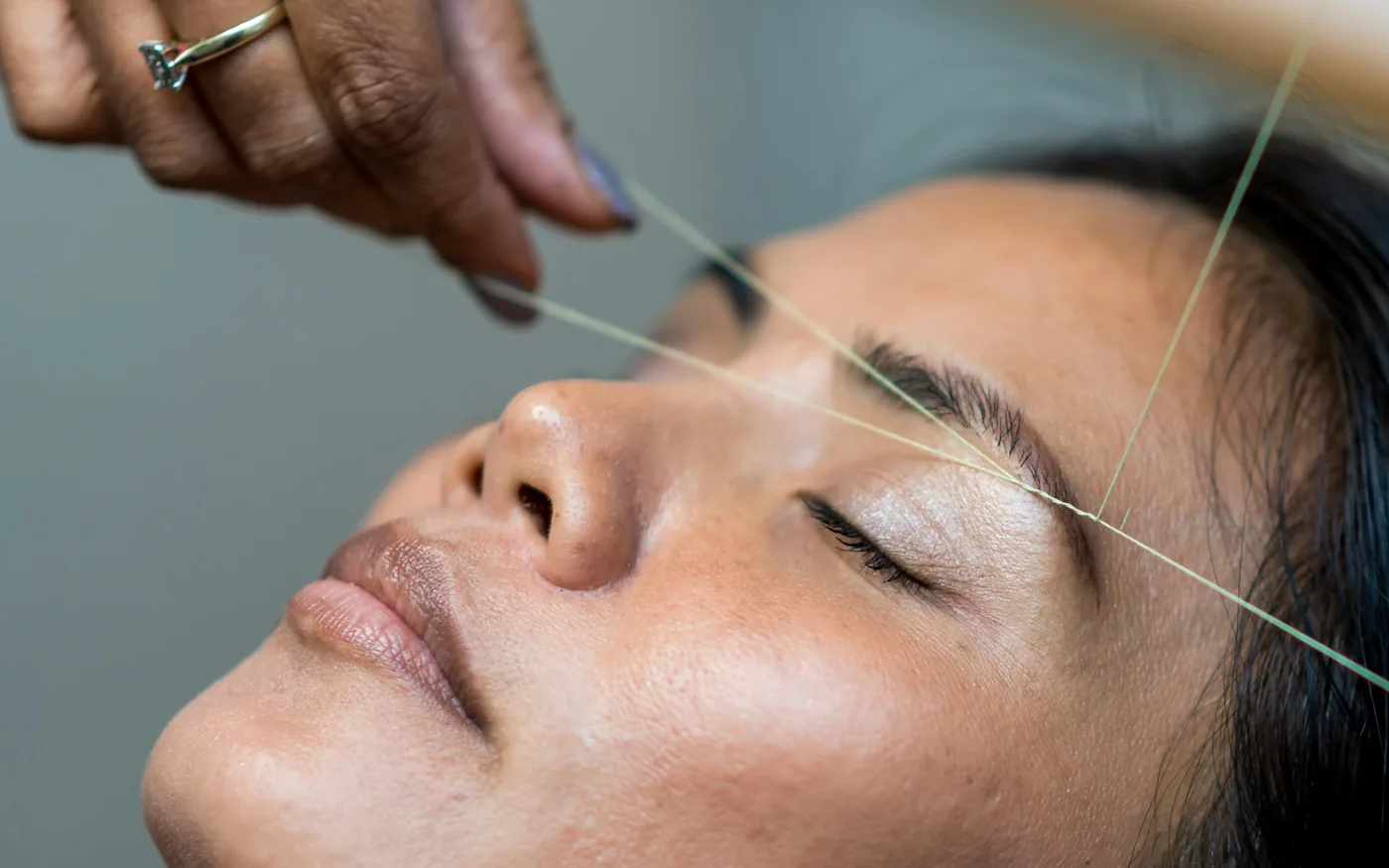
Treatment commonly uses points around the face and sinuses, along with points on the hands, arms and lower legs. The facial points are shallow and finer than people expect.
If needles near the face sound unappealing, say so when you book — there is more than one way to approach this, and what the needles actually feel like may reassure you first.
Practical measures that genuinely help
- Windows shut on high-pollen days, particularly early morning when counts peak.
- Shower and change after being outdoors — pollen travels indoors on hair and clothing.
- Dry laundry indoors during your season.
- Wrap-around sunglasses for itchy eyes.
- Rinse with saline at the end of the day.

What a season of treatment looks like
Allergy treatment is preventive, so it is planned around the calendar rather than booked when you already feel awful.
| Phase | Timing | Frequency | Purpose |
|---|---|---|---|
| Run-up | 3–4 weeks before your trigger | Weekly | Building an effect before exposure starts |
| Early season | First weeks of symptoms | Weekly | Where reduced medication use tends to show |
| Peak | Worst two or three weeks | Weekly or fortnightly | Holding the line |
| Tail | As counts drop | Fortnightly, then stop | Winding down |
| Next year | Same run-up window | Weekly | Most people find the second season easier to plan |
Keep a rough symptom score through the season, and note how often you reach for medication. Both are more reliable than trying to remember in October how bad August was.
Realistic expectations
Acupuncture will not make you non-allergic. Nothing short of immunotherapy attempts that, and it takes years.
What the trials describe is a reduction in symptom burden and in how much medication people need. A season that is noticeably less miserable, with fewer days written off, is the outcome to aim at. Anyone promising more is not describing the same research.
If the main complaint is facial pressure and blockage rather than sneezing and itching, sinus pressure and congestion is the more useful article — the evidence there is thinner, and the cheapest measure is one most people have never tried.
When to see a doctor
Please seek medical advice for wheezing or shortness of breath, which may indicate asthma alongside the allergy; for symptoms that are not responding to standard treatment; or for any history of severe allergic reaction. Allergy testing is worth having if you do not know what you actually react to.
Booking a session in Beverly
Acupuncture is $75 a session, published with everything else on our rates page. Appointments run Tuesday, Wednesday and Friday 9am to 6pm and Saturday 8am to 2pm, by appointment only.
Book ahead of your season if you can. Read more about acupuncture at our Beverly, MA practice, or get in touch to book an appointment.
Frequently asked questions
Does acupuncture help hay fever?
The evidence is reasonably good by the standards of this field. A large randomised trial found acupuncture better than both sham acupuncture and rescue medication alone for seasonal allergic rhinitis, and it appears as an option in ENT clinical practice guidelines. It reduces symptoms rather than eliminating them.
When should I start treatment?
Before the season rather than during it. Starting three to four weeks ahead of your usual trigger — tree pollen in spring, grass early summer, ragweed late summer into autumn — gives treatment time to build.
Can I keep taking antihistamines?
Yes, and you should not stop them to “test” the acupuncture. In the trials acupuncture was used alongside rescue medication. Many people find they reach for antihistamines less often, which is a reasonable thing to aim at.
How many sessions?
Weekly through the run-up and into the early part of the season is the usual pattern, so roughly six to eight sessions. Some people then continue fortnightly through the worst weeks.
Does it work for indoor allergies too?
Most of the research is on seasonal allergic rhinitis rather than perennial allergies such as dust mite. The evidence is thinner for year-round symptoms, though the treatment approach is similar.
This article is general information, not medical advice. Acupuncture is intended to work alongside the care of your doctor, not to replace it. Please speak to a clinician about any new, severe or changing symptom.