
One sentence in this article saves people months, so it goes first: the hip joint is felt in the groin.
Pain on the bony point at the side of the hip is usually something else, and the two get confused constantly — including by people who spend a year treating the wrong structure.
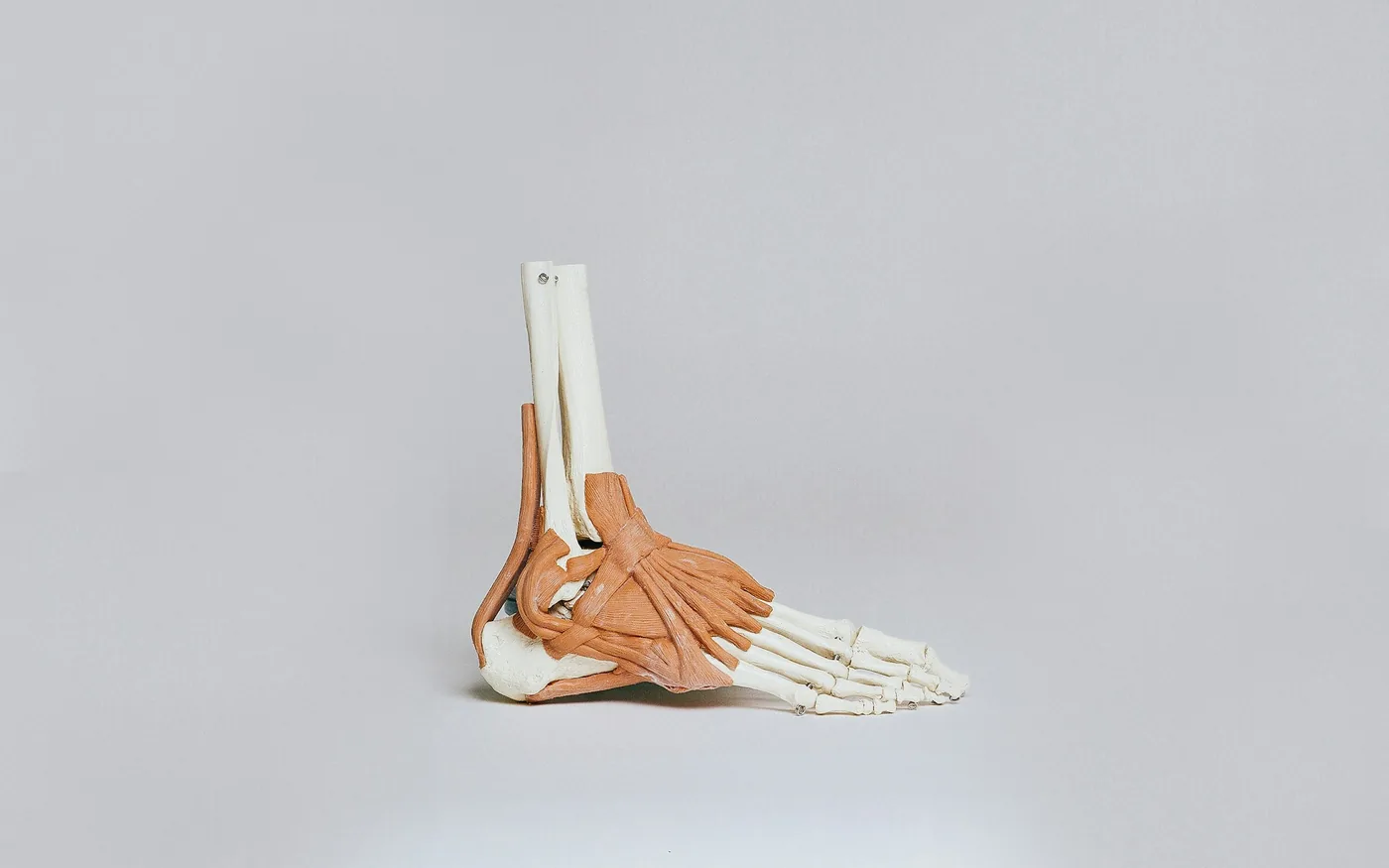
Groin or side?
The distinction is easy once someone points it out, and it is the single most useful thing on this page.
| Feature | Hip osteoarthritis | Lateral hip pain |
|---|---|---|
| Where | Groin, front of thigh, sometimes knee | The bony point at the side |
| Lying on that side | Not especially painful | Characteristically painful |
| Stiffness | Marked, worse after sitting | Not a main feature |
| Turning the leg inward | Restricted and sore | Usually normal |
| Socks and shoes | Increasingly awkward | Unaffected |
| Read more | This page | Pain on the outside of the hip |

The knee that is really a hip
Worth its own note because it wastes so much time.
The hip refers pain down the front of the thigh, and in some people that referral reaches the knee and stops there. They present with knee pain, the knee is examined, and the knee looks unremarkable.
If your knee hurts, imaging is unhelpful, and treatment aimed at the knee is doing nothing, it is reasonable to ask whether the hip has been assessed. It is a quick thing to check and it occasionally changes everything.
What it feels like day to day
Hip osteoarthritis rarely arrives as pain alone. Most people describe a combination of stiffness and lost range that they noticed before the pain became the main complaint.
- Stiff after sitting, easing after a few minutes of walking, then returning later in the day.
- Socks, shoes and toenails becoming awkward, which is the change people mention first and dismiss.
- A shorter walking distance before it aches.
- Difficulty getting in and out of a car, because that movement needs exactly the rotation that goes first.
- An ache that lingers for hours after over-doing it, rather than settling quickly.
Written down as a list, most people recognise more of it than they expected. It is also useful to bring to an appointment, because function tells a clinician more than a number out of ten does.
Exercise is the treatment, not the warm-up
Clinical guidelines are unusually consistent here. Exercise is recommended for hip osteoarthritis as a core treatment, not as something to try while waiting for the real thing.
| Element | Why | Where to start |
|---|---|---|
| Hip abductor strength | Controls the pelvis when you stand on one leg | Side-lying raises, then banded walks |
| Glute and quadriceps work | Supports the joint through range | Sit-to-stands, bridges |
| Range of movement | Stiffness is often as limiting as pain | Gentle, daily, not forced |
| Walking | Tolerance builds with graded load | Add minutes before adding hills |
| Water-based work | Useful when land-based hurts too much | A reasonable starting point, not a permanent one |

If land-based work hurts
A common enough obstacle to be worth addressing directly rather than treating as a failure of willpower.
Water is the common answer, and a sensible one. Buoyancy removes much of the joint load, which lets people build strength and confidence they could not build on land.
The caveat: the aim is usually to graduate back to land, because that is where the loading that maintains bone and muscle happens. Water is a productive way in rather than a permanent destination.

A word about hip replacement
This site is generally cautious about surgery, so it is worth being equally clear when the picture is different.
We have been sceptical elsewhere on this site about surgery for joint problems — the meniscus trials being the clearest case — so it is only fair to be equally plain in the other direction.
Total hip replacement, for hip osteoarthritis that has not responded to properly delivered conservative care, is one of the more successful operations in medicine. Satisfaction rates are high and function generally improves substantially.
That does not make it a first step. It does mean that if you get there, you are not being fobbed off. Henry Ford Health publishes patient material on hip conditions and their management if you want to read further.

Where acupuncture fits
Conditionally recommended for hip osteoarthritis in US rheumatology guidance — the same guidance discussed in acupuncture for knee and joint pain and hand and thumb arthritis.
That is a real endorsement stated carefully. It may reduce pain enough to make the exercise programme possible, which is where its value lies. It does not restore cartilage, and no honest practice will tell you it does.
When to see a doctor
See a doctor for hip pain with fever, for night pain that is unrelieved by position, for a sudden inability to bear weight, for pain following a fall, for any history of cancer with new hip pain, or for pain and stiffness that are steadily worsening despite consistent exercise.
Booking a session in Beverly
Acupuncture is $75 a session and massage is $45 for 30 minutes, $75 for 60 and $105 for 90 — all on our rates page. How many sessions people usually need sets out the shape of a course.
Browse all our articles or get in touch.
Frequently asked questions
Where does hip arthritis hurt?
In the groin, most characteristically, sometimes spreading to the front of the thigh and occasionally to the knee. Pain on the outside of the hip, worst when lying on that side, is usually a different condition entirely.
Can hip arthritis cause knee pain?
Yes, and it catches people out. The hip refers pain down the front of the thigh to the knee, so some people are investigated for a knee problem when the hip is the source. If your knee looks normal and hurts anyway, ask about the hip.
What is the first-line treatment?
Exercise, and it is not a consolation prize. Clinical guidelines recommend it strongly for hip osteoarthritis, both land-based and water-based, alongside education and weight management where that applies.
Does acupuncture help hip arthritis?
It is conditionally recommended for hip osteoarthritis in US rheumatology guidance, which is a genuine but measured endorsement. It sits alongside exercise rather than replacing it.
When is a hip replacement worth considering?
When pain and loss of function persist despite properly done conservative treatment. Unlike some other joint operations, hip replacement has genuinely good outcomes and high satisfaction, and it is worth saying so plainly.
This article is general information, not medical advice. Acupuncture is intended to work alongside the care of your doctor, not to replace it. Please speak to a clinician about any new, severe or changing symptom.