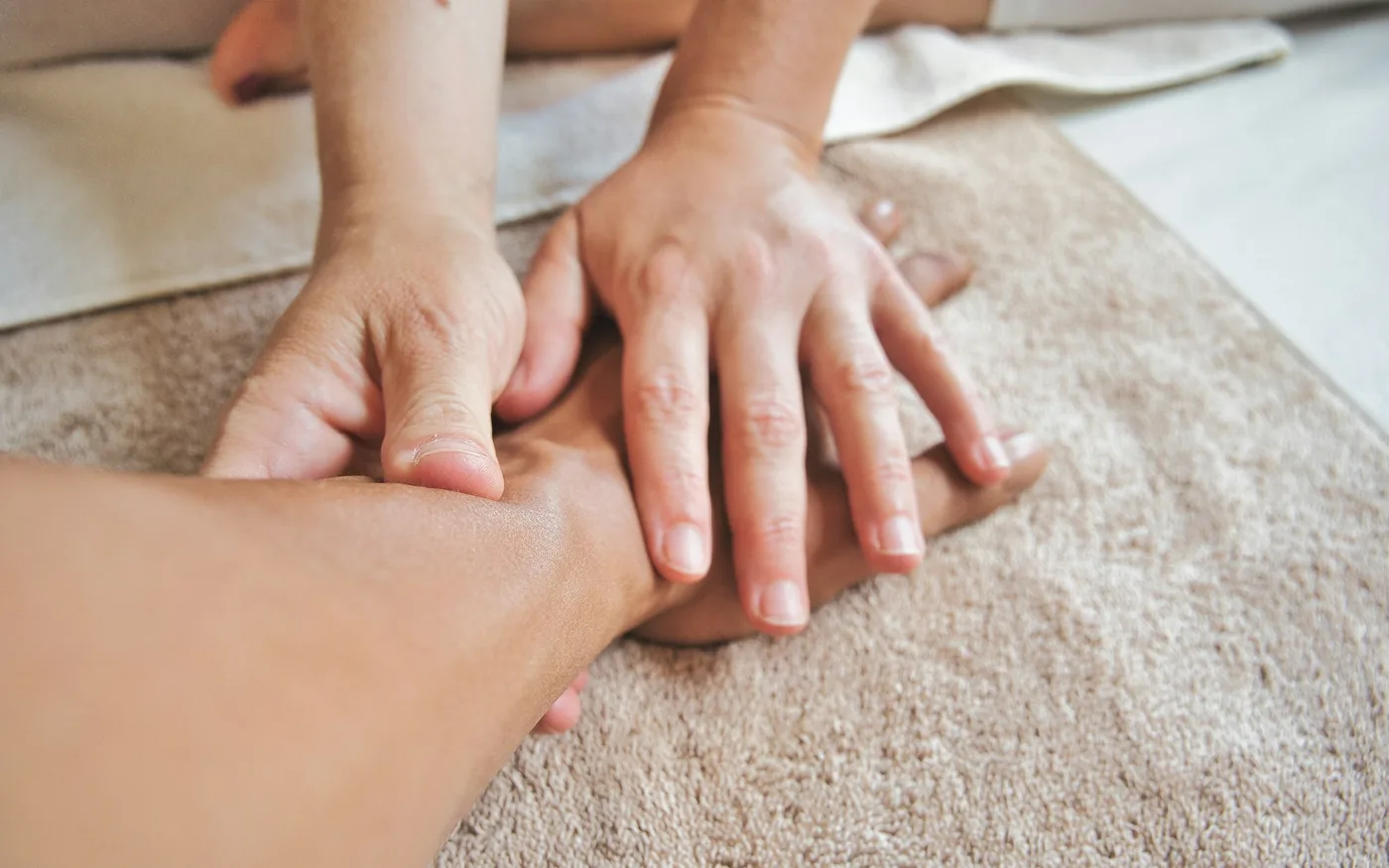
Reflexology attracts more overclaiming than almost any other therapy on a treatment menu, which is a shame, because what it genuinely does is worth having on its own terms.
This is a straight account: what happens in a session, what the research supports, and what it cannot do.
What reflexology is
Reflexology applies firm, specific pressure to points on the feet — and sometimes the hands or ears — following a traditional map in which areas of the foot correspond to other parts of the body.
That map is the traditional framework the practice is built on. It is not an anatomical claim that pressing the arch operates on your liver, and any practitioner telling you otherwise has overstated it. What the sequence reliably produces is a sustained, methodical hour of pressure that most people find deeply calming.
The feet are also densely supplied with nerve endings, which is part of why focused work there registers so strongly.
Reflexology or a foot massage?
People use the terms interchangeably. They are not quite the same thing, and the difference matters when you are booking.
| Reflexology | Foot massage | |
|---|---|---|
| Intent | Pressure on mapped points, in sequence | Easing the muscles and tissue of the foot |
| Structure | Methodical, covers the whole map | Follows wherever the tension is |
| Pressure | Firm and specific | Usually lighter and broader |
| Clothing | Fully clothed, shoes and socks off | The same |
| Typical length | About an hour | 15–30 minutes, often part of a longer massage |
| Best for | Overall stress, sleep, a whole-body sense of settling | Tired, aching feet specifically |
What happens in a session
- A short intake. Any foot problems, recent injuries, circulation issues, diabetes, or anything tender. Your feet are checked for cuts, rashes or verrucas.
- Getting comfortable. You settle into a reclining chair or onto the table, shoes and socks off, everything else on.
- The work itself. Firm thumb and finger pressure moving through the sequence, usually one foot fully then the other.
- Sensitive points. Some spots feel more tender. That is normal and the pressure is adjusted.
- Afterwards. Most people feel notably relaxed and occasionally a bit spacey for a few minutes. Take your time getting up.

What the evidence honestly supports
This is where reflexology needs plain speaking, because the gap between what is claimed and what is demonstrated is wide.
| Claim | What the evidence says |
|---|---|
| Relaxation and stress reduction | Reasonably supported. This is its clearest and most consistent effect. |
| Reduced anxiety | Supported in several clinical trials, including in hospital settings. |
| Better sleep | Commonly reported by patients; the formal evidence is thinner but plausible given the relaxation effect. |
| Short-term wellbeing | Supported. |
| Diagnosing illness from the feet | Not supported. Reflexology cannot diagnose anything. |
| Removing toxins | Not supported. No mechanism, no evidence. |
| Treating or curing disease | Not supported. It is a complementary therapy, not a treatment for illness. |
The MedlinePlus guide to complementary and integrative medicine is a good reference point if you want to check any therapy against the evidence.
Who tends to get the most from it
- People who want the benefits of bodywork but would rather not undress
- Anyone whose stress shows up as poor sleep more than as muscular pain
- People who find a full-body massage too much stimulation
- Those with a back or shoulder problem that makes lying face down uncomfortable
If muscular tension is your main complaint, therapeutic massage for neck and shoulder pain is likely the better fit, and our comparison of acupuncture and massage may help you decide.

How often is worth it
Reflexology is not a course of treatment in the way acupuncture for a specific complaint is. There is no six-session block to commit to, and nobody should be selling you one.
Most people use it in one of two ways. Either as an occasional reset — every month or two, when things have got on top of them — or as a standing appointment during a stretch they know will be demanding. Both are reasonable. What tends not to work is a single session during the worst week of the year, expecting it to undo the year.
If you are using it for ongoing stress rather than a one-off, a regular rhythm you can actually keep matters more than the gap between appointments.

When to check with your doctor first
Mention any circulation problems, diabetes affecting the feet, active infection, recent foot or ankle surgery, deep vein thrombosis or a history of it, or pregnancy. None of these necessarily rules reflexology out, but each changes how it is delivered — and foot ulceration in diabetes needs medical attention rather than bodywork.
Booking a session in Beverly
Reflexology is one of several modalities used here. Our guide to choosing between deep tissue and relaxation massage covers the others, including craniosacral work and stretching.
Reflexology is $65, listed with everything else on our published rates for massage and reflexology. Sessions run Monday, Tuesday, Wednesday and Friday from 7am to 3pm, and Saturday 8am to noon, by appointment only.
You can read more about the bodywork we offer in Beverly, MA, or get in touch to book a reflexology appointment. If you are not sure which treatment suits you, say so when you get in touch and we will talk it through first.
Frequently asked questions
Do I need to undress for reflexology?
No. You stay fully clothed and only remove your shoes and socks. That makes it a comfortable option for people who would rather not undress for a conventional massage.
Is reflexology just a foot massage?
They overlap, but the intent differs. A foot massage works the muscles and tissue of the foot for their own sake. Reflexology applies specific pressure to mapped points in a set sequence. In practice a reflexology session is more structured and more methodical, and it usually feels firmer.
Does reflexology hurt?
It should not. Firm pressure is normal, and some points feel more sensitive than others, but it should stay comfortable throughout. Say so if a point is genuinely painful and the pressure is eased.
What does the evidence actually show?
The reasonable reading is that reflexology is well supported for relaxation, stress and short-term wellbeing, and not supported as a way to diagnose or treat disease. Trials in clinical settings have shown reductions in anxiety. Claims that it detoxifies organs or cures conditions are not supported.
How long is a reflexology session and what does it cost?
Sessions here run about an hour and cost $65. Most people find one session pleasant and restorative; if you are using it for ongoing stress, a regular rhythm tends to work better than an occasional one-off.
This article is general information, not medical advice. Acupuncture is intended to work alongside the care of your doctor, not to replace it. Please speak to a clinician about any new, severe or changing symptom.