Almost everybody has the same questions before a first massage, and almost nobody asks them, because they feel awkward. They are not awkward at all — they are the practical details that decide whether you spend the hour relaxing or quietly worrying.
So here they are, answered plainly.

What comes off, and what does not
The standard phrase is “undress to your level of comfort”, and it means exactly that. There is no correct answer and no expectation.
| You keep on | How common | Effect on the session |
|---|---|---|
| Nothing | Very common | Full access for oil-based work on back and legs |
| Underwear | Very common | No practical limitation for most work |
| Underwear and a top | Common | Limits back work; therapist adapts |
| Loose clothing throughout | Less common | Fine — the session becomes clothed work, no oil |
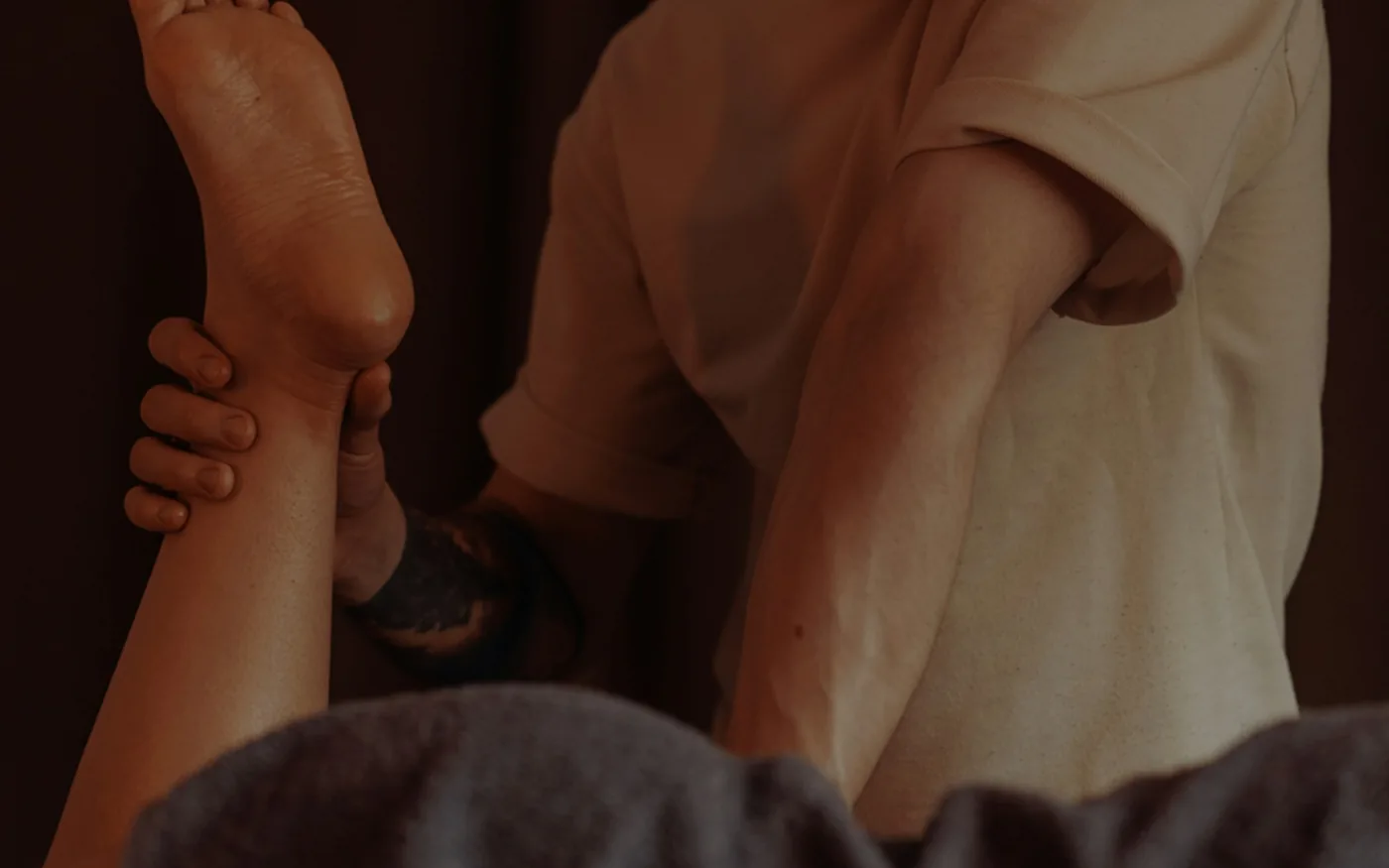
| Shoes and socks only removed | Common | This is reflexology, a good option if undressing is the barrier |
The therapist leaves the room while you get on the table and under the sheet, and knocks before coming back in.
How draping actually works
This is the part people worry about most and understand least.
- You are under a sheet, and often a blanket, for the whole session.
- Only the area being worked on is uncovered — one leg, or the back, and it is re-covered before moving on.
- When you turn over, the therapist holds the sheet up and looks away so you stay covered as you move.
- Areas that are never uncovered stay that way. This is not negotiable and you never have to raise it.
Professional draping is a standard of practice, not a favour. The National Certification Board for Therapeutic Massage and Bodywork sets ethical standards that practitioners work to.
What happens, in order
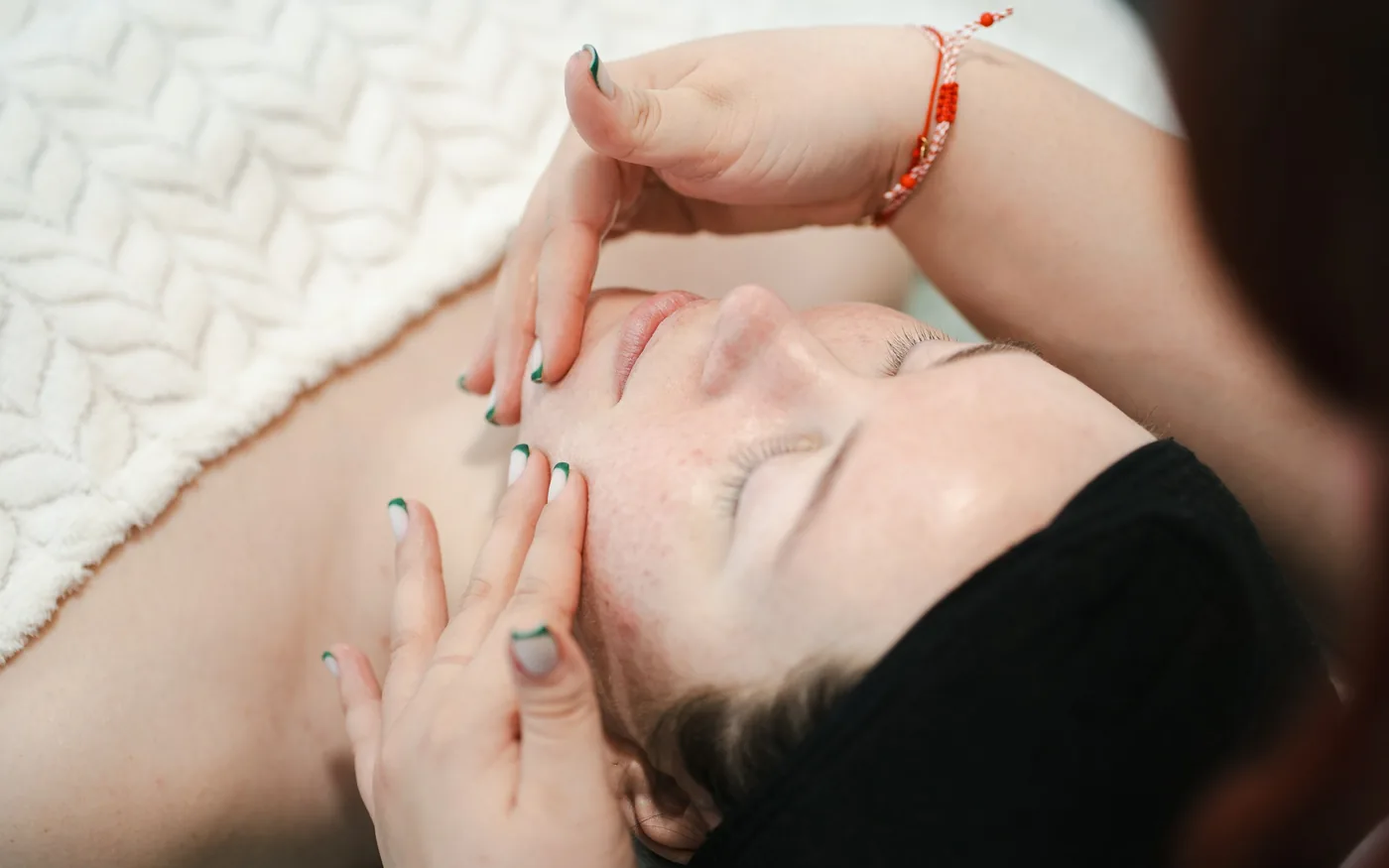
- The conversation. Lynn asks what hurts, what makes it worse, how you sleep, and what you do all day. Mention any injuries, surgery, pregnancy or medication — blood thinners in particular.
- Agreeing the plan. What you want from the hour: whole-body relaxation, or focused work on one area.
- Getting on the table. The therapist steps out; you undress to your comfort level and get under the sheet, face down to start unless told otherwise.
- The work. Usually starting broad and warming the tissue before anything deeper.
- Turning over. Roughly halfway, with the sheet held for you.
- Finishing. You are left to get up slowly and dress in private. Take a minute; standing up fast after an hour face-down is how people get dizzy.

Nothing about the sequence is a test, and there is no etiquette you can get wrong. Therapists do this every day and have seen every degree of nervousness.
How to ask for what you want
The single most useful thing you can do is speak up. Therapists genuinely prefer it — guessing is harder than being told.
| If | Say | Why it matters |
|---|---|---|
| Pressure is too much | “Could you ease off a little” | Pain makes muscles guard, undoing the work |
| Pressure is too light | “You can go deeper here” | Therapists start conservative by default |
| You are cold | “Could I have the blanket” | Cold muscles do not release |
| A position hurts | “This is uncomfortable” | There is almost always another position |
| You would rather not talk | “I might just be quiet” | Entirely normal, never rude |
| An area is off limits | “Please skip my feet” | No explanation needed |
Practical details
- Arrive a few minutes early so you are not starting out of breath.
- Eat lightly beforehand. Not a large meal, but not on an empty stomach either.
- Wear something easy to get in and out of.
- Choose the length deliberately. 30 minutes for one area, 60 for neck, shoulders and back, 90 for whole-body work.
- Drink water afterwards and keep the rest of the day gentle.

Choosing how long to book
Length is the decision first-timers most often get wrong, usually by booking thirty minutes and then wishing they had longer.
Thirty minutes is genuinely useful for one specific area — a single stiff shoulder, or the low back. It is not enough for whole-body work, and the session will feel rushed if you ask for both.
Sixty minutes covers neck, shoulders and back properly, and is the right default for a first visit. Ninety suits whole-body work, or a neck problem with a lower back component that needs attention in the same session.
When to check with a doctor first
Speak to a clinician before booking if you have a fever or infection, a recent fracture or surgery, deep vein thrombosis or a history of it, uncontrolled high blood pressure, or pain radiating down a limb with numbness or weakness. Mention pregnancy and any blood-thinning medication when you book.
Booking a first massage in Beverly
Massage is $45 for 30 minutes, $75 for 60 and $105 for 90, with reflexology at $65 — all on our published rates page. Sessions run Monday, Tuesday, Wednesday and Friday from 7am to 3pm and Saturday 8am to noon.
Read more about therapeutic massage at our Beverly practice, massage for neck and shoulder pain specifically, or how deep tissue and Swedish massage differ if you are still deciding what to ask for. Otherwise get in touch to book a first appointment.
Frequently asked questions
Do I have to take all my clothes off for a massage?
No. The phrase therapists use is “undress to your level of comfort”, and it is meant literally. Many people keep underwear on. Some keep more on than that, and a useful session is still possible — tell the therapist and they will work around it.
What is draping?
You are covered by a sheet throughout, and only the area being worked on is uncovered. When you turn over, the therapist holds the sheet so you stay covered the whole time. It is standard professional practice, not a courtesy extended on request.
Should I talk during a massage?
Whatever you prefer. Some people chat, others say nothing for an hour. Neither is wrong. The only thing you should always speak up about is pressure, temperature or an uncomfortable position.
What if the pressure is too much?
Say so immediately — that sentence is genuinely welcome. Pain makes muscles guard, which works directly against the treatment. “Could you ease off a little” is all it takes.
How will I feel afterwards?
Usually relaxed, sometimes a little drowsy. Mild soreness the next day is common after deeper work and settles within a day or two. Drink water and avoid a heavy gym session straight afterwards.
This article is general information, not medical advice. Acupuncture is intended to work alongside the care of your doctor, not to replace it. Please speak to a clinician about any new, severe or changing symptom.