This article is going to be unflattering to us, so let us get it over with in the second paragraph.
The evidence for acupuncture in tinnitus is inconclusive. The trials are small, they use different methods and different outcome measures, and systematic reviews consistently decline to draw a conclusion. Anybody advertising acupuncture as a tinnitus treatment is going beyond what the research supports.
The rest of this page is about what does help, because that is more use to you than a sales pitch.

Start with a hearing assessment
This is the step people skip, and it is the one that changes things most often.
Tinnitus is very commonly associated with hearing loss, including hearing loss mild enough that you have not noticed it. The leading explanation is that when the ear sends less input, the brain turns up its own gain — and the tinnitus is what that increased gain sounds like.
Which is why hearing aids frequently reduce tinnitus: they restore the missing input. An audiologist is the right first appointment, and the American Tinnitus Association is a good place to read further.
Get these checked promptly
| If your tinnitus is | Why it matters | What to do |
|---|---|---|
| In one ear only | Asymmetry needs explaining | See a doctor or ENT |
| Pulsing with your heartbeat | Suggests a vascular cause | See a doctor |
| With sudden hearing loss | Treatment is time-critical | Urgent — same or next day |
| With vertigo | May point at an inner ear condition | See a doctor |
| After starting a medication | Some drugs can cause it | Ask your prescriber, do not stop |
| Steady, both ears, gradual | The commonest pattern | Hearing assessment |
What the evidence does support
Most effective tinnitus treatment does not target the sound. It targets how much attention and distress the sound commands — and that is a meaningful change, not a consolation.
- Hearing aids, where there is hearing loss. Frequently the single most effective measure.
- Sound therapy. Background sound reduces the contrast that makes tinnitus stand out. Silence is what makes it loudest, which is why nights are the worst.
- Cognitive behavioural approaches. The best supported intervention for tinnitus distress.
- Tinnitus retraining therapy, combining sound therapy with structured counselling.
- Protecting your remaining hearing. Nothing undoes noise damage; preventing more is free.
The one thing that is entirely in your control
Protecting the hearing you still have. It is free, it is unglamorous, and it is the only item on this page that reliably changes the future rather than the present.
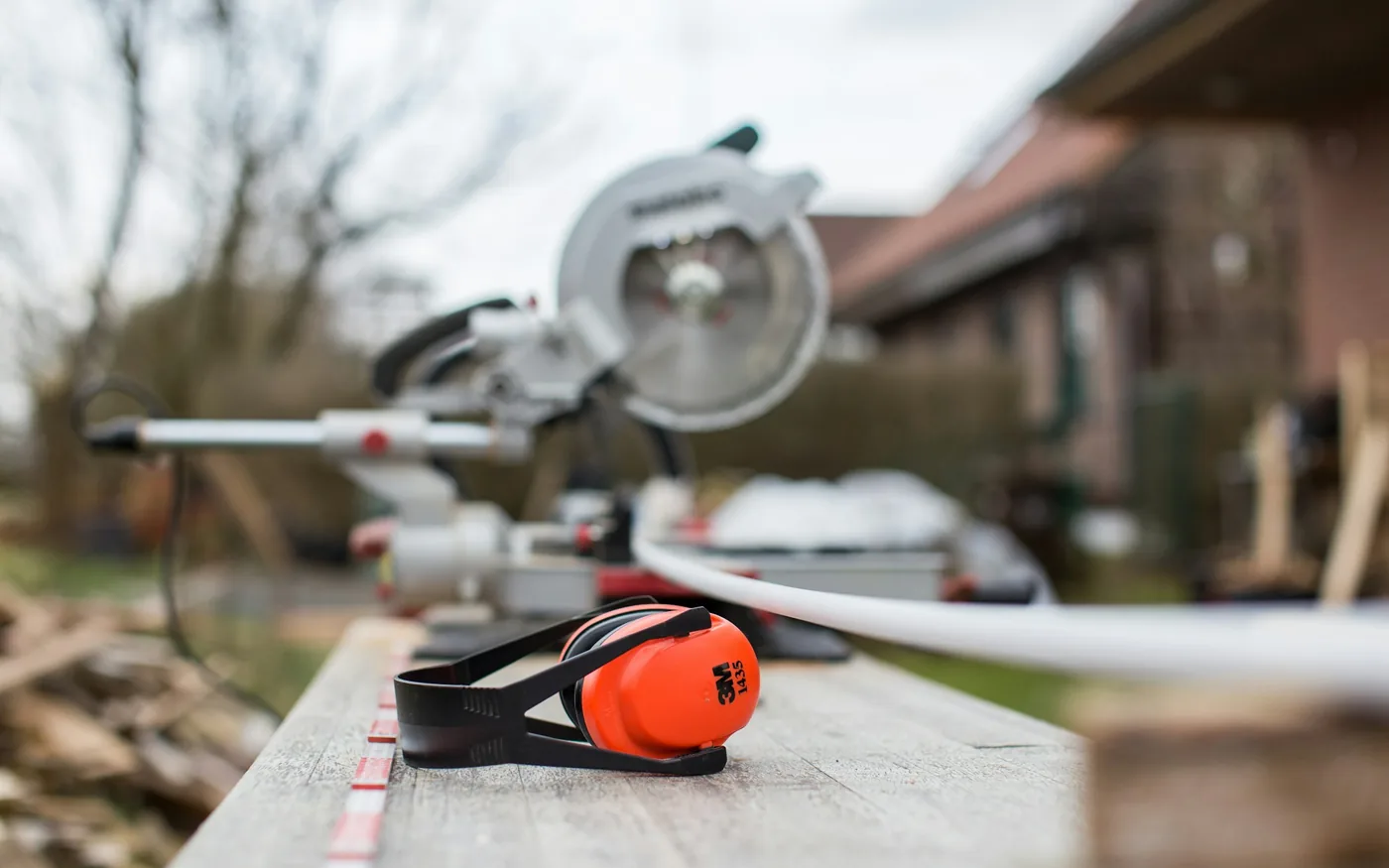
Noise damage does not reverse. Every further exposure — power tools without defenders, a loud gig, headphones turned up to drown out a commute — adds to it, and for many people tinnitus tracks that accumulation. Ear defenders for the tools and moulded plugs for music cost very little against what they protect.
The headphone one catches people out. Turning the volume up to mask background noise is the commonest way adults now damage their hearing, and noise-isolating headphones solve it at lower volume.
The loop that makes it unbearable
Tinnitus keeps you awake. Poor sleep raises anxiety and lowers tolerance. Higher anxiety makes the tinnitus more intrusive, which keeps you awake. It is a genuine feedback loop, and for many people it is what turns a manageable sound into a dominating one.
Anything that interrupts that loop helps, whichever point you break it at — which is the same logic set out in why pain persists after healing, and it applies here for the same reasons.

The one honest exception
There is a subgroup worth naming, because for them hands-on work has a plausible rationale rather than a hopeful one.
Some people can change the volume or pitch of their tinnitus by clenching the jaw, turning the head, or pressing on the neck. That is called somatosensory tinnitus, and it reflects a genuine connection between the nerves serving the jaw and neck and the auditory pathways.
If that describes you — and it is worth actually testing — then addressing jaw tension and TMJ pain or neck and shoulder tension may be worth trying. That is a narrower claim than “acupuncture treats tinnitus”, and it is the only one we are prepared to make.

So should you book with us?
| Your situation | Our honest advice |
|---|---|
| New tinnitus, no hearing test yet | Audiologist first. Come back to this later |
| One-sided or pulsatile | Doctor. Not us, and not yet |
| Jaw or neck changes the sound | Reasonable to try treatment for the jaw or neck |
| Sleep wrecked by it | Worth addressing sleep in its own right |
| Hoping to silence the sound | We cannot do that, and we will say so |

Booking a session in Beverly
If what you want is help with sleep, stress, jaw tension or neck tension alongside your tinnitus, that is something we can talk about honestly. Acupuncture is $75 and everything is on our rates page.
If dizziness comes with it, vertigo and dizziness takes the same honest approach and points at what treats the commonest cause.
Browse all our articles or get in touch — and if the answer is that you should see someone else first, we will tell you.
Frequently asked questions
Does acupuncture help tinnitus?
The evidence does not support saying yes. Systematic reviews find the trials small, inconsistent and at high risk of bias, and the overall conclusion is inconclusive. We would rather tell you that than take your money on a maybe.
What actually helps tinnitus?
A hearing assessment first, because hearing loss is the commonest associated finding and hearing aids often reduce tinnitus. Beyond that, sound therapy and cognitive behavioural approaches have the best support — they reduce the distress and intrusiveness rather than the sound itself.
When is tinnitus urgent?
Tinnitus in one ear only, tinnitus that pulses in time with your heartbeat, sudden hearing loss, or tinnitus with vertigo all need prompt medical assessment. Sudden hearing loss in particular is treated as an emergency because treatment is time-sensitive.
Can jaw or neck problems cause tinnitus?
In a minority of people, yes. If you can change the volume or pitch of your tinnitus by clenching your jaw, pressing on your neck or turning your head, that is called somatosensory tinnitus, and it is the one presentation where hands-on work has a plausible role.
Will it ever go away?
For many people it becomes far less intrusive over time even when the sound itself does not change, which is what the effective treatments are actually working on. That is a real outcome, not a consolation prize.
This article is general information, not medical advice. Acupuncture is intended to work alongside the care of your doctor, not to replace it. Please speak to a clinician about any new, severe or changing symptom.