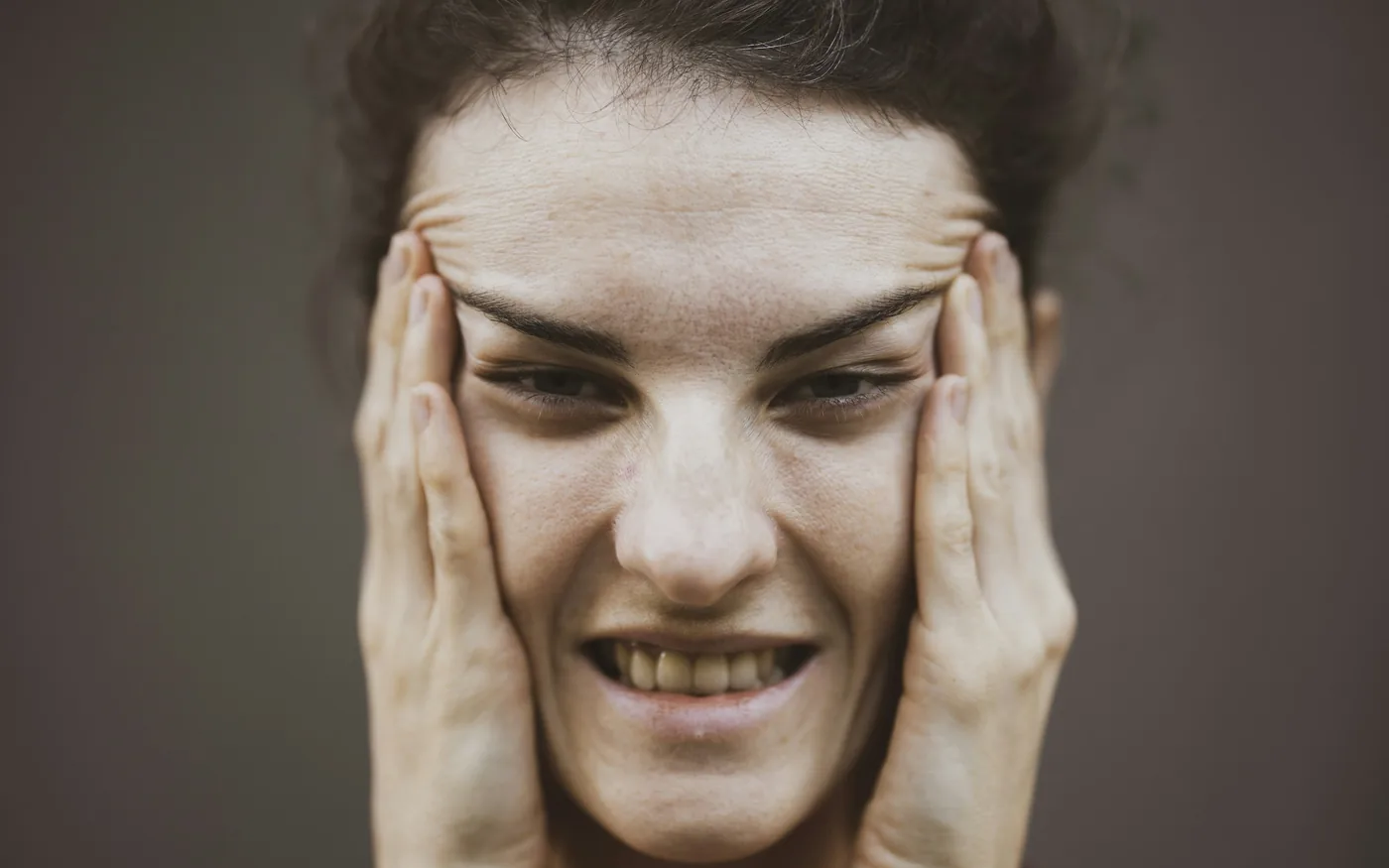
Jaw pain is miserable in a particular way, because you cannot rest a jaw. You talk, eat and swallow with it several hundred times a day whether it hurts or not.
Of the three upper-body complaints in this batch, temporomandibular disorder is the one where acupuncture has the best support. Here is what that rests on, and what has to happen first.

See a dentist first
This is not a formality. Jaw pain has several distinct causes and they need different treatment.
| If the problem is | It is likely | What helps |
|---|---|---|
| Aching muscles, tender to press | Myofascial, muscle-origin TMD | Where acupuncture has its evidence |
| Clicking without pain | Disc movement | Often needs nothing at all |
| Locking or catching | Structural, within the joint | Dental or specialist assessment |
| Pain on biting a specific tooth | Dental in origin | See a dentist |
| Swelling, fever, unable to open | Possible infection | Urgent dental care |
The NIH dental institute publishes plain-language guidance on temporomandibular disorders, including a useful caution about irreversible treatments.
What the evidence shows
Reviews consistently find acupuncture superior to placebo or sham needling for TMD pain, and broadly comparable to occlusal splints — the standard conservative dental treatment. A recent randomised trial reported marked pain relief and improved physical and emotional function against sham.
The honest qualifier: GRADE certainty across these outcomes is rated low to very low, and the benefit is described as short-term. Acupuncture also does not change a structural problem inside the joint. What it appears to do is reduce muscular pain and spasm, which is why it works for the muscle-origin presentation and not the others.
How it compares with the alternatives
TMD attracts a wide range of treatments, and they are not equally reversible. That distinction is worth holding onto.
| Option | What it does | Reversible? |
|---|---|---|
| Self-management | Softer food, jaw rest, heat, awareness of clenching | Entirely |
| Occlusal splint | Protects teeth and unloads the muscles at night | Yes |
| Acupuncture | Reduces muscular pain and spasm | Yes |
| Massage and manual therapy | Eases jaw, neck and upper back muscles | Yes |
| Physiotherapy | Movement retraining and jaw exercises | Yes |
| Occlusal adjustment or surgery | Alters the bite or the joint permanently | No — reserve for clear structural cause |
Acupuncture sits comfortably in the reversible group, which is much of its appeal here: if it does not help, you have lost six weeks and no anatomy.
Why the neck is treated too
The jaw does not operate in isolation. The muscles that close it work with the neck muscles that stabilise the head, and people with persistent jaw pain very often have a tight neck and upper back as well.
Treatment usually addresses both. Where the neck component is large, therapeutic massage for the neck and shoulders alongside acupuncture tends to work better than either alone.
Why it so often flares in a bad month
TMD is unusual among musculoskeletal complaints for how closely it tracks life circumstances. People routinely report that their jaw was fine for a year and then seized up during a difficult few weeks at work.
That is not imagination and it is not a character flaw. Clenching is a physical response to sustained tension, and the muscles involved are among the strongest in the body for their size. Several hours a night of that produces exactly the pain people describe.
Clenching is usually the engine
Most muscle-origin jaw pain traces back to clenching or grinding, and most of that happens either at night or during concentration without the person noticing.
- Notice the daytime clench. Teeth should be apart at rest, with lips together. Most people with jaw pain discover theirs are touching most of the day.
- Put a reminder somewhere you look. A dot on the monitor works better than willpower.
- Softer food while it settles. Smaller mouthfuls, nothing chewy, no gum.
- Warmth before bed across the jaw and the sides of the head.
- Address the stress if that is the driver. Jaw pain that flares in bad weeks is telling you something — see acupuncture for anxiety and stress.

What a session involves
Needles are placed around the jaw, temple and cheek, along with points on the hands, forearms and feet. The facial points are shallow and considerably finer than people picture.
If the idea of needles near your face is the sticking point, say so when you book — there is more than one way to approach this, and what the needles actually feel like may settle it first.
When to see a doctor or dentist
Seek assessment promptly for a jaw that locks or will not open, facial swelling with fever, pain following a blow to the face, numbness in the face, or jaw pain with chest pain or breathlessness — that last combination can indicate a cardiac problem and needs urgent attention.

Booking a session in Beverly
Acupuncture is $75 a session, published with everything else on our rates page. Appointments run Tuesday, Wednesday and Friday 9am to 6pm and Saturday 8am to 2pm.
One connection worth knowing: a minority of people can change the volume of their tinnitus by clenching the jaw. If that is you, acupuncture for tinnitus sets out what is and is not worth trying.
Browse all our articles, read more about acupuncture at our Beverly practice, or get in touch to book an appointment.
Frequently asked questions
Does acupuncture help TMJ pain?
For pain of muscular origin, the evidence is reasonably encouraging. Recent trials found acupuncture gave marked pain relief compared with sham, and reviews report results broadly similar to occlusal splints. Certainty is still rated low to very low, so treat it as promising rather than proven.
Should I see a dentist first?
Yes. Jaw pain can come from the joint, the muscles, the teeth or the bite, and those need different treatment. A dental assessment establishes which you are dealing with. Acupuncture is most relevant once a muscular component has been identified.
Will it help if my jaw clicks or locks?
Clicking alone is common and often needs no treatment. Locking — a jaw that catches or will not open fully — is a structural problem within the joint and needs dental or specialist assessment rather than needling.
Are needles put into my face?
Some, yes — around the jaw, cheek and temple. They are shallow and finer than people expect. Points on the hands and feet are usually used as well. If facial needling is not something you want, say so and it can be worked around.
How many sessions?
Six weekly sessions with a review is the usual block. Track something concrete: how wide you can open, how often you notice clenching, and whether you are waking with a tight jaw.
This article is general information, not medical advice. Acupuncture is intended to work alongside the care of your doctor, not to replace it. Please speak to a clinician about any new, severe or changing symptom.