
Most articles about acupuncture side effects are written either to reassure or to alarm. This one is meant to be neither: here is what commonly happens, here is what rarely happens, and here is what to say before a first session.

Why there are so few of them
It is worth starting with the reason the list below is short. An acupuncture needle is solid and hair-fine — nothing is injected, nothing is drawn out, and several would fit inside the hollow of a needle used to take blood.
That is most of the explanation for why the effects people report are minor ones. There is no substance to react to, and very little tissue displaced.
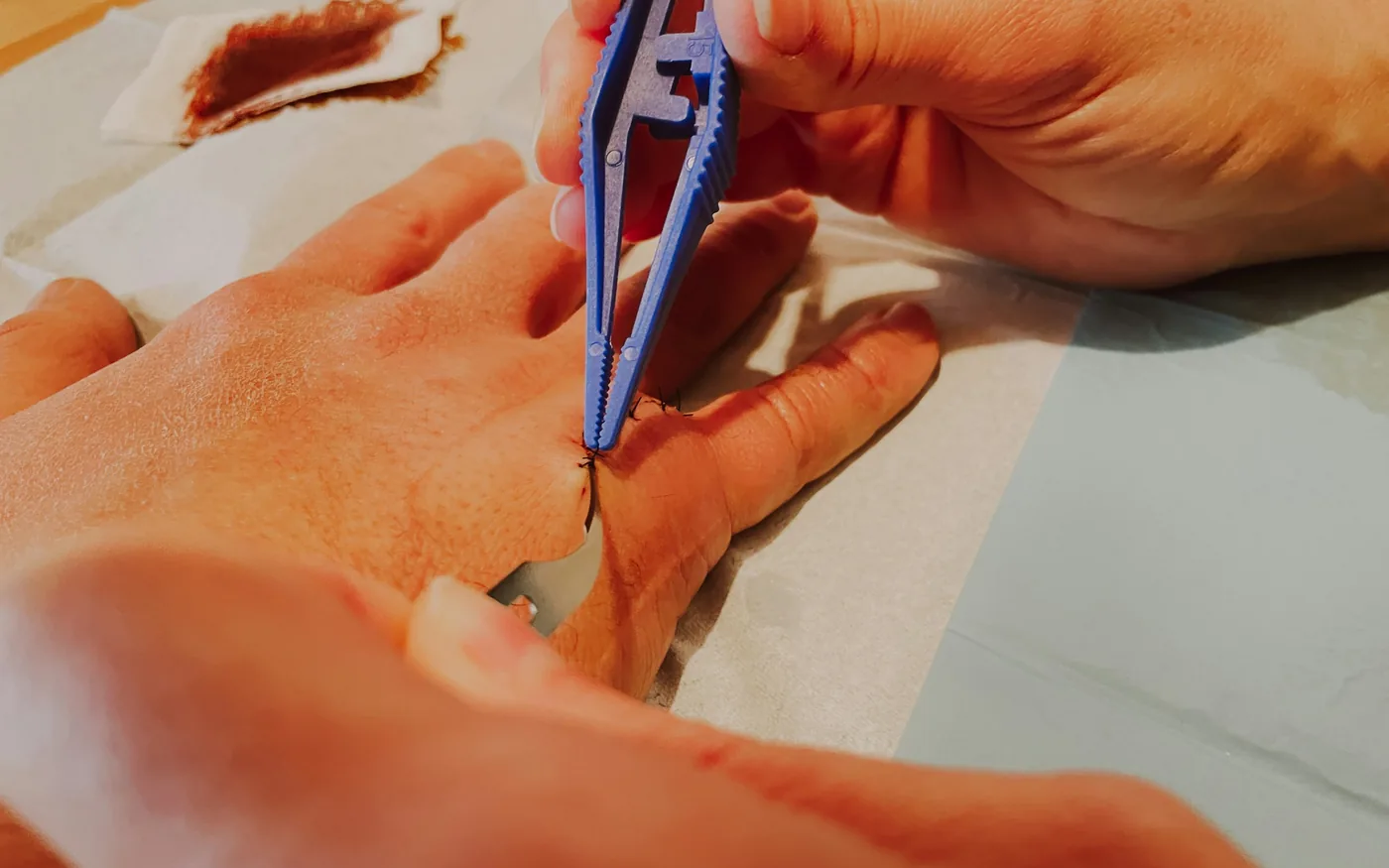
The common, minor things
These are the ones you might actually notice, and none of them signal a problem.
| Effect | How common | How long |
|---|---|---|
| Small bruise at a needle site | The commonest of all | A few days, like any bruise |
| A pinprick of bleeding on withdrawal | Fairly common | Seconds |
| Soreness at the site | Common | Hours to a day |
| Drowsiness afterwards | Common | A few hours |
| Feeling lightheaded | Uncommon | Minutes, lying down |
| A brief flare in symptoms | A minority | A day or two |
The temporary flare deserves comment, because it is the one that worries people. A day or two of feeling slightly more aware of the problem after a session is reported by a minority and typically settles. What is not normal is a flare that is severe, or one that arrives reliably after every appointment — that is a signal to change the approach, not to grit your teeth through six more.
Bruising is worth a sentence of its own. Fine needles still pass near small blood vessels, and some people mark more easily than others. If you bruise readily in general, expect to bruise occasionally here, and say so beforehand.
The rare, serious ones
Naming these is not scaremongering. It is the reason licensure exists, and the reason the question “who is doing this?” matters more than any other question on this page.
- Pneumothorax — a punctured lung, from needling too deeply over the chest or upper back. Rare, and specifically what anatomical training exists to prevent.
- Infection — very rare with single-use sterile needles, which is precisely why reuse is not a thing that happens.
- A retained or broken needle — rare, and why needles are counted in and counted out.
- Fainting — uncommon, more likely at a first session or on an empty stomach, and the reason you are treated lying down.
Acupuncture needles in the United States are regulated by the Food and Drug Administration as Class II medical devices, with sterility and single use part of that standard.
What to say before your first session
None of the following rules treatment out. All of them change how it is done, which is why they are asked.
| Tell us if you | What changes |
|---|---|
| Take blood thinners | Fewer needles, gentler technique, longer pressure after |
| Have a bleeding disorder | The same, discussed case by case |
| Are or might be pregnant | Certain points are avoided throughout |
| Have a pacemaker or implant | No electroacupuncture |
| Have lymphoedema | The affected limb is not needled |
| Faint during medical procedures | Eat beforehand; we go slower and check on you more |
What none of this covers
One honest limitation. Everything above concerns treatment performed by a licensed practitioner using single-use needles. Almost all of the serious case reports in the literature involve either reused equipment or someone needling well beyond their training, which is a different risk profile entirely.
So the safety question and the licensing question are not two separate questions. They are the same one, and what a Massachusetts Lic.Ac. actually requires sets out how to check.
One variant deserves a separate mention: semi-permanent ear studs and seeds left in place for days carry a different risk profile from a needle inserted and removed in one session. Acupuncture for weight loss covers that, along with why we do not offer it.
Aftercare, which is genuinely simple
- Drink some water and eat something if you have come on an empty stomach.
- Do not book a maximal workout straight afterwards. A walk is fine.
- Give the day a bit of slack if you know you tend to feel drowsy.
- Leave a bruise alone. It behaves like any other bruise.
- Note what changed, and when. It is far more useful at the next appointment than a general impression.

When to call someone
Rare things are still worth knowing the signs of, so here is the short list rather than a vague instruction to seek help.
Call your doctor for breathlessness or chest pain after treatment; for a needle site that becomes hot, spreading or discharging; for a fever afterwards; or for any symptom that worries you and is not settling.
Call us for anything that felt wrong in the session itself. We would rather hear about it.

Booking in Beverly
Acupuncture is $75 a session and is given by a licensed acupuncturist; every rate is on our rates page.
If this is your first time, what acupuncture actually feels like covers the sensation itself, how acupuncture differs from dry needling covers who is qualified to do what, and choosing a licensed acupuncturist on the North Shore sets out what the licence requires. Otherwise get in touch.
Frequently asked questions
Is acupuncture safe?
When performed by a licensed practitioner using sterile single-use needles, serious adverse events are rare. Minor effects such as a small bruise, brief soreness or drowsiness are common and settle on their own. Rarity is not the same as impossibility, which is why who performs it matters.
Why do I feel tired after acupuncture?
Post-treatment drowsiness is one of the commonest reactions and usually passes within a few hours. It is not a sign anything has gone wrong. If you tend to feel it, avoid booking immediately before something demanding.
Can acupuncture make symptoms worse before better?
A temporary flare in the day or two after a session happens to a minority of people and typically settles. A flare that is severe, or that keeps happening after every session, is worth raising rather than pushing through.
What should I tell my practitioner beforehand?
Blood thinners or a bleeding disorder, pregnancy, a pacemaker or implanted device, lymphoedema, a suppressed immune system, and any history of fainting during medical procedures. None of these necessarily rule out treatment; they change how it is done.
Are the needles reused?
No. Acupuncture needles are single-use, sterile and disposed of after one treatment. In the United States they are regulated as Class II medical devices, and single use is part of that standard.
This article is general information, not medical advice. Acupuncture is intended to work alongside the care of your doctor, not to replace it. Please speak to a clinician about any new, severe or changing symptom.