
Chest pain gets assessed by a doctor. Every time, and first. That is not a disclaimer bolted onto the end of this article; it is the first line of it, because no web page can tell you what is causing pain in your chest.
What follows is for people who have already been through that, been told the heart and lungs are fine, and been given a word like costochondritis without much explanation of what to do next.
Call for help now if
Before anything else, the patterns that mean stop reading and get help.
- Crushing or pressing pain, or a heavy band across the chest.
- Pain spreading to the jaw, neck, back or down an arm.
- Sweating, nausea, or feeling faint alongside chest pain.
- Breathlessness, particularly if it came on suddenly.
- Pain brought on by exertion and eased by stopping.
- Chest pain with fever, or with coughing up blood.
Any of those is an emergency call, not an appointment. The American College of Cardiology publishes patient material on recognising cardiac symptoms.
What it is usually not
Once cardiac and respiratory causes have been excluded, several things can produce pain in the same area, and they are managed differently.
| Also possible | Typical clue | What it needs |
|---|---|---|
| Rib joint irritation at the spine | Pain also felt in the upper back | Hands-on work at the back |
| Muscle strain between the ribs | A recent bout of coughing or heavy lifting | Time and gentle movement |
| Reflux | Burning, worse lying flat or after eating | A conversation with your doctor |
| Shingles, before the rash | Burning in a band on one side | See a doctor promptly |
| Tietze syndrome | Visible swelling over a rib joint | Medical assessment |
| Anxiety | Tightness with breathlessness and racing heart | Real, and treatable |
What costochondritis is
Your ribs do not attach directly to the breastbone. They connect through cartilage, and those junctions are joints like any other. They can become irritated, and when they do the pain appears in the front of the chest.
It is common, it is not dangerous, and it is entirely capable of feeling frightening — which is a large part of why it sends people to emergency departments.
The feature clinicians look for
One sign does most of the work in separating chest wall pain from the things that matter more.
| Feature | Chest wall pain | Less typical of it |
|---|---|---|
| Pressing on the spot | Reproduces the exact pain | No change on pressing |
| Deep breath | Sharper | Unaffected |
| Twisting or reaching | Provokes it | Unaffected |
| Exertion | Not specifically worse | Worse on exertion needs assessment |
| Duration | Hours to days at a time | Minutes, then gone |
| Position | Lying on that side hurts | No positional pattern |

The loop it creates
Worth naming, because almost everybody experiences it and few people mention it.
Chest pain frightens you. Fear directs your attention to your chest. Attention makes ordinary sensations there far more noticeable — a twinge you would never have registered becomes evidence. And noticing more keeps the fear going.
That is not imagination, and it does not mean the pain is not real. It is the same mechanism described in why pain persists after healing, running in a place where the stakes feel higher. Being told clearly that your heart is fine is the intervention that breaks it, which is another reason to get properly assessed rather than wonder.

What helps
Modest measures, and mostly patience — which is a reasonable prescription when the trajectory is downward.
- Simple pain relief, to make normal movement possible. Ask a pharmacist what suits you.
- Keep moving. Guarding the chest and breathing shallowly makes the surrounding muscles ache too.
- Heat over the sore area, which most people find more comfortable than ice here.
- Ease off the aggravator — often heavy pressing at the gym, a new lifting task, or a long bout of coughing.
- Give it time. Weeks, sometimes a couple of months, and the trajectory is downward.

Where hands-on treatment fits
Aimed at the back rather than the front, which surprises people.
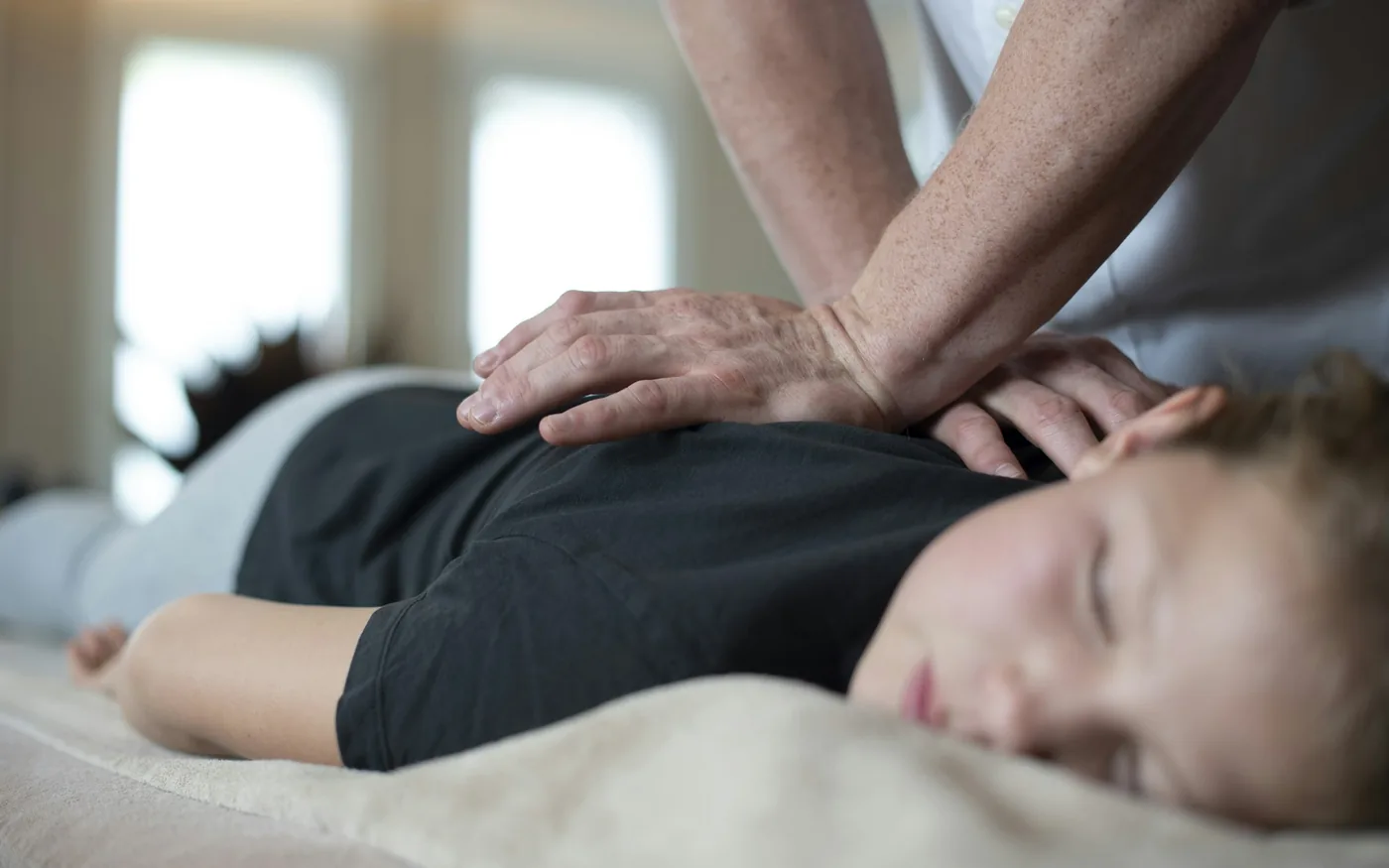
The ribs attach to the spine as well as to the breastbone, and stiffness in the upper back and those rib joints refers pain around the chest wall. Massage and needling of the upper back and the muscles between the ribs can ease that, and some people find it makes a real difference.
What we will not do is work on a chest that has not been medically assessed. If you have not had that conversation yet, have it first — and we will say so on the phone.
When to go back to the doctor
Return for any change in the character of the pain, for pain that starts coming on with exertion, for new breathlessness, for fever, for visible swelling over a rib joint, or for pain that is not improving after a couple of months.
Booking a session in Beverly
Massage is $45 for 30 minutes, $75 for 60 and $105 for 90, and acupuncture is $75 — all on our rates page. Tell us what you have been assessed for when you book.
See also massage for neck and shoulder pain and desk setup, both of which contribute to upper back stiffness. Browse all our articles or get in touch.
Frequently asked questions
Can I diagnose chest pain myself?
No, and please do not try. New, unexplained or changing chest pain needs medical assessment first, every time. Nothing on this page is a substitute for that, and it is written for people who have already been assessed.
What does costochondritis feel like?
Sharp or aching pain in the front of the chest, typically worse on deep breathing, coughing, twisting or lying on that side. The defining feature is that pressing on the sore spot reproduces the pain you have been feeling.
How long does it last?
Usually weeks, sometimes a few months. It is self-limiting in the great majority of cases, though it can be persistent enough to be genuinely wearing while it lasts.
Why does it make me so anxious?
Because chest pain reasonably frightens people, and fear directs attention to the chest, which makes every sensation there more noticeable. That loop is real, common, and worth naming rather than dismissing.
Does hands-on treatment help?
It can, aimed at the upper back and the joints where the ribs meet the spine rather than at the breastbone itself. Stiffness there refers pain around the chest wall, and easing it sometimes helps considerably.
This article is general information, not medical advice. Acupuncture is intended to work alongside the care of your doctor, not to replace it. Please speak to a clinician about any new, severe or changing symptom.