It is one of the most recognisable complaints in running. Pain on the outside of the knee, arriving at almost exactly the same point in every run, sharp enough to stop you, and gone by the time you get home.
It is also the condition where the standard advice is furthest from the current understanding.
Is it actually the IT band?
Outer knee pain has a few possible sources, and they are separated more by pattern than by location.
| Feature | IT band syndrome | Other likely candidates |
|---|---|---|
| Where | Outside of the knee, at or above the joint line | Around the kneecap suggests runner’s knee |
| Onset | At a consistent point in a run | A specific twist points elsewhere |
| Stairs | Down can hurt, up usually not | Both hurting is less typical |
| Swelling | Little or none | A swollen knee needs assessment |
| Locking or giving way | No | Suggests a meniscus problem — see a doctor |
| Rest | Settles quickly, returns on running | Constant pain at rest is a different picture |
What the band actually is
The iliotibial band is a thick sheet of connective tissue running down the outside of the thigh, anchored firmly to bone at the hip and again just below the knee.
The old explanation was that it slides back and forth over the bony bump at the outside of the knee and becomes irritated by the friction. The current understanding is that it does not meaningfully slide at all, because it is tethered along its length.
What appears to happen instead is compression. At around thirty degrees of knee bend — roughly where the knee sits at footstrike — the band presses down on a layer of richly innervated tissue beneath it. Do that a few thousand times and it complains.
Which changes what you should do
If the problem is compression rather than friction, then stretching or rolling the band to lengthen it is aiming at the wrong thing — and the band is not lengthening anyway.
| Common advice | What it assumes | Honest verdict |
|---|---|---|
| Foam roll the band | It can be lengthened | Feels better briefly; changes little |
| Stretch the band | It is a tight muscle | It is not a muscle and does not stretch usefully |
| Rest completely | It is an inflammation that will settle | Tolerance falls; the pain returns on resuming |
| Strengthen the hip | Control decides the load reaching the knee | Supported, and the part people skip |
| Manage the running load | It is a capacity problem | The core of it |
| Increase cadence slightly | Shorter strides reduce peak load | Cheap and effective |
It is a hip problem wearing a knee costume
The same argument as runner’s knee, and for the same reason. If the hip muscles do not control the thigh as you land, the leg collapses slightly inward and the tissue on the outside of the knee takes more compression.
So the programme looks familiar: side-lying leg raises and banded walks for the hip abductors, glute bridges progressing to single leg, and controlled step-downs. Short, daily, boring, and it is what works.
What to change while it settles
- Cut the downhill. Descending holds the knee near the angle that compresses the tissue.
- Get off the camber. Running the same side of a sloped road all week tilts the load consistently.
- Shorten the stride slightly. Around five per cent more cadence, same pace.
- Run to the threshold, not past it. If it starts at mile four, run three and a half.
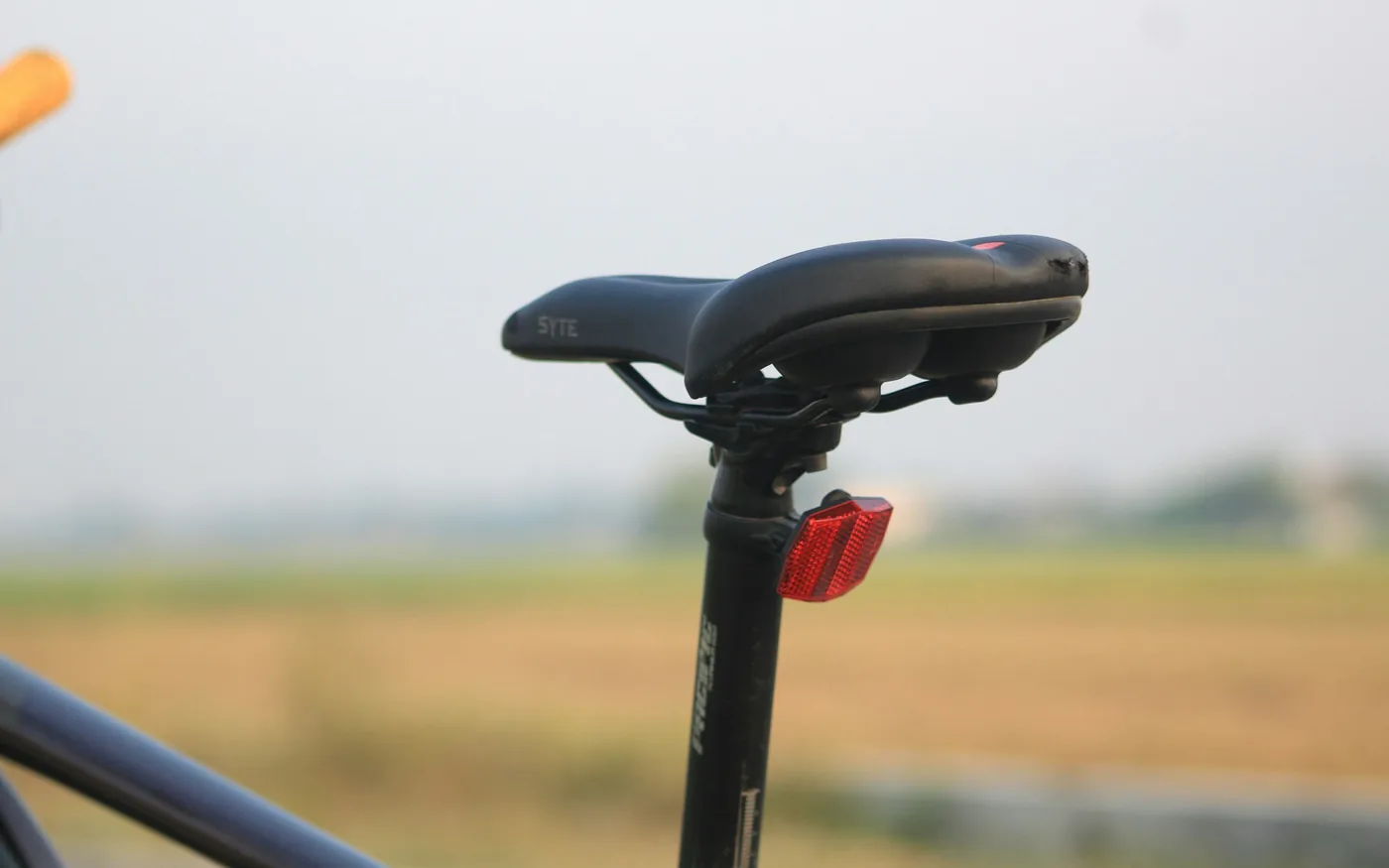
- Cyclists: check the saddle height. A saddle set too high extends the knee repeatedly through the sore range.
Emory Healthcare and other academic sports medicine services publish patient guidance on running injuries — Emory Healthcare is one worth a look for the wider picture.
A note for cyclists
The condition is less discussed in cycling but it turns up regularly, and the mechanism is the same: repeated passes through the compressive knee angle, thousands of times an hour.
Saddle height is the usual culprit, followed by cleat position. Both are worth a proper bike fit rather than guesswork, because a small change repeated ninety times a minute adds up quickly.
Where treatment fits
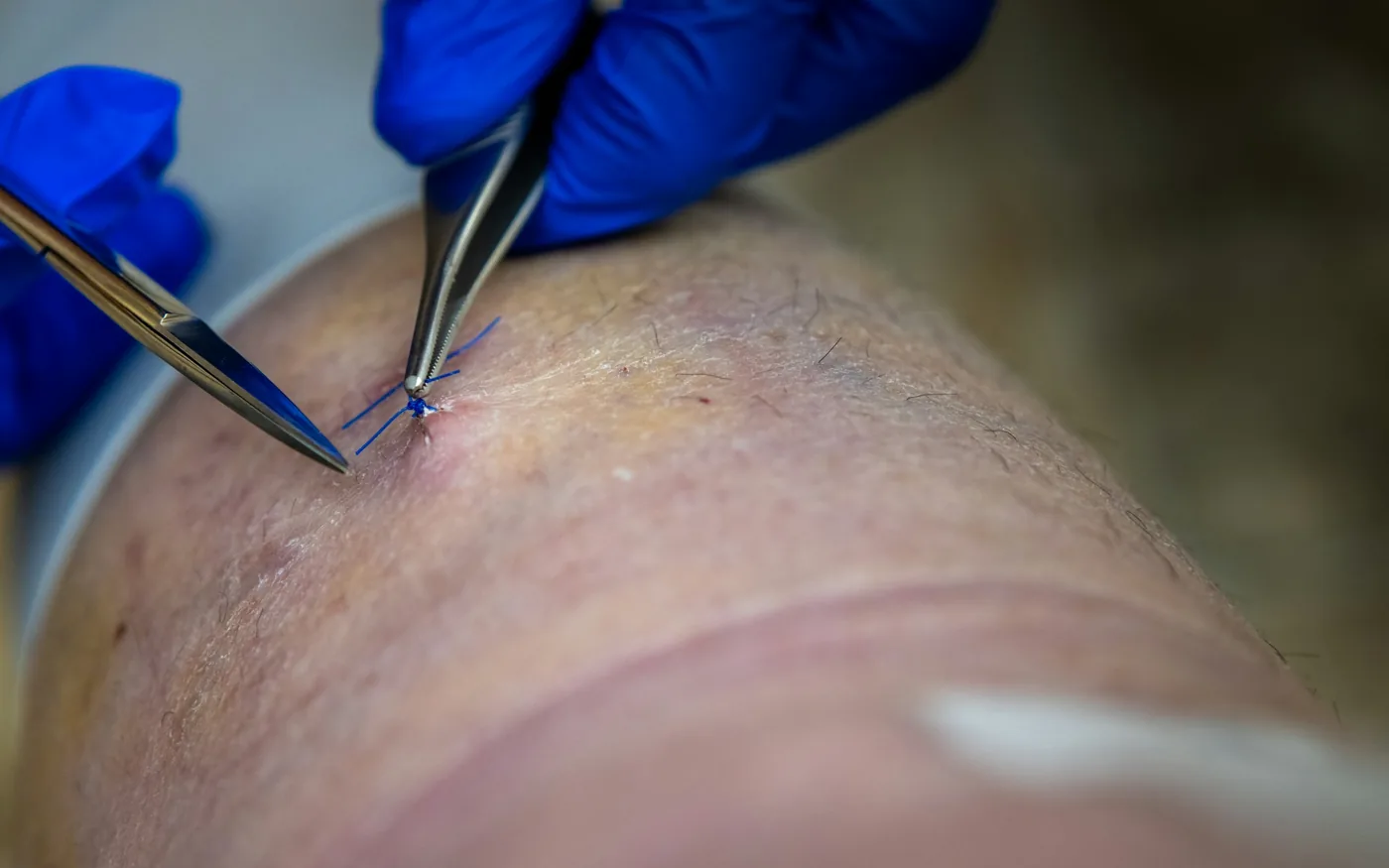
The same honest place as every other loading problem on this site. Needling and hands-on work around the outside of the thigh and the hip can reduce the muscular tension that builds up, and make the strengthening tolerable in the early weeks.
It does not change how the leg lands. The strengthening does.
When to see a doctor
Seek assessment for a knee that locks, gives way or swells; for pain following a specific twist or impact; for a knee that is hot and red; or for outer knee pain that has not improved after twelve weeks of managed load and consistent strengthening.
Booking a session in Beverly
Acupuncture is $75 a session and massage is $45 for 30 minutes, $75 for 60 and $105 for 90 — all on our rates page.
See also runner’s knee, shin splints, Achilles tendinopathy and recovery work for active people. Browse all our articles or get in touch.
Frequently asked questions
Where does IT band syndrome hurt?
On the outside of the knee, roughly at the level of the joint line or just above it. That location is the main thing separating it from patellofemoral pain, which is felt around or behind the kneecap.
Why does the pain arrive at the same point every run?
Because it is a load-accumulation problem rather than a single injury. The tissue tolerates a certain amount of repeated compression and then becomes symptomatic, which produces a remarkably consistent distance or time. People often report it to the mile.
Does foam rolling the IT band help?
It may feel better briefly, but it is not lengthening anything. The iliotibial band is an extremely strong sheet of connective tissue anchored to bone at both ends. Any relief is more likely a nervous system effect than a change in the tissue.
What actually fixes it?
Managing the running load so it stays below the point that provokes it, plus strengthening the hip muscles that control how the leg lands. A modest increase in cadence helps too. It is close to the same programme as runner’s knee.
How long does it take?
Typically six to twelve weeks to get back to previous distances, assuming the running volume is managed rather than pushed through. Pushing through is what turns six weeks into six months.
This article is general information, not medical advice. Acupuncture is intended to work alongside the care of your doctor, not to replace it. Please speak to a clinician about any new, severe or changing symptom.