
Two shoulder problems account for most of what walks through the door, they are confused constantly, and they want opposite handling. Getting the distinction right matters more than the treatment you then choose.

Telling them apart
One simple question separates them most of the time: can someone else move your shoulder through its range?
| Rotator cuff / subacromial pain | Frozen shoulder | |
|---|---|---|
| Passive range | Largely preserved — painful but movable | Genuinely lost, in every direction |
| Typical pattern | Painful arc lifting out to the side | Cannot reach behind the back or overhead at all |
| Onset | Often after overhead work or a change in training | Often no trigger at all |
| Course | Weeks to months with rehabilitation | One to three years through three phases |
| First-line treatment | Progressive cuff and scapular strengthening | Pain relief first, range work later |
| Wrong move | Resting it completely | Aggressive stretching while it is still painful |
What the evidence supports
Exercise, clearly and consistently. Systematic reviews find exercise produces statistically and clinically meaningful reductions in pain and improvements in function for rotator-cuff-related shoulder pain.
Two details are worth knowing. Scapular stabilising work — training the muscles that control the shoulder blade rather than only the cuff itself — has moderate support of its own. And supervised programmes were not better than home programmes, which means the deciding factor is whether you do it, not who watches.
Manual therapy augments exercise rather than replacing it. Physiopedia’s clinician-facing summary of rotator cuff tendinopathy sets out the rehabilitation approach in more detail.

What a scan does and does not tell you
Imaging is less decisive here than people expect, and it is worth knowing before a report unsettles you.
Rotator cuff tears are common in people with no shoulder pain at all, and become more common with age. A scan reporting a partial tear in a fifty-year-old shoulder may be describing something that has been there for years and is not what hurts.
That is why the decision to operate rests on function and on how the shoulder responds to rehabilitation, rather than on the report alone.
Where we fit
The same place we fit for every tendon problem on this site: making the loading programme tolerable, and easing the compensating tension that builds around a painful shoulder.
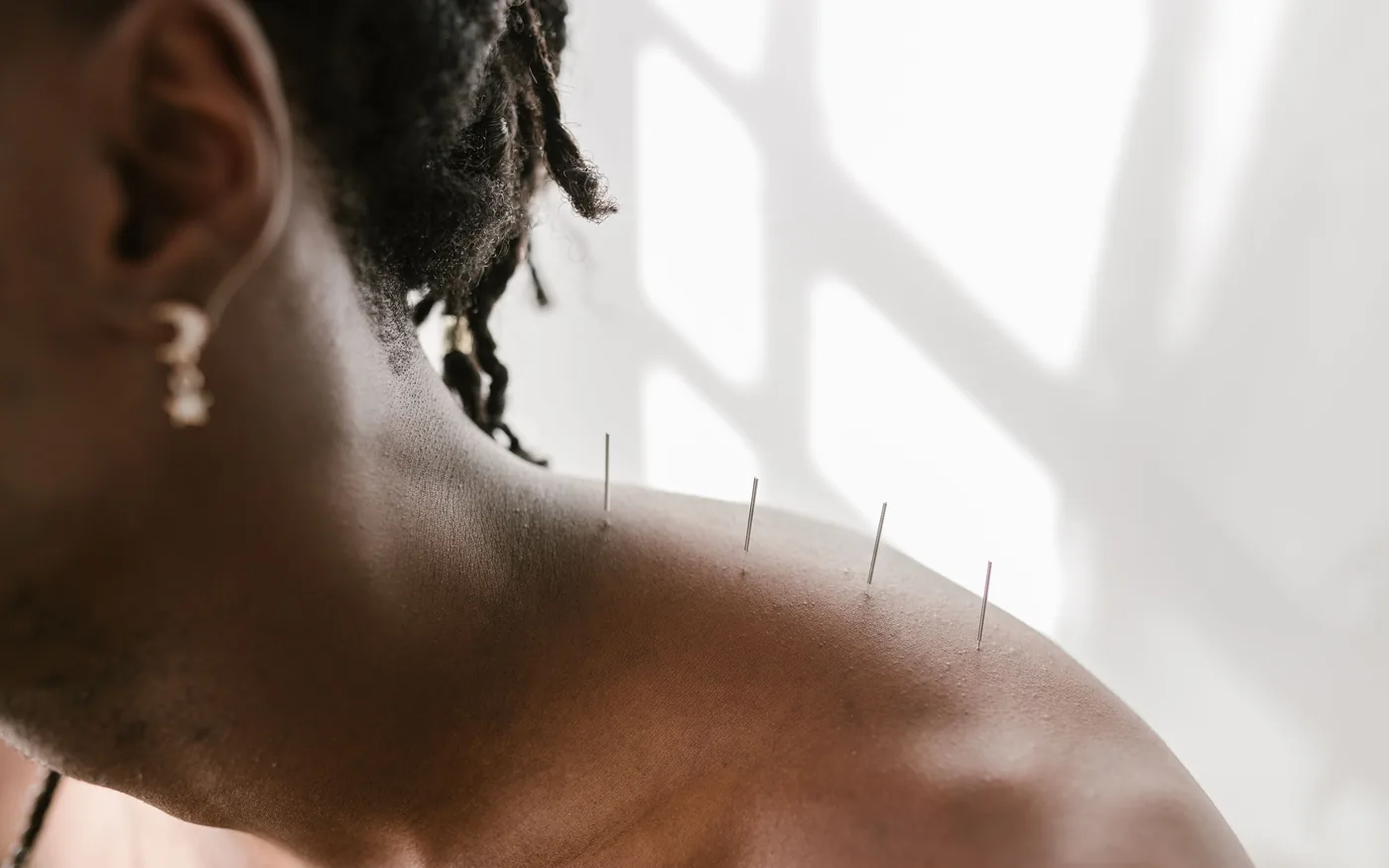
Needling addresses the cuff, the muscles around the shoulder blade, and the neck, which is very often involved by the time someone books. Hands-on work helps the upper back tightness that comes from months of guarding — see massage for neck and shoulder pain.
What we would not tell you is that needles fix the tendon. They do not. The strengthening does, and if you only have the time or money for one of the two, do the exercises.
What the exercises actually are
Not a full programme — that should be set for your shoulder — but the shape of one, so you know whether what you have been given is reasonable.
| Element | What it targets | Rough starting point |
|---|---|---|
| External rotation | The cuff tendons themselves | Elbow at your side, band pulling outwards, slow |
| Internal rotation | The opposing cuff muscles | Same position, pulling inwards |
| Scapular retraction | The muscles controlling the shoulder blade | Rows, kept below shoulder height at first |
| Serratus work | Shoulder blade stability overhead | Wall slides, only into a pain-free range |
| Progressive loading | The tendon’s capacity | Add resistance weekly, not repetitions endlessly |
Working into mild discomfort is usually acceptable if it settles within a day. Sharp pain, or pain that is worse the following morning, means the load was too high rather than that the exercise is wrong.

What to change while it settles
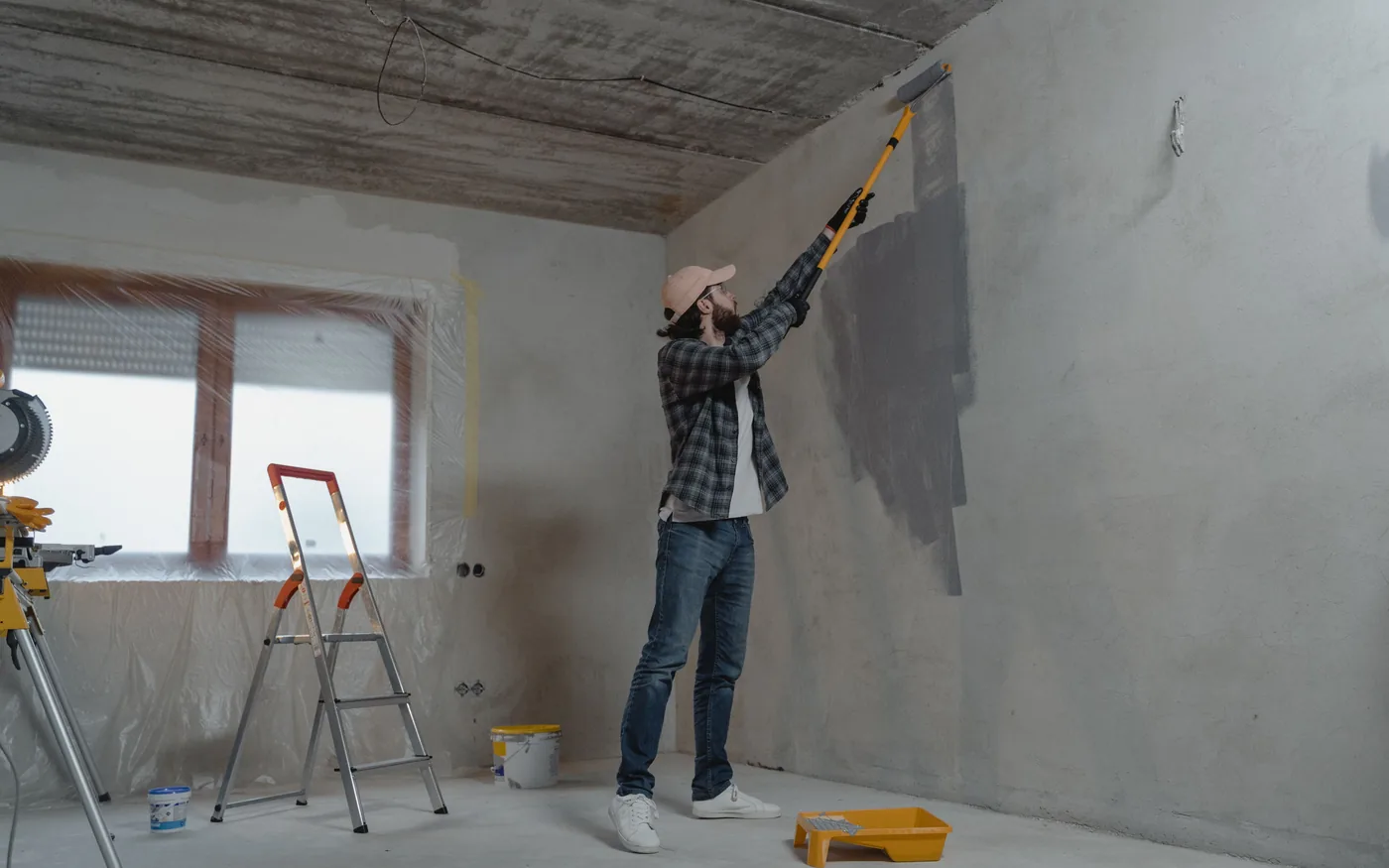
- Reduce sustained overhead work rather than stopping using the arm. Painting a ceiling over a weekend is the classic way people arrive here in the first place.
- Bring the work down. Lower the shelf, raise the platform, move the monitor.
- Sleep with a pillow under the affected arm when on your back, or hug one when on your side.
- Keep moving within comfort. Total rest is how a cuff problem becomes a stiff shoulder.
- Expect six to twelve weeks of consistent work before judging it. Shoulders are slower than most people are told, and stopping at week three is the commonest reason a programme appears not to work.
When to see a doctor
Seek assessment for shoulder pain after a fall, especially if you cannot lift the arm at all; for sudden weakness rather than pain-limited weakness; for a shoulder that looks visibly deformed; for fever with a hot, swollen joint; or for pain that has not improved at all after twelve weeks of appropriate rehabilitation.

Booking a session in Beverly
Acupuncture is $75 a session and massage is $45 for 30 minutes, $75 for 60 and $105 for 90 — all on our rates page.
This is the commonest complaint we see from the sailing towns, and acupuncture for Marblehead covers the practical side of travelling in for a course of appointments.
Browse all our articles, compare with frozen shoulder if you are unsure which you have, or get in touch to book.
Frequently asked questions
How do I know if it is rotator cuff pain or frozen shoulder?
The quickest test is whether someone else can move it. With rotator cuff pain, passive movement is largely preserved — it hurts, but the shoulder can be lifted. With frozen shoulder the range is genuinely lost, and someone else lifting your arm cannot get past the restriction either.
What is a painful arc?
Pain that appears partway through lifting the arm out to the side, roughly between 60 and 120 degrees, and then eases as you go higher. It is characteristic of the cuff tendons being compressed under the bony arch above them.
What actually treats it?
Progressive strengthening of the cuff and the muscles that control the shoulder blade. Reviews consistently find exercise reduces pain and improves function, and that supervised programmes are no better than a well-explained home programme you actually do. Conservative treatment is usually given six to twelve weeks.
Does a tear mean I need surgery?
Not necessarily. Partial and even some full-thickness tears are managed well without surgery, and imaging finds tears in plenty of people with no pain at all. The decision rests on function and response to rehabilitation, not the scan alone.
Where does acupuncture fit?
As an adjunct for pain, so that the strengthening is tolerable. The exercise is what changes the tendon. Anyone offering needling as the treatment for a cuff problem is overselling it.
This article is general information, not medical advice. Acupuncture is intended to work alongside the care of your doctor, not to replace it. Please speak to a clinician about any new, severe or changing symptom.