
Pain around the front of the knee in someone who is otherwise healthy and active is one of the most common complaints in sport, and one of the most consistently mistreated — because people treat the knee.
Recognising it
Patellofemoral pain has a recognisable pattern, and it is worth checking it fits before following any of the advice below.
| Feature | Patellofemoral pain | What it is not |
|---|---|---|
| Where | Around or behind the kneecap | Deep in the joint line, or at the side |
| Stairs | Down worse than up | Locking or giving way |
| Sitting | Aches after a long spell with the knee bent | Constant pain at rest |
| Swelling | Little or none | A visibly swollen, hot joint |
| Who | Often younger and active | See knee osteoarthritis if over 50 with stiffness |
| Imaging | Typically unremarkable | Structural change on a scan |
That fourth row is worth dwelling on. The ache that arrives after a long film or a long drive — the so-called theatre sign — is characteristic enough to be worth mentioning when you describe the problem to anyone.
Why the hip matters
This is the part that surprises people, and it is the best-supported thing on the page.
The kneecap runs in a groove at the end of the thigh bone. If the thigh rotates inward when you land — because the hip muscles are not controlling it — the groove moves relative to the kneecap, and the load concentrates.
A systematic review and meta-analysis of 14 trials and 673 participants found that hip and knee strengthening reduced pain more than knee strengthening alone. That is why a programme built only around quadriceps work often stalls.
It also explains a pattern people notice and cannot account for: the knee hurts, nothing about the knee seems wrong, and every stretch and rub aimed at the knee changes nothing. The knee is where the symptom lands. The control is further up.
None of which means the quadriceps are irrelevant — they matter, and a programme should include them. The point is that they are half the job, and the half that gets skipped is usually the one that changes the outcome.
The Hospital for Special Surgery publishes patient-facing material on anterior knee pain if you want to read further.
What the programme looks like
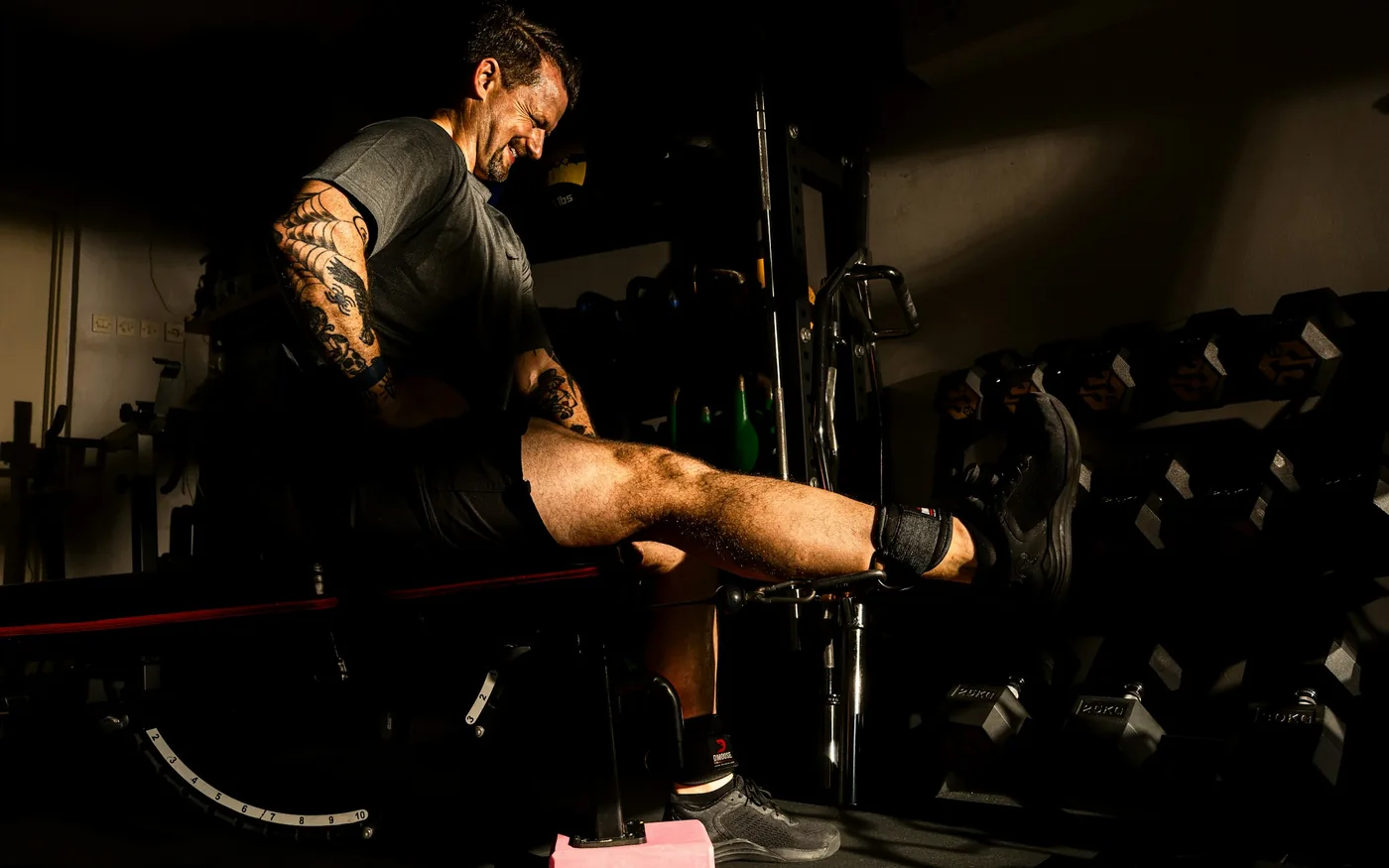
| Element | Why | Rough starting point |
|---|---|---|
| Hip abduction | Stops the thigh collapsing inward | Side-lying leg raises, then banded walks |
| Glute bridges | Hip extension strength | Two-leg, then single-leg |
| Step-downs | Control of the knee under load | Low step, slow, watching the knee stay over the foot |
| Quadriceps work | Capacity at the joint itself | Within a pain-free range of bend |
| Cadence | Shorter, quicker stride cuts patellofemoral load | Around 5% faster than your habit |
What recovery actually looks like
Two things surprise people about the timeline. The first is that it is slower than they expect — strength takes weeks to change, not days. The second is that the pain often lags behind the improvement, so the knee is already better before it feels better.
Twelve weeks of consistent work is the usual quoted figure for a well-established case. Most people notice something within four to six, and the useful measure is not how the knee feels on any given day but what you can now do without provoking it.
The commonest reason a programme fails is not that the exercises were wrong. It is that they were done for three weeks and then quietly abandoned once the pain eased, at which point the capacity that was being built stops being built.
What to change while it settles
- Cut the downhill. Descending loads the kneecap hardest, and it is the easiest thing to remove.
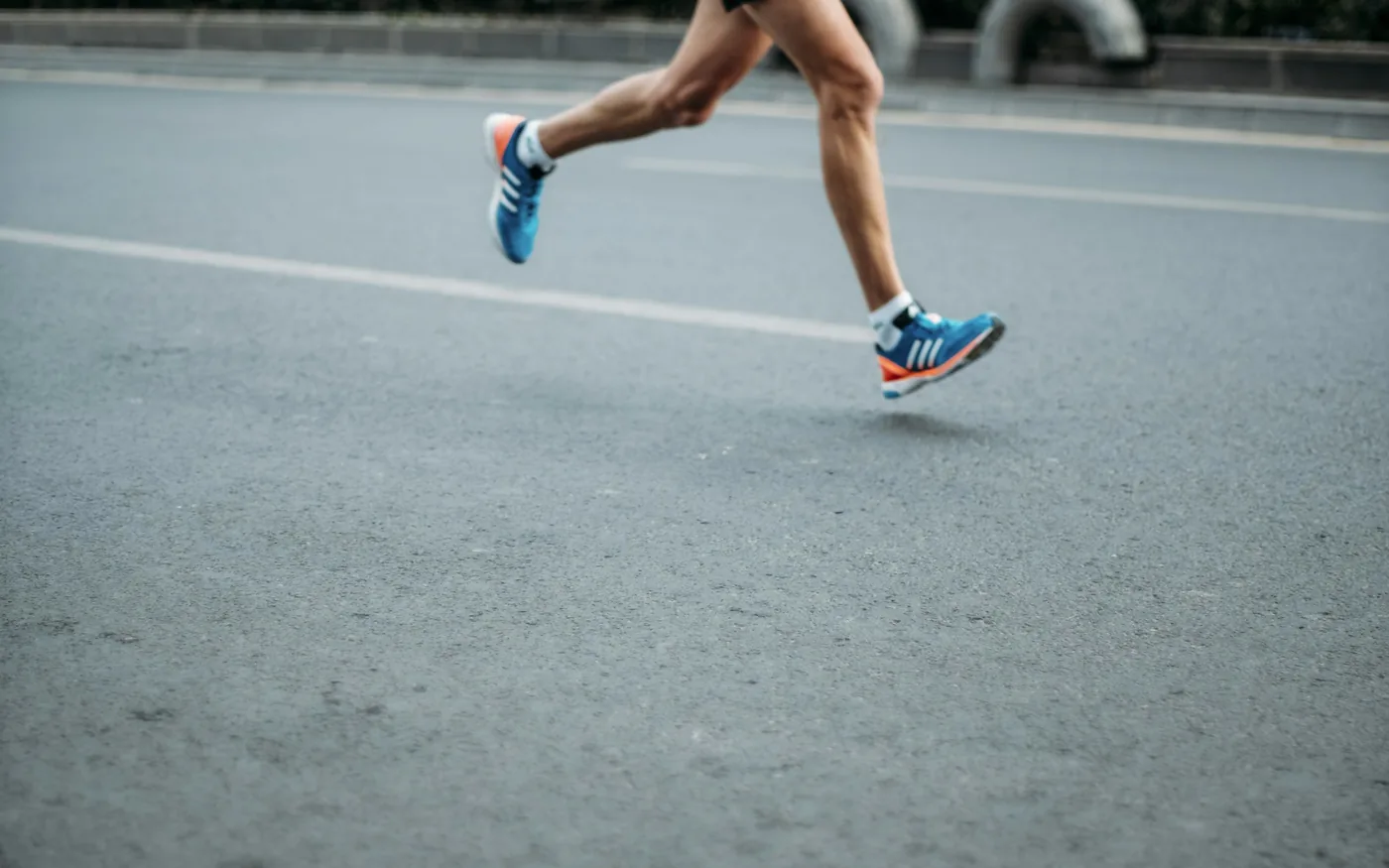
- Shorten the stride slightly. A modest increase in cadence reduces load per step without running slower.
- Break up long sitting. Straighten the leg periodically rather than holding it bent for hours.
- Reduce deep knee bend in the gym for a few weeks — deep squats and leg extensions especially.
- Judge it by the next morning, not by how it feels during the run.
Where treatment fits
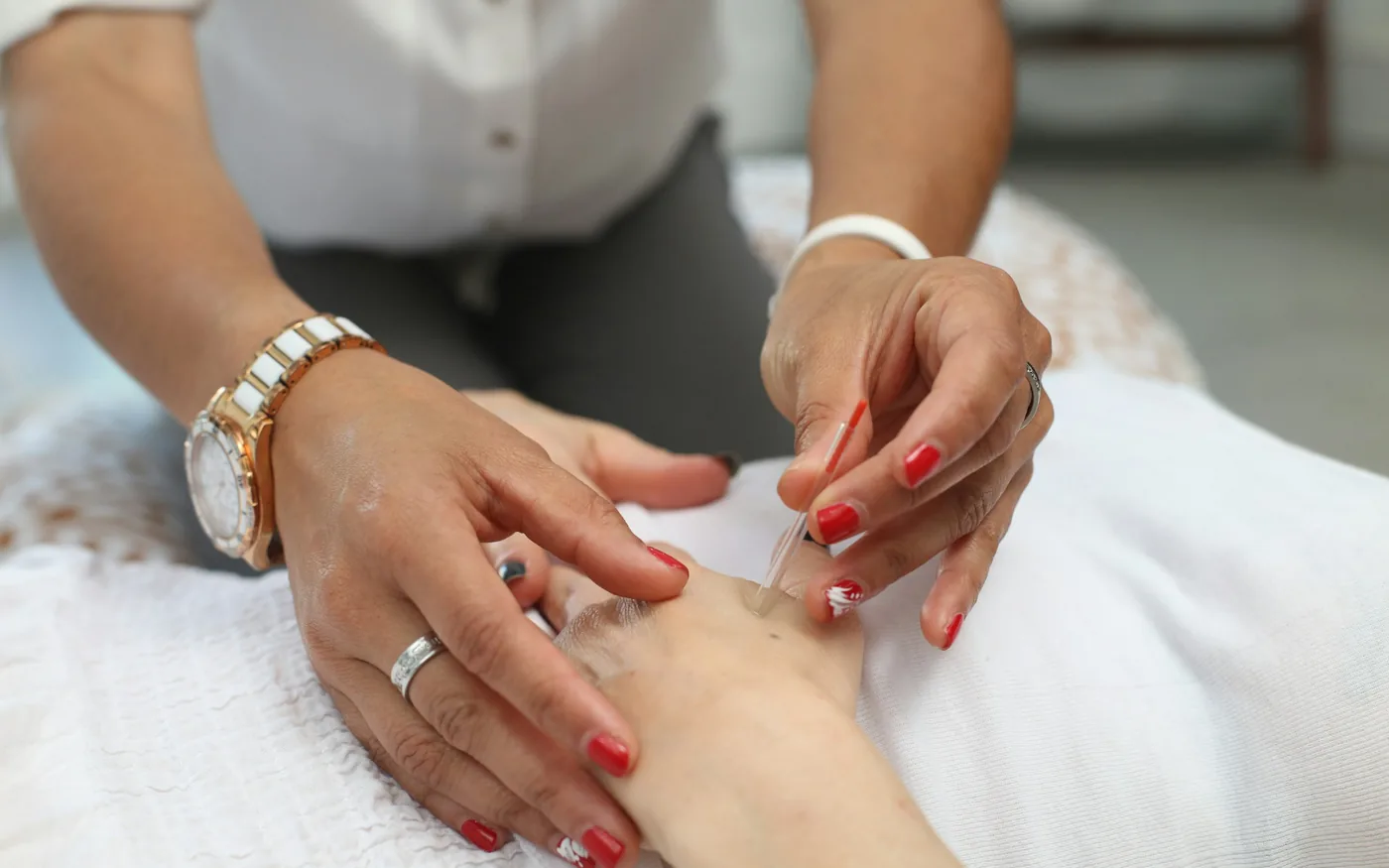
The same honest place as every other loading problem on this site. Needling around the quadriceps, the outside of the thigh and the hip can reduce the muscular tension that builds around a painful knee, and make the exercises tolerable.
It does not change how the kneecap tracks. The strengthening does. If a practice tells you otherwise, they are selling.
Where that is genuinely useful is early on, when the knee is irritable enough that step-downs are unpleasant and the programme keeps getting postponed. Making the first fortnight tolerable is a real contribution, provided nobody pretends it is the cure.
Massage of the quadriceps and the outside of the thigh does much the same job, and for some people is the more comfortable choice — our comparison of acupuncture and massage works through how to decide between them.
When to see a doctor
Seek assessment for a knee that locks, gives way or swells; for pain after a specific twisting injury; for a knee that is hot and red; or for pain that has not improved after twelve weeks of consistent strengthening.
Booking a session in Beverly
Acupuncture is $75 a session and massage is $45 for 30 minutes, $75 for 60 and $105 for 90 — all on our rates page.
If the pain is on the outside of the knee rather than around the kneecap, IT band syndrome is the likelier explanation, and the programme differs. If you can cover the sore spot with one fingertip at the bottom of the kneecap, that is jumper’s knee instead.
See also shin splints, Achilles tendinopathy and recovery work for active people, browse all our articles, or get in touch.
Frequently asked questions
Is this the same as knee arthritis?
No, and the distinction matters. Patellofemoral pain is felt around or behind the kneecap, usually in active people, with no structural damage on imaging. Osteoarthritis is degenerative change in the joint itself, more common with age, and is covered separately.
Why would my hip cause knee pain?
Weak hip abductors let the thigh rotate inward when you land or squat, which changes how the kneecap tracks in its groove. A meta-analysis of 14 trials found hip and knee strengthening reduced pain more than knee strengthening alone.
What is the “theatre sign”?
Aching after sitting for a long time with the knee bent, so it is stiff and sore when you stand. It is characteristic enough to be worth mentioning when you describe the problem.
Do I have to stop running?
Usually not entirely. Reduce volume, avoid downhill and deep-knee loading for a few weeks, and keep running at a level that does not provoke pain during, after, or the next morning.
Where does acupuncture come in?
For pain relief while you do the strengthening, which is what actually resolves it. Needling around the quadriceps and hip can reduce the muscular tension that builds up, but the exercise is the treatment.
This article is general information, not medical advice. Acupuncture is intended to work alongside the care of your doctor, not to replace it. Please speak to a clinician about any new, severe or changing symptom.