
Some headaches are produced by the neck. Many more are simply accompanied by neck pain, and the two get conflated constantly — including by practices that would rather sell you neck treatment either way.
So this article spends its first half on telling them apart.

What a cervicogenic headache looks like
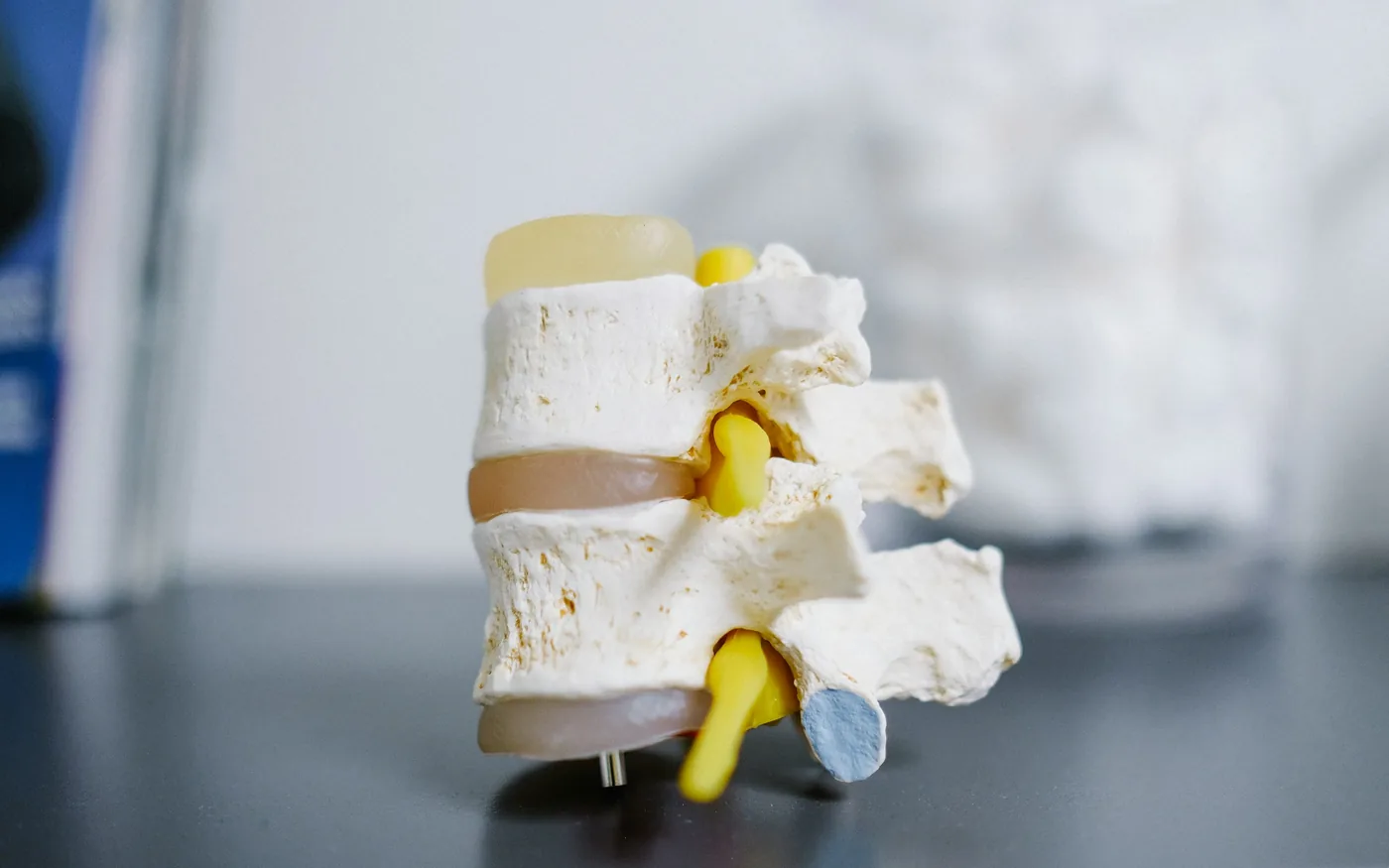
The upper three segments of the neck share nerve pathways with the structures that carry sensation from the head. Irritation up there can be felt in the head rather than the neck, which is why the pain arrives somewhere the problem is not.
- Side-locked. Always the same side, attack after attack. This is the single most useful feature.
- Starts at the back. Base of the skull or upper neck, spreading forward to the temple or behind the eye.
- Provoked by the neck. Turning, looking up, or holding one position for a long time brings it on.
- Restricted movement. The neck does not turn as far one way.
- Moderate and steady rather than throbbing, and usually without nausea or aura.
Migraine, tension-type, or cervicogenic?
| Cervicogenic | Migraine | Tension-type | |
|---|---|---|---|
| Side | Same side every time | Can switch sides | Both sides |
| Starts | Back of head and neck | Anywhere, often one temple | Band around the head |
| Quality | Steady, moderate | Throbbing, often severe | Pressing, mild to moderate |
| Nausea, light | Unusual | Common | Unusual |
| Neck movement | Provokes it | Makes little difference | Little difference |
| Neck range | Reduced | Usually normal | Usually normal |
| Read more | This page | Migraine and headaches | Neck and shoulder tension |
The trap: neck pain in migraine
This deserves its own section because it leads a great many people to the wrong treatment.
Neck pain is reported in the large majority of migraine attacks, and it frequently arrives before the headache. That makes it feel causal. It is usually part of the attack rather than the trigger for it.
The practical consequence: if your headaches switch sides, throb and come with nausea or light sensitivity, treating your neck is unlikely to be the answer even though your neck genuinely hurts. The American Headache Society publishes on headache classification if you want the detail.

What the evidence supports
This is one of the better cases for hands-on treatment on this site, which is worth saying given how often we conclude the opposite.
For genuine cervicogenic headache, the combination that performs best is manual therapy of the upper neck plus specific exercise — not either alone.
The exercise component is more particular than general neck stretching. Deep neck flexor training — a gentle, precise chin nod done lying down, without the big superficial muscles taking over — is the piece with the supporting evidence, and it is easy to do badly.
The third element is removing the sustained positions that provoke it, which for most people means the desk. Setting up a workstation so it stops provoking your neck covers that in full.

What a course looks like
Because this is a headache with a physical source, it is one of the cases where you can set a genuinely concrete review point.
| Element | What it involves | Rough timeline |
|---|---|---|
| Manual therapy | Hands-on work at the upper neck | Weekly at first, reviewed at six |
| Deep neck flexor work | A precise chin nod, done lying down | Daily, small doses |
| Workstation change | Screen height, breaks, position variation | Once, properly |
| Headache diary | Days per month, side, and what preceded it | From day one |
| Review | Has headache frequency actually dropped? | At six sessions |
The painkiller trap
Worth naming because it is common and quietly makes everything worse.
Taking acute painkillers on more days than not can produce medication overuse headache, in which the treatment becomes a cause. It typically presents as the original headache getting gradually more frequent, which is exactly the thing that makes people take more.
If you are reaching for something most days, that is a conversation with your doctor rather than a reason to book here first.

Where acupuncture and massage fit
Aimed at the neck, not at the headache. That distinction is more than semantic: it means the target is the joint stiffness and muscular guarding in the upper neck, and the headache is expected to follow if the neck was genuinely the source.
Which is also the test. If six sessions aimed at the neck change nothing about the headaches, the neck was probably not the source — and how many sessions people usually need explains why we would rather say that than book a seventh.
When to see a doctor
Seek urgent assessment for a headache that comes on like a thunderclap; for headache with fever, rash or a stiff neck; for a first significant headache after fifty; for headache with weakness, visual loss or confusion; for headache that is consistently worse lying down or on coughing; or for headache after a head injury.
Booking a session in Beverly
Acupuncture is $75 a session and massage is $45 for 30 minutes, $75 for 60 and $105 for 90 — all on our rates page.
See also acupuncture for migraines, a pinched nerve in the neck if symptoms run into the arm, and TMJ and jaw pain, which refers into the head from a different structure. Otherwise get in touch.
Frequently asked questions
How is cervicogenic headache different from migraine?
Cervicogenic headache is typically side-locked — always the same side — starts at the back of the head and spreads forward, is provoked by neck movement or sustained positions, and comes with reduced neck movement. Migraine can switch sides, throbs, and brings nausea and light sensitivity.
My neck hurts during migraines. Does that make them cervicogenic?
No, and this is the commonest misunderstanding. Neck pain occurs in a large majority of migraine attacks, often before the headache itself. Neck pain during a headache is not evidence that the neck is causing it.
What actually helps?
The best supported approach combines manual therapy of the upper neck with specific exercise, particularly deep neck flexor training. Addressing sustained positions matters too, which usually means the workstation.
Can painkillers make headaches worse?
Yes. Taking acute painkillers on more days than not can produce medication overuse headache, which then looks like the original problem getting worse. If you are reaching for something most days, that is worth raising with your doctor.
When should I worry about a headache?
A headache that comes on like a thunderclap, a new headache after fifty, headache with fever and a stiff neck, headache with neurological changes, or headache that is worse lying down or on coughing all need prompt medical assessment.
This article is general information, not medical advice. Acupuncture is intended to work alongside the care of your doctor, not to replace it. Please speak to a clinician about any new, severe or changing symptom.