We have written about tennis elbow already, and described its evidence base as the thinnest on this site. Its counterpart on the inside of the elbow deserves the same honesty and gets it here.
It is less common, more often misdiagnosed, and rarely caused by golf.
Which bump hurts?
Hold your arm out with the palm facing up. The bony bump on the inside of the elbow — the side towards your body — is the one that hurts in golfer’s elbow. The outside bump is tennis elbow.
| Golfer’s elbow | Tennis elbow | |
|---|---|---|
| Where | Inside bump of the elbow | Outside bump |
| Tendons involved | Wrist flexors and pronators | Wrist extensors |
| Provoked by | Gripping, turning the palm down, pulling | Lifting with the palm down, gripping |
| Typical cause | Manual work, heavy pulling, racquet or club sports | Repetitive gripping, often at a desk |
| How common | Less common than its counterpart | The commoner of the two |
| Read more | This page | Acupuncture for tennis elbow |
The differential that matters
This is the section worth reading carefully, because a meaningful minority of people with inner elbow pain do not have a tendon problem at all.
The ulnar nerve passes behind that same inner bump — it is what you hit when you catch your funny bone. Irritation there produces a different picture, and it needs different handling.
- Tingling or numbness in the ring and little fingers points at the nerve, not the tendon.
- Worse with the elbow bent for long stretches — on the phone, or sleeping with the arm curled.
- Waking you at night, which is unusual for a tendon.
- Weakness in the grip or difficulty with fine finger movements.
If that describes you, see a doctor rather than starting a loading programme. The same reasoning as carpal tunnel syndrome and a pinched nerve in the neck: nerve problems want assessing, not loading.
Where it usually comes from
Something changed, and the tendon was asked for more than it had.
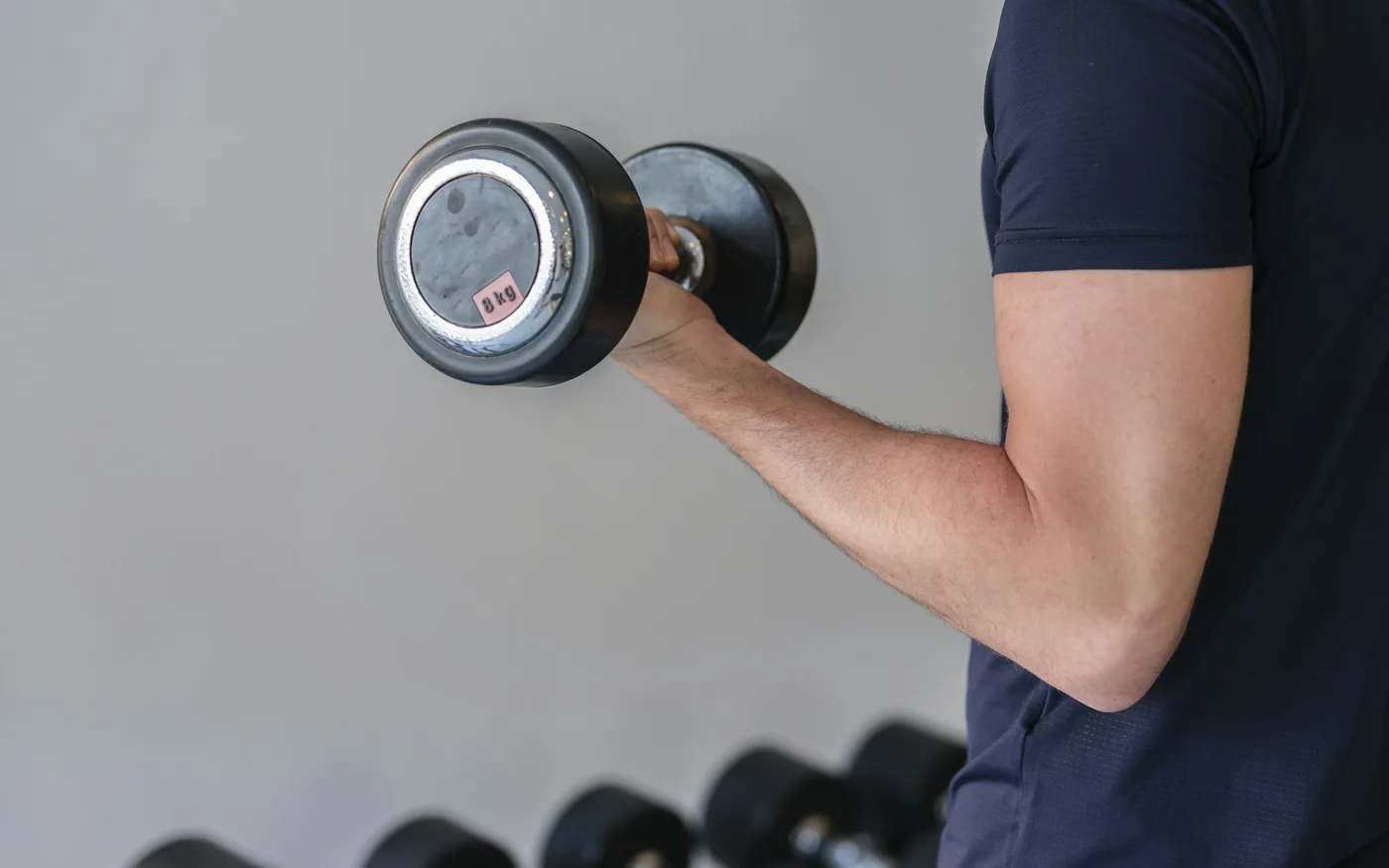
- Heavy pulling in the gym. Rows, deadlifts and chin-ups, particularly after a jump in volume. Now the commonest presentation we see.
- Manual work. Anything with sustained gripping and a rotating wrist — screwdrivers, wrenches, secateurs.
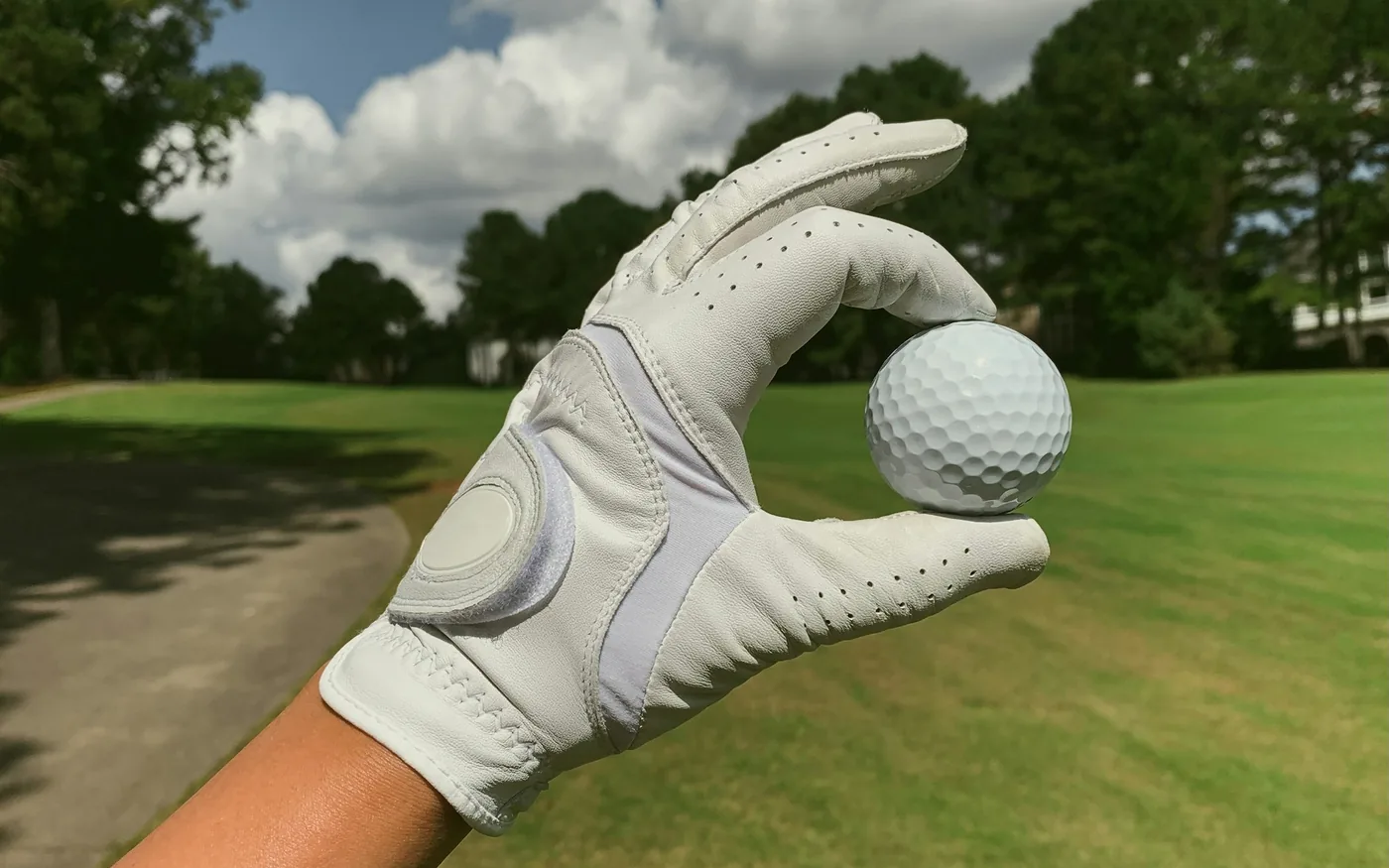
- Racquet and club sports, especially after a change of grip size or technique.
- A new task at home. A weekend of tiling or painting, then three months of pain.
What the loading looks like
The instinct is to rest it until it stops hurting and then return to what you were doing. That reliably produces a tendon with less capacity than it had when the trouble started, and the pain comes back within a fortnight of resuming.
Loading is the treatment. What follows is the usual shape of it, though the specific progressions are worth getting from someone who can watch you do them.
Tendons are built by load, so the programme is loading rather than rest — the same principle as Achilles tendinopathy at the other end of the body.
| Stage | What it involves | Rough timing |
|---|---|---|
| Settle it | Reduce the provoking activity, not stop everything | First week or two |
| Isometrics | Holding a light weight still, no movement | Often tolerable when movement is not |
| Slow, heavy loading | Wrist curls and grip work, slow and controlled | Weeks two to twelve |
| Change the trigger | Grip size, technique, tool choice | Alongside everything |
| Return to load | Back to the activity, added gradually | When capacity allows, not when pain stops |
Cedars-Sinai publishes patient information on elbow tendon problems if you want a second description of the same picture.
Changing what caused it
This is the half of the job that decides whether you are back here in a year.
The loading rebuilds capacity. Changing the trigger is what stops it coming back, and it is the half people skip.
A thicker grip on a club or a tool spreads the load; a lighter or better-balanced tool reduces it; and for gym work, adjusting the pulling volume or using straps to take the grip out of a heavy set both help. Straps are not cheating if the alternative is not lifting at all.
Where acupuncture fits
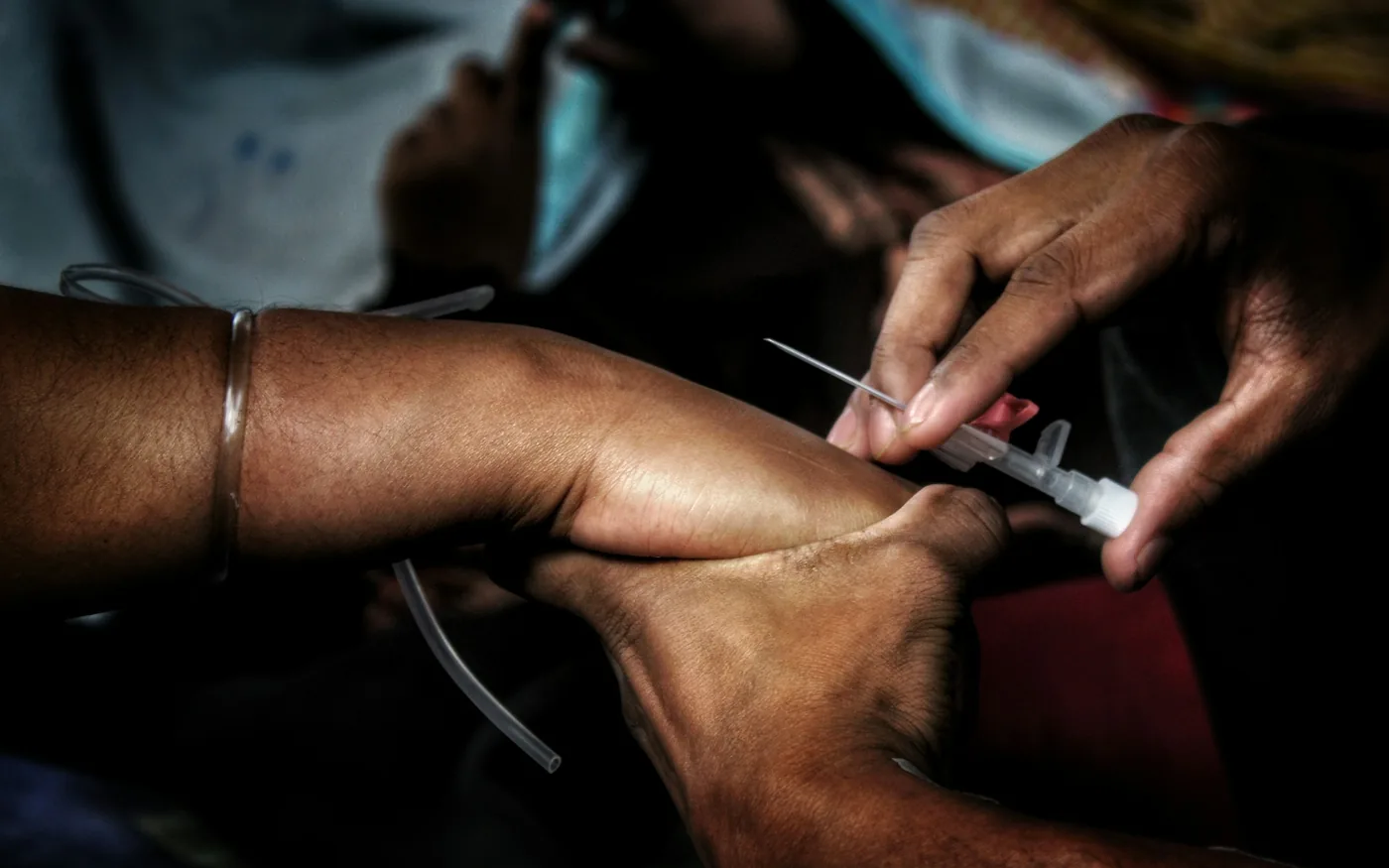
Honestly, thinly. The trial evidence for acupuncture in medial elbow tendinopathy specifically is sparse, and we are not going to lean on the tennis elbow literature as though it transfers cleanly.
What it can do is reduce pain and forearm tightness enough to make the loading programme tolerable. That is a supporting role, and it is the one we would describe on the phone.
Six to twelve weeks before judging it is a fair benchmark, and longer if the trigger has not changed.
When to see a doctor
See a doctor for numbness or tingling in the hand, for weakness gripping, for pain after a fall onto the arm, for a hot or swollen elbow with fever, or for pain that has not improved after three months of consistent loading.
Booking a session in Beverly
Acupuncture is $75 a session and massage is $45 for 30 minutes, $75 for 60 and $105 for 90 — all on our rates page.
See also tennis elbow, de Quervain’s tenosynovitis and rotator cuff shoulder pain. Browse all our articles or get in touch.
Frequently asked questions
Where exactly is golfer’s elbow?
On the bony bump on the inside of the elbow, the side nearest your body when your arm hangs with the palm forward. Tennis elbow is the bump on the outside. That single distinction sorts most people out.
Do I have to play golf to get it?
No, and most people who have it do not. Gripping, pulling and turning the palm downward are the provoking movements, so manual trades, gym work involving heavy pulling, and racquet sports all produce it at least as often as golf.
How do I know it is not a trapped nerve?
Tingling or numbness in the ring and little fingers, worse when the elbow is bent for a while or at night, points at the ulnar nerve rather than the tendon. Tendon pain is provoked by gripping and stays in the elbow and forearm.
Should I rest it?
Not completely. Tendons respond to graded load and lose capacity without it. Reduce the provoking activity to a tolerable level and start loading it deliberately, rather than avoiding it and waiting.
How long does it take?
Months rather than weeks, which is the honest answer for any tendon problem. Most of the improvement comes from consistency with the loading, not from what is done in a treatment room.
This article is general information, not medical advice. Acupuncture is intended to work alongside the care of your doctor, not to replace it. Please speak to a clinician about any new, severe or changing symptom.