
Deep pain right at the sit bone. Worse after a long drive, worse through a film, worse running uphill, and stubbornly present for months. Most people arrive having been told it is sciatica, or a hamstring strain that never settled.
It is usually neither, and the instinctive response makes it worse.

Sitting is the giveaway
Most complaints have a movement that provokes them. This one has a position, which is unusual enough to be diagnostically useful.
More than any other feature, this is what identifies it. The hamstring tendons attach to the sit bone, and sitting presses the tendon directly against that bone.
So people describe it in terms of chairs: hard seats are worse than soft, driving is worse than walking, cycling is worse than running on the flat, and the pain builds the longer they stay put.

Or is it sciatica?
This is the question worth settling before starting anything, because the two want opposite handling and a great many people spend a season on the wrong one.
This confusion is the reason so many people spend months on the wrong programme. The sciatic nerve runs right past the tendon, so the geography invites the mistake.
| Feature | High hamstring tendinopathy | Sciatica |
|---|---|---|
| Where | At the sit bone, localised | Down the back of the leg |
| Travels | Not far | Often past the knee |
| Tingling or numbness | No | Common |
| Sitting | Reliably worse | Often worse, but so is bending |
| Loading the hamstring | Provokes it | Not specifically |
| Read more | This page | Acupuncture for sciatica |
Who gets it
Two groups, arriving from opposite directions.
- Runners, particularly after adding hills, speed work or a sudden increase in distance. The tendon is loaded hardest at the point the leg reaches forward.
- People who sit a great deal, especially on hard seats or through long drives, where the compression alone is enough to keep it irritable.
- Cyclists, who manage both at once — hip flexion held for hours with the tendon under load.
- Anyone returning to sport after a hamstring injury that was never rehabilitated properly.
The two groups need slightly different emphasis. Runners usually need the load managed first; sitters usually need the compression removed first.
The counterintuitive part
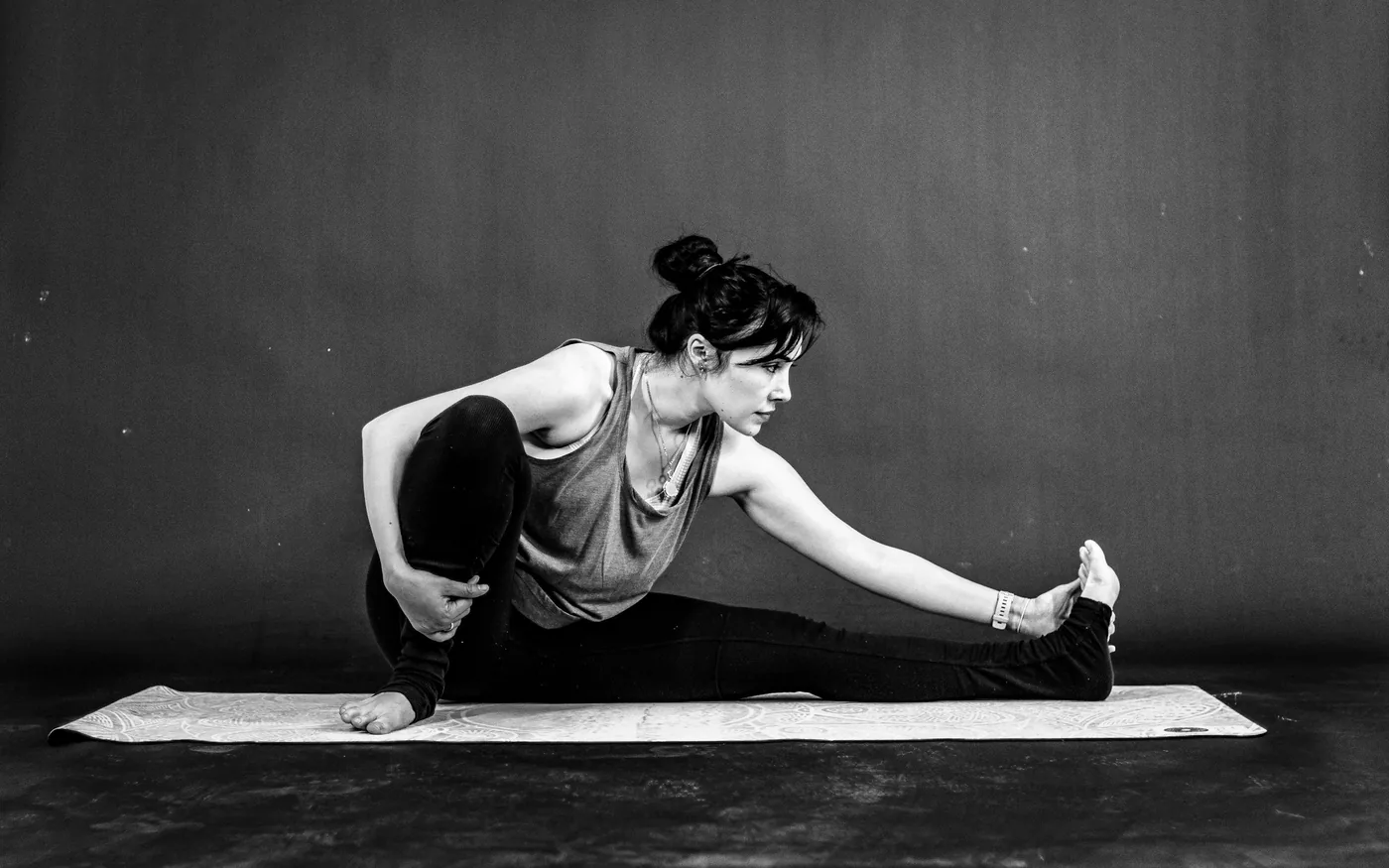
Everyone stretches it. It is the obvious response to a tight, sore hamstring, and here it is close to the worst thing you can do.
A hamstring stretch bends the hip, and bending the hip presses the tendon harder against the sit bone. You are compressing the exact structure that is irritated. It often feels good for thirty seconds and worse the following day.
The same trap exists at the other end of the leg with insertional Achilles tendinopathy, where the standard heel-drop protocol makes one type worse for the same reason.
What actually rebuilds it
Tendons respond to progressive load. The complication here is that the position which loads the hamstring best also compresses the sore part, so the early stages deliberately work below that range.
| Stage | What it involves | Note |
|---|---|---|
| Settle the compression | Cushion for hard chairs, break up long drives | Do this first, it changes the daily load |
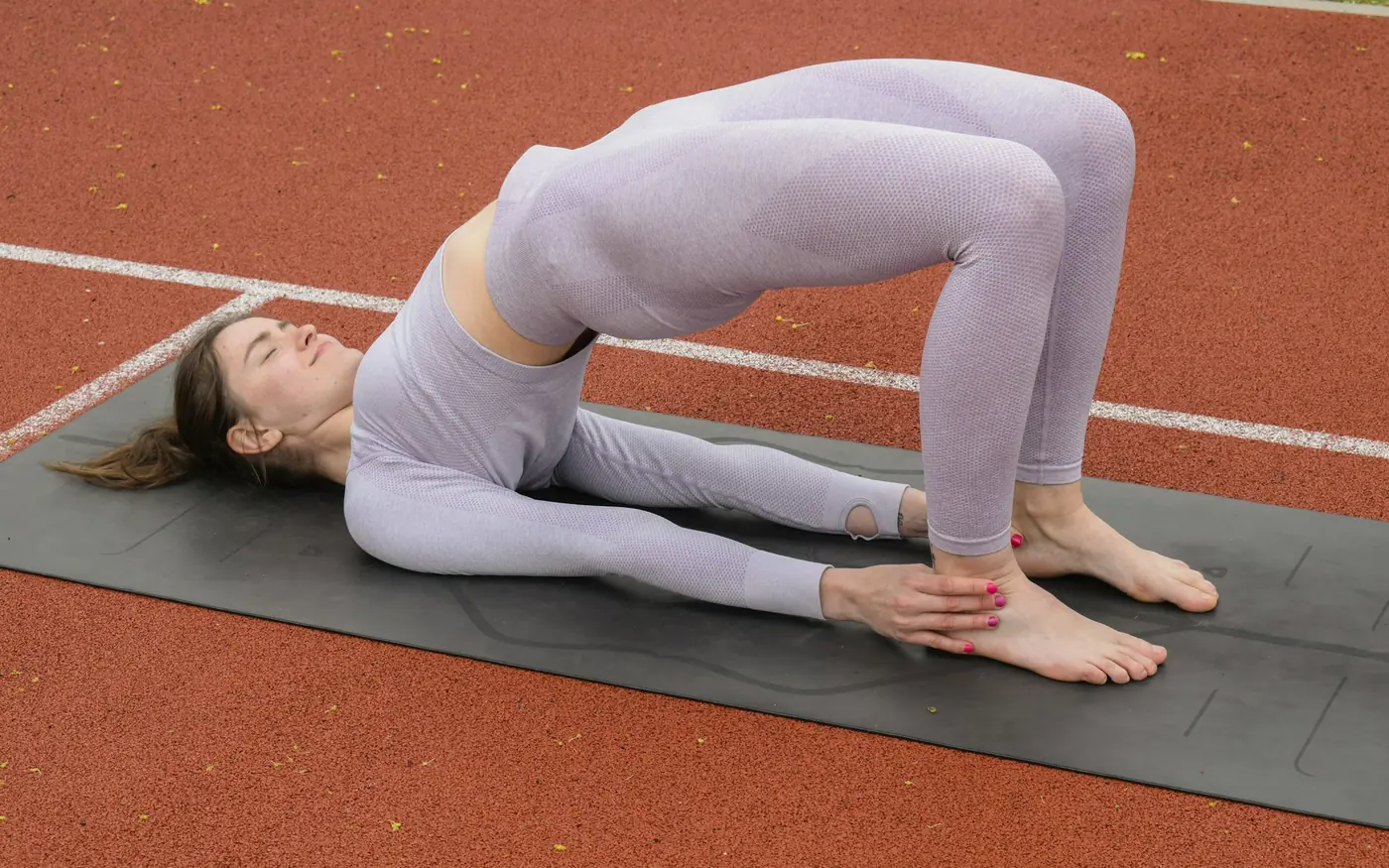
| Isometrics | Holding a bridge position still | Often tolerable early |
| Loading in low hip flexion | Bridges, then single-leg | Below the range that compresses |
| Progressive loading | Adding range and weight gradually | Weeks, not days |
| Return to running | Flat first, hills and speed last | Uphill and sprinting load it hardest |
| Avoid | Aggressive stretching, deep hip flexion early | The single commonest mistake |
What to change today
The loading takes months. These take an afternoon, and they stop the daily compression working against everything else.
- Sit on something softer, and put a cushion in the car. Unglamorous, and it removes hours of daily compression.
- Break up long drives and long meetings. Standing for two minutes resets it.
- Pause the hills and the speed work. Flat, easy running is usually tolerable when hard running is not.
- Stop stretching it. Genuinely.
- Start the loading, and expect months rather than weeks.

Where acupuncture and massage fit
As with every tendon problem on this site: supporting the loading programme rather than substituting for it. The American Academy of Physical Medicine and Rehabilitation publishes on tendon rehabilitation if you want the wider picture.
Needling and hands-on work around the gluteal muscles and upper hamstring can ease the guarding that builds up, which makes the loading tolerable. It does not rebuild a tendon. Nothing does that except progressive load.
One more thing worth saying: this responds well, but slowly, and a fortnight of good behaviour proves nothing either way. Judge it at three months, not at three weeks.
When to see a doctor
See a doctor for a sudden tearing sensation at the back of the thigh with bruising, which suggests a tendon rupture; for numbness or tingling running into the foot; for weakness in the leg; for night pain that wakes you; or for pain that has not improved after three months of consistent loading.
Booking a session in Beverly
Acupuncture is $75 a session and massage is $45 for 30 minutes, $75 for 60 and $105 for 90 — all on our rates page.
See also pain on the outside of the hip, sciatica and recovery work for active people. Browse all our articles or get in touch.
Frequently asked questions
Where exactly does high hamstring tendinopathy hurt?
Right at the sit bone — the bone you feel under you on a hard chair — where the hamstring tendons attach. The pain is deep, localised, and does not usually travel far down the leg.
How is it different from sciatica?
Sciatica travels. It runs down the back of the leg, often past the knee, and typically brings tingling or numbness. High hamstring pain stays at the sit bone, is provoked by sitting and by loading the hamstring, and has no nerve pattern to it.
Why does sitting hurt so much?
Sitting compresses the tendon directly against the bone it attaches to. Hard chairs, long drives and cycling are the usual complaints, and many people notice it in the cinema before anywhere else.
Why should I not stretch it?
Because stretching a hamstring bends the hip, which presses the tendon harder against the bone. It feels like the right response and it reliably provokes the problem. Loading, not lengthening, is what helps.
How long does it take?
Months rather than weeks, in common with every tendon problem on this site. The progress is real but slow, and it depends far more on consistency than on intensity.
This article is general information, not medical advice. Acupuncture is intended to work alongside the care of your doctor, not to replace it. Please speak to a clinician about any new, severe or changing symptom.