
There is a description that identifies this condition more reliably than almost anything a scan shows: you can push a shopping cart around a supermarket for far longer than you can walk the same distance without one.
If that sounds familiar, the rest of this article is probably about you.

What is happening
The nerves leaving the lower back pass through spaces that narrow gradually with age — thickened ligament, bony change, bulging discs. When those spaces get tight enough, standing upright and walking narrows them further, and the nerves complain.
Bending forward opens the same spaces. That is the entire mechanism behind the cart, and it explains most of the pattern people describe.
The pattern, and what it is not
| Feature | Spinal stenosis | Other explanations |
|---|---|---|
| Where | Both legs, often above the knee | One leg down to the foot suggests sciatica |
| Brought on by | Walking and standing | Sitting suggests a disc problem |
| Relieved by | Sitting or leaning forward | Standing still relieving it suggests circulation |
| Uphill vs downhill | Uphill easier — you lean forward | Both equally hard suggests circulation |
| Cycling | Usually comfortable | Painful cycling suggests circulation |
| Quality | Heaviness, weakness, ache | Cramping calf pain suggests circulation |
The circulation question
This is the one differential worth being careful about, and it is easy to check yourself before anyone else does.
Worth its own paragraph, because getting it wrong wastes time and occasionally matters a great deal.
Narrowed leg arteries produce a similar picture — leg pain on walking that stops you. The distinguishing feature is the position: circulatory pain eases when you simply stop, whether or not you sit or bend. Stenosis wants the flexion, not just the rest.
If cycling hurts as much as walking, or if the pain is cramping calf pain, that points away from the spine. Ask a doctor about circulation rather than assuming the back.
What the trajectory usually looks like
Worth knowing, because the picture people carry around is often bleaker than the reality.
Lumbar stenosis has a reputation for relentless decline. In practice a substantial proportion of people stay roughly stable over years, some improve, and a minority worsen steadily. It fluctuates, which is one reason a bad month is not evidence of anything much.
That matters for two reasons. It makes conservative management a reasonable first course rather than simply delaying the inevitable, and it makes tracking something objective far more useful than tracking how you feel.
Measure the walking distance
This is the practical suggestion worth acting on today.
“How is your back?” is a hard question to answer honestly six weeks later. “How far can you walk before it starts?” is not. Write down a number before you change anything — minutes, or a landmark you can reach.
It is the same principle as setting a review point before starting a course, and it matters more here than almost anywhere, because stenosis fluctuates enough to fool anyone relying on memory.
What tends to help
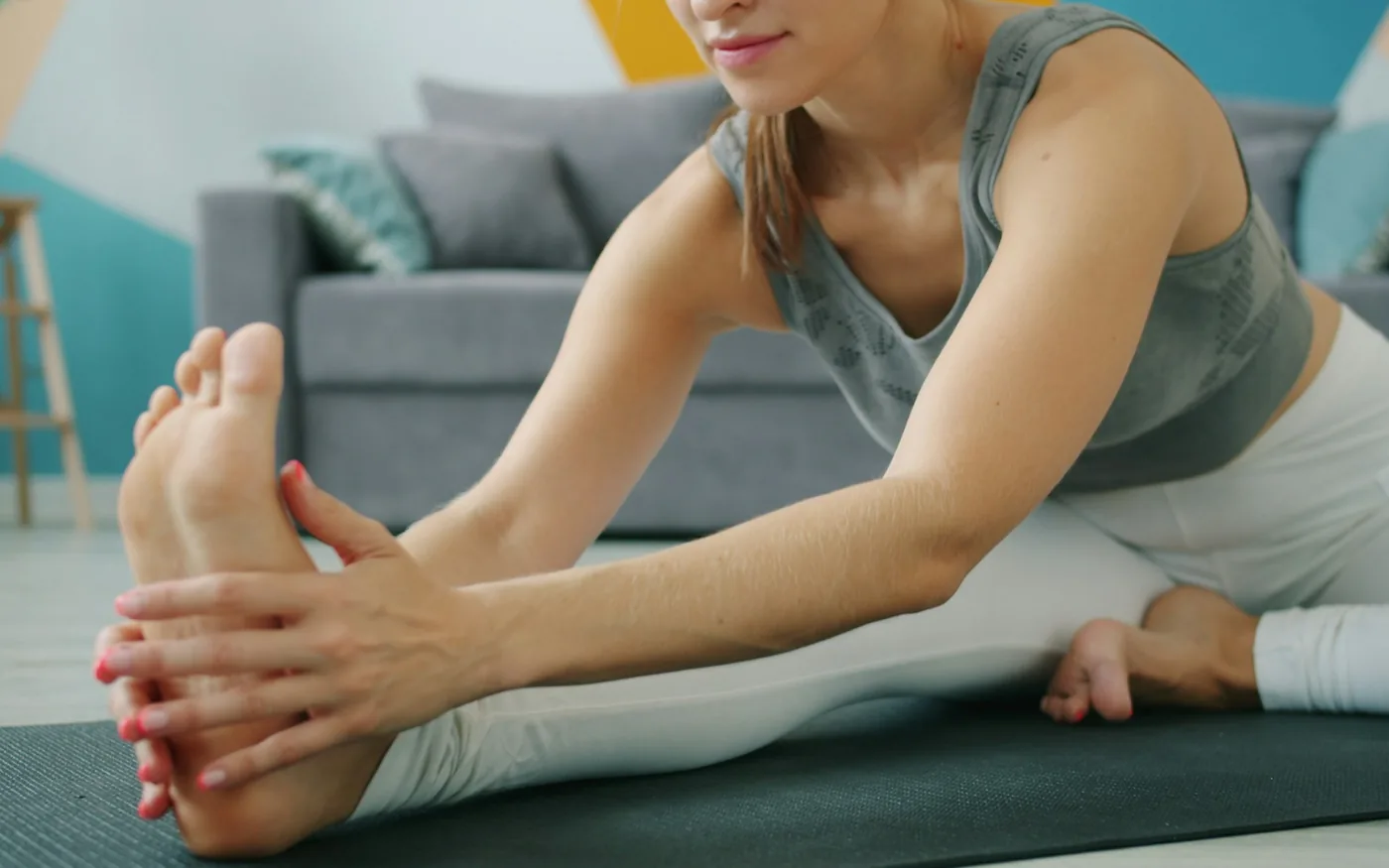
One general principle first, because it is the opposite of the advice a lot of people have already been given for their back: here, bending forward is usually the friend rather than the enemy. Programmes built around arching backwards, which suit some disc problems well, often suit this one badly.
| Approach | Why it suits this condition | Note |
|---|---|---|
| Flexion-biased exercise | Opens the space rather than closing it | The opposite of what suits some back problems |
| Cycling or a stationary bike | Forward lean makes it comfortable | Often the easiest way to keep fitness |
| Interval walking | Walk, sit briefly, walk again | Total distance rises over weeks |
| Aquatic exercise | Buoyancy plus a naturally flexed posture | Well tolerated |
| Strength work | Legs and trunk, within comfort | Protects function long term |
| Weight management | Where it applies, it reduces the load | A doctor conversation |
The National Institute on Aging publishes patient material on back problems in later life if you want a broader reference.
None of that is a substitute for a proper assessment. It is a description of what a well-designed programme for this condition tends to contain, so you can tell whether the one you have been given looks like it.
Where acupuncture fits
Modestly. There is limited condition-specific trial evidence for acupuncture in lumbar spinal stenosis, and nothing we do widens a spinal canal.
Where it can contribute is the accompanying back and gluteal muscle pain, which is often a genuine additional source of discomfort on top of the nerve symptoms. Easing that can make the walking programme more tolerable, which is the same supporting role described throughout this site.

When to see a doctor
Seek urgent care for numbness around the groin or inner thighs, for any loss of bladder or bowel control, or for rapidly worsening weakness in both legs. See a doctor for leg pain on walking that is not relieved by sitting, for cramping calf pain, for a steadily shrinking walking distance, or for new weakness or foot drop.
Booking a session in Beverly
Acupuncture is $75 a session and massage is $45 for 30 minutes, $75 for 60 and $105 for 90 — all on our rates page.
See also acupuncture for back pain, sciatica and hip osteoarthritis, which can look similar from a distance. Browse all our articles or get in touch.
Frequently asked questions
What does spinal stenosis feel like?
Aching, heaviness or weakness in both legs that comes on after a fairly predictable walking distance and eases within a few minutes of sitting down. Standing still often does not help; sitting or leaning forward does.
Why can I walk further pushing a shopping cart?
Because leaning forward opens up the space the nerves pass through. It is such a consistent finding that clinicians ask about it by name, and people often report walking several times further with a cart than without.
How is it different from sciatica?
Sciatica is typically one leg, often worse sitting, and follows a single nerve. Stenosis usually affects both legs, is provoked by walking and standing, and is relieved by sitting. The two can overlap, but the pattern is usually distinguishable.
Do I need surgery?
Not necessarily. Many people manage for years with exercise, activity pacing and time. Decompression surgery is considered when walking limitation is significantly affecting life despite proper conservative treatment.
What should I be measuring?
Walking distance, or minutes before symptoms start. It is objective, it is what actually limits people, and it makes any review of whether treatment is working far more honest than asking how the pain feels.
This article is general information, not medical advice. Acupuncture is intended to work alongside the care of your doctor, not to replace it. Please speak to a clinician about any new, severe or changing symptom.