
Neck and shoulder pain is the most common thing that brings people to a massage table, and it is also the complaint most often described in the same three words: tight, stiff, and “always there”.
Here is what massage can realistically do about it, which style suits which problem, and what has to happen between appointments for the relief to last.

What the evidence supports
Massage has a decent evidence base for neck and shoulder pain, with an important caveat about how long the benefit lasts.
A systematic review pooling twelve studies and 757 participants found massage more helpful than doing nothing, though not clearly better than other active treatments such as exercise therapy. Benefits for shoulder pain in particular were short-term.
One finding is genuinely useful for planning: a trial of 228 people with chronic neck pain found that 60-minute sessions given more than once a week outperformed shorter or less frequent ones. Dose matters. A single monthly massage is pleasant, but it is not a treatment plan. The American Massage Therapy Association publishes ongoing research summaries if you want to read further.
Which style suits which problem
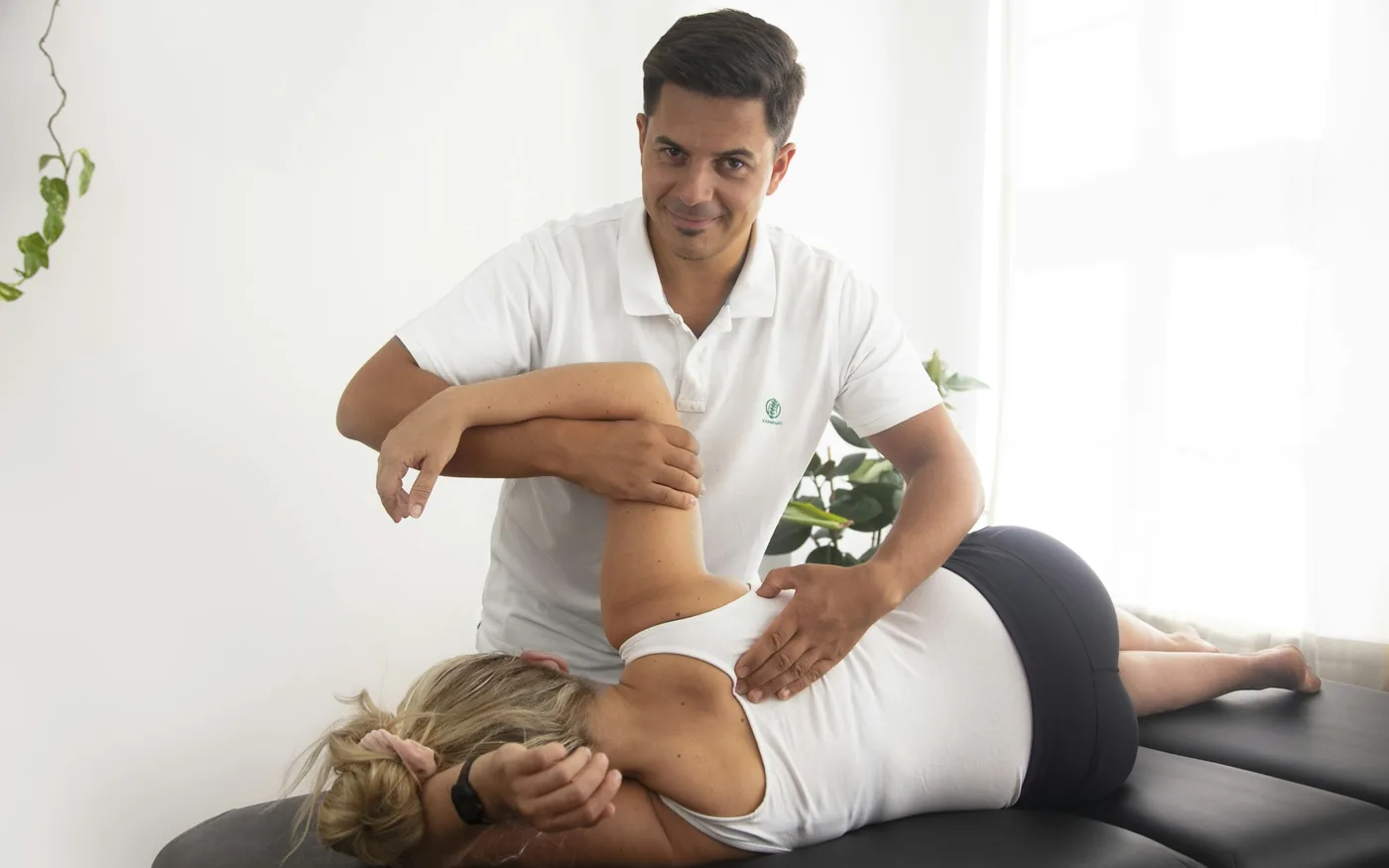
Lynn incorporates several modalities and will adapt within a single session. This is roughly how they map onto complaints.
| Style | Best for | How it feels | Typical session |
|---|---|---|---|
| Deep tissue | Stubborn bands of tension, long-standing shoulder tightness | Slow, firm, a “good ache” | 60–90 minutes |
| Swedish / relaxation | Stress-driven holding, whole-body tension | Flowing, lighter pressure | 60 minutes |
| Trigger point work | A specific painful spot that refers elsewhere | Brief, concentrated pressure | 30–60 minutes |
| Stretching within the session | Restricted movement, turning the head | Assisted, gentle | Included as needed |
| Reflexology | Overall stress rather than the neck itself | Firm pressure on the feet | 60 minutes |
How long a session, and how often
Length is the decision people get wrong most often. Booking thirty minutes for a whole-body ache leaves the therapist rushing; booking ninety for one tight shoulder is more than the area needs.
| Session | Best used for | Cost | Typical rhythm |
|---|---|---|---|
| 30 minutes | One specific area — a single stiff shoulder | $45 | Weekly while it settles |
| 60 minutes | Neck, shoulders and upper back together | $75 | Weekly, then fortnightly |
| 90 minutes | Whole body, or neck pain with a lower back component | $105 | Every 2–4 weeks |
| Reflexology, 60 min | Stress driving the tension rather than the tissue itself | $65 | Monthly |

What is usually driving it
Neck and shoulder pain is rarely a neck problem alone. The common contributors are unglamorous and mostly modifiable.
- Screen height. A laptop on a desk puts the head forward and down for hours at a time.
- Carrying on one side. Bags, toddlers, tool belts — anything habitually one-sided.
- Sleeping position. Front-sleeping rotates the neck for hours; a pillow that is too high does something similar.
- Stress. Shoulders rise under sustained tension and stay there. This one is genuinely physical.
- Breathing pattern. Shallow upper-chest breathing recruits neck muscles that were not designed for it.
- An old injury. Neck pain dating from a collision behaves differently — see whiplash and neck injury.
- Jaw clenching. The jaw and neck muscles work together, so jaw pain and neck tension usually arrive as a pair.
That last pair is why people with persistent shoulder tension often get further by addressing the way sustained stress sits in the body alongside the hands-on work.

What to do between appointments
The massage releases it. What you do in the following fortnight decides whether it stays released.
- Raise the screen. Top of the monitor at eye level. A stack of books works.
- Move every 40 minutes. Even standing and rolling the shoulders back a few times.
- Two stretches daily. Ear towards shoulder, held thirty seconds each side; then chin tucked back, held five seconds, ten times.
- Check the pillow. It should fill the gap between ear and shoulder, no more.
- Breathe into the ribs. Hand on the belly, slow breath, exhale longer than the inhale.

Consistency beats intensity here. Two short stretch breaks a day will do more for a stiff neck over a month than one heroic session at the gym on a Sunday.
When to see a doctor first
Get a medical opinion before booking massage if you have pain radiating down an arm with numbness, pins and needles or weakness; neck pain after a fall or collision; neck stiffness with fever or headache; or pain that wakes you consistently at night. Massage works alongside medical care, not in place of it.
Booking a session in Beverly
Massage is $45 for 30 minutes, $75 for 60 and $105 for 90, with reflexology at $65 — all listed on our published rates page. For an active neck problem, sixty minutes is usually the right starting length.
If you are unsure whether to ask for deep work or a lighter full-body session, deep tissue and Swedish massage compared sets out what each is actually for.
And if this came on overnight rather than building up over months, waking with a stiff neck covers the acute version, which behaves quite differently. If a scan has reported degenerative change, what that phrase actually means is worth reading before worrying about it.
Therapeutic massage runs Monday, Tuesday, Wednesday and Friday from 7am to 3pm, and Saturday 8am to noon. Read more about therapeutic massage at our Beverly practice, or get in touch to book an appointment. If the neck tension is also producing headaches, our piece on acupuncture for migraines and tension headaches covers where the two overlap.

Frequently asked questions
How often should I have massage for neck and shoulder pain?
For an active problem, weekly or fortnightly for the first month is a reasonable starting point, then spacing out as things settle. The trials that showed the clearest benefit used 60-minute sessions given more than once a week, so a single monthly massage is unlikely to shift a persistent problem on its own.
Should a massage for neck pain hurt?
It should feel like firm, purposeful pressure — sometimes a “good ache” — but never sharp pain, and you should be able to breathe normally throughout. Pain makes muscles guard, which works against the treatment. Say something the moment pressure tips over; a good therapist adjusts immediately.
What is the difference between deep tissue and a regular massage?
Deep tissue works more slowly and at a deeper layer, targeting specific bands of tension rather than covering the whole body. It is not simply harder pressure. For a stubborn shoulder, thirty focused minutes often beats an hour of general work.
Will one massage fix my neck pain?
It may well ease it for a few days, and that is genuinely worth having. Whether it lasts depends on what caused it. Pain driven by eight hours a day at a screen returns unless something about the eight hours changes too.
Is massage safe if I have a disc problem or nerve pain?
Often yes, but get it assessed first. Pain that radiates down an arm with pins and needles, numbness or weakness needs a medical opinion before massage, not instead of it. Tell your therapist what you have been told and what makes it worse.
This article is general information, not medical advice. Acupuncture is intended to work alongside the care of your doctor, not to replace it. Please speak to a clinician about any new, severe or changing symptom.