146 Cabot Street, Beverly, MA 01915 978.524.4888 View Hours Get Directions

Category: Acupuncture & Wellness

Guides to acupuncture, massage and reflexology written by our practice at 146 Cabot Street, Beverly, MA. Every article listed newest first.

  • Acupuncture for Salem, MA: One Stop Up the Line

    Acupuncture for Salem, MA: One Stop Up the Line

    Salem and Beverly are close enough to share a harbour, and they sit next to each other on the commuter rail. That second fact matters more than it sounds, because acupuncture works as a course of appointments rather than a single visit.

    A weekly treatment is a very different proposition when it does not require a car each time.

    The same logic runs further up the branch. Two stops beyond Salem, acupuncture for Ipswich residents works on exactly the same reasoning, with a longer ride and more attention needed to the timetable.

    It runs the other way too. People coming from Marblehead, which has no station at all, drive through Salem to get here, which makes Salem residents the ones with the genuinely easy journey.

    Salem and Beverly sit one stop apart on the Newburyport/Rockport line
    Salem and Beverly Depot are adjacent stops on the Newburyport/Rockport line.

    Getting here from Salem

    Two straightforward options, and unusually for the North Shore, the non-driving one is genuinely competitive.

    OptionTimeNotes
    Commuter rail5–7 minutes ridingSalem to Beverly Depot is one stop; Cabot Street is a walk from there
    Driving, Route 1A~10 minutesThe direct route; street and municipal parking at this end
    Driving, Bridge Street10–12 minutesAlternative when 1A is busy
    Cycling20–25 minutesFeasible in season across the bridge
    Timetables change, so check before relying on a particular train.

    Timetables are published by the MBTA and change seasonally, so check the Newburyport/Rockport line before relying on a particular train. If you are coming by rail, allow a few minutes at this end so you are not arriving rushed — a session works better when you are not still catching your breath.

    The harbour that Salem and Beverly share
    Salem and Beverly share the same stretch of coastline.

    What a course of treatment looks like

    Acupuncture is rarely a one-visit proposition, and it is worth knowing that before you book rather than after.

    StageScheduleWhat you are watching for
    Sessions 1–2WeeklyAny change at all — sleep, morning stiffness, a shorter flare
    Sessions 3–4WeeklyPain less intense, less frequent, or recovering faster
    Sessions 5–6Weekly or fortnightlyEnough of a pattern to decide honestly
    After sixMonthly or as neededHolding the gain rather than chasing more
    Six sessions at $75 is $450. We would rather you knew the total before starting than discovered it along the way.

    If the arithmetic is the sticking point, our guide to what acupuncture costs in Massachusetts covers insurance coverage, Medicare rules and using an HSA.
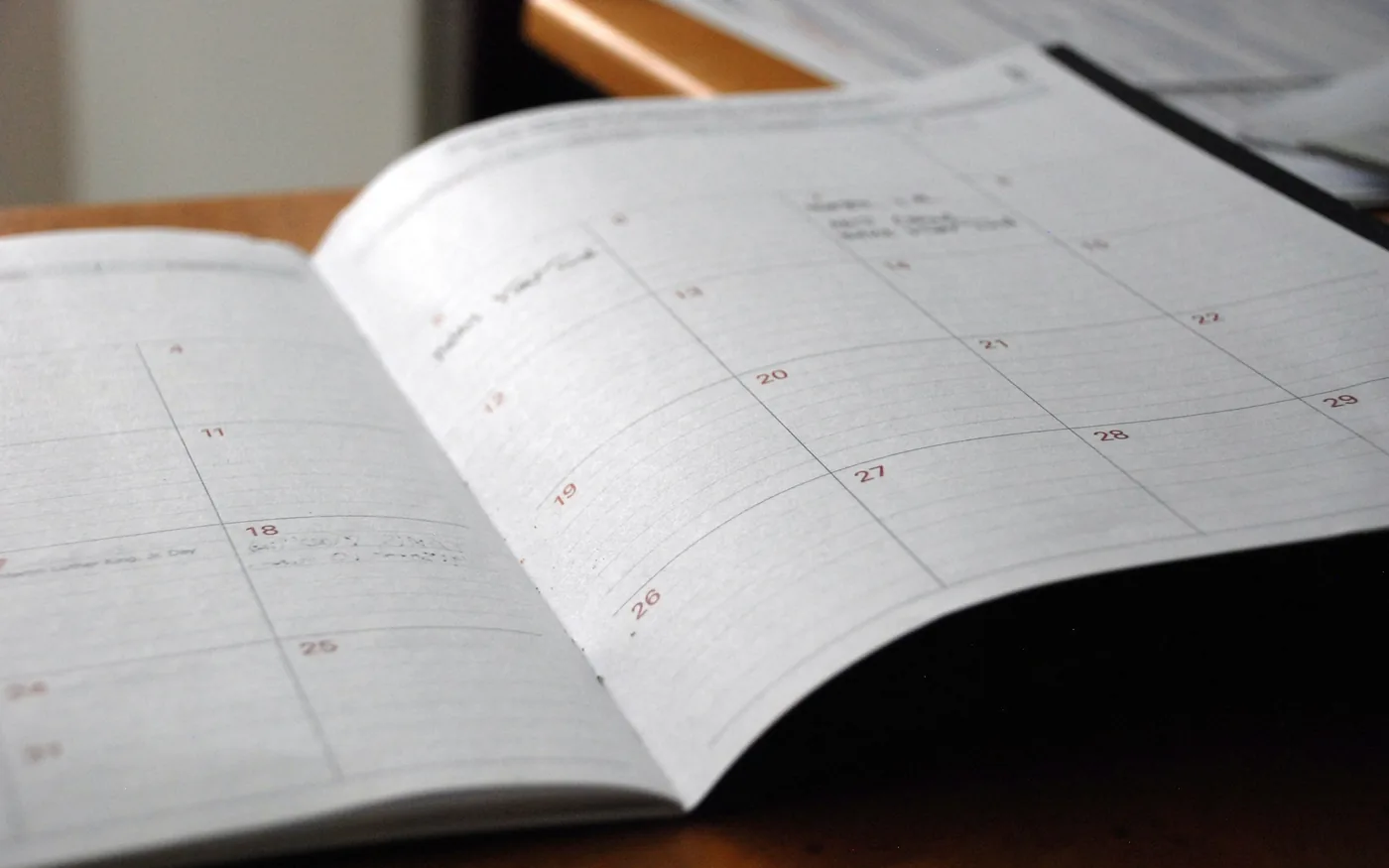
    Acupuncture works as a course of appointments, not a single visit
    A course of weekly appointments, with a review at the end.

    What a first appointment involves

    The first visit runs longer than those that follow, and most of it is conversation. Vanessa takes a full history — what brought you in, your general health, sleep, digestion, energy, and any medication you are taking — before anything else happens.

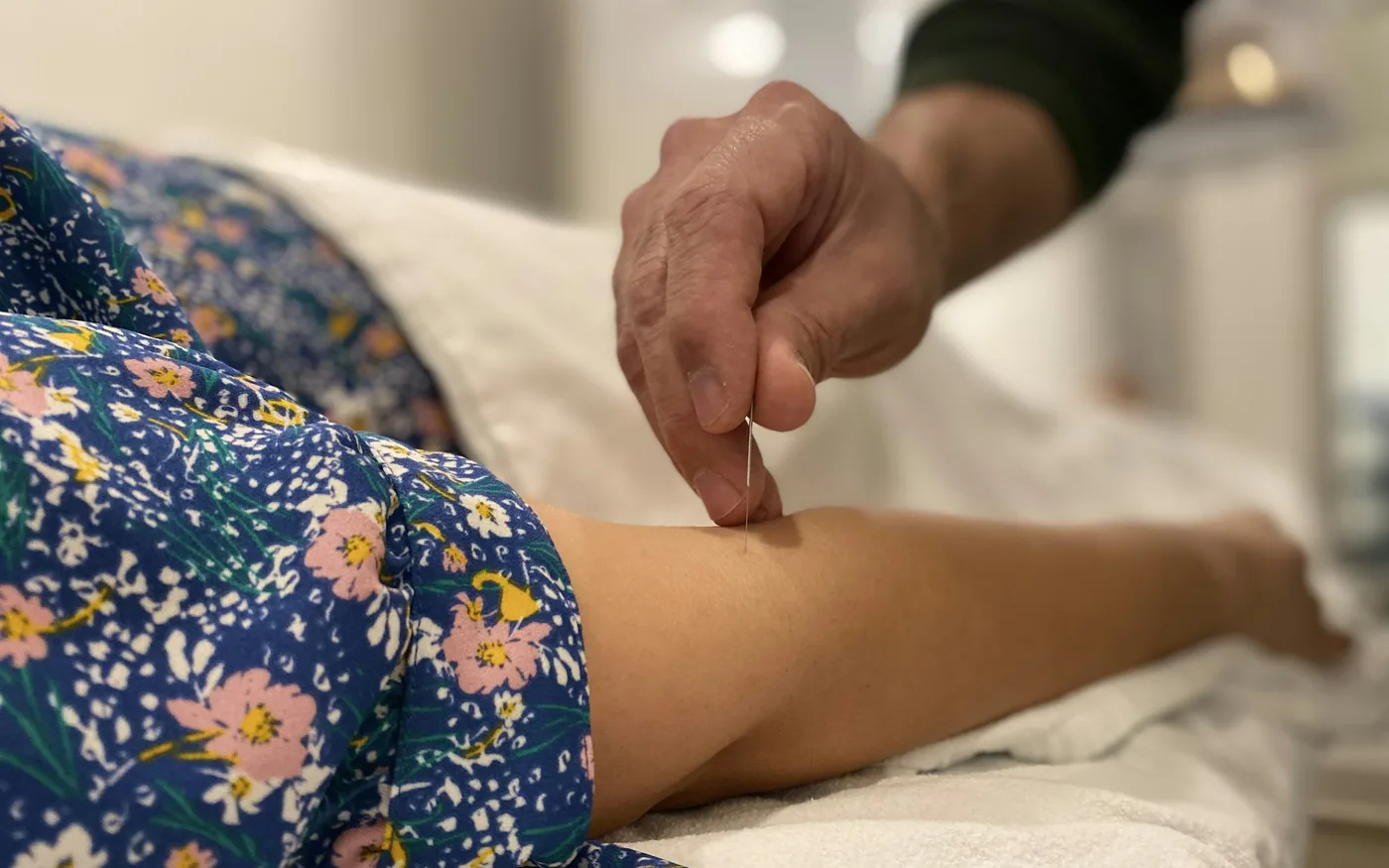
    That is followed by two traditional diagnostic steps: taking the pulse at both wrists, and looking at the tongue. Then the treatment itself. Somewhere between six and fifteen needles is typical, and they stay in for twenty to thirty minutes while you rest in a quiet room.

    Most people find that part unexpectedly restful. A fair number fall asleep. If the needles are the thing making you hesitate, what an acupuncture needle actually feels like is worth reading first — they are roughly the thickness of a human hair, and nothing like the hollow needles used to take blood.
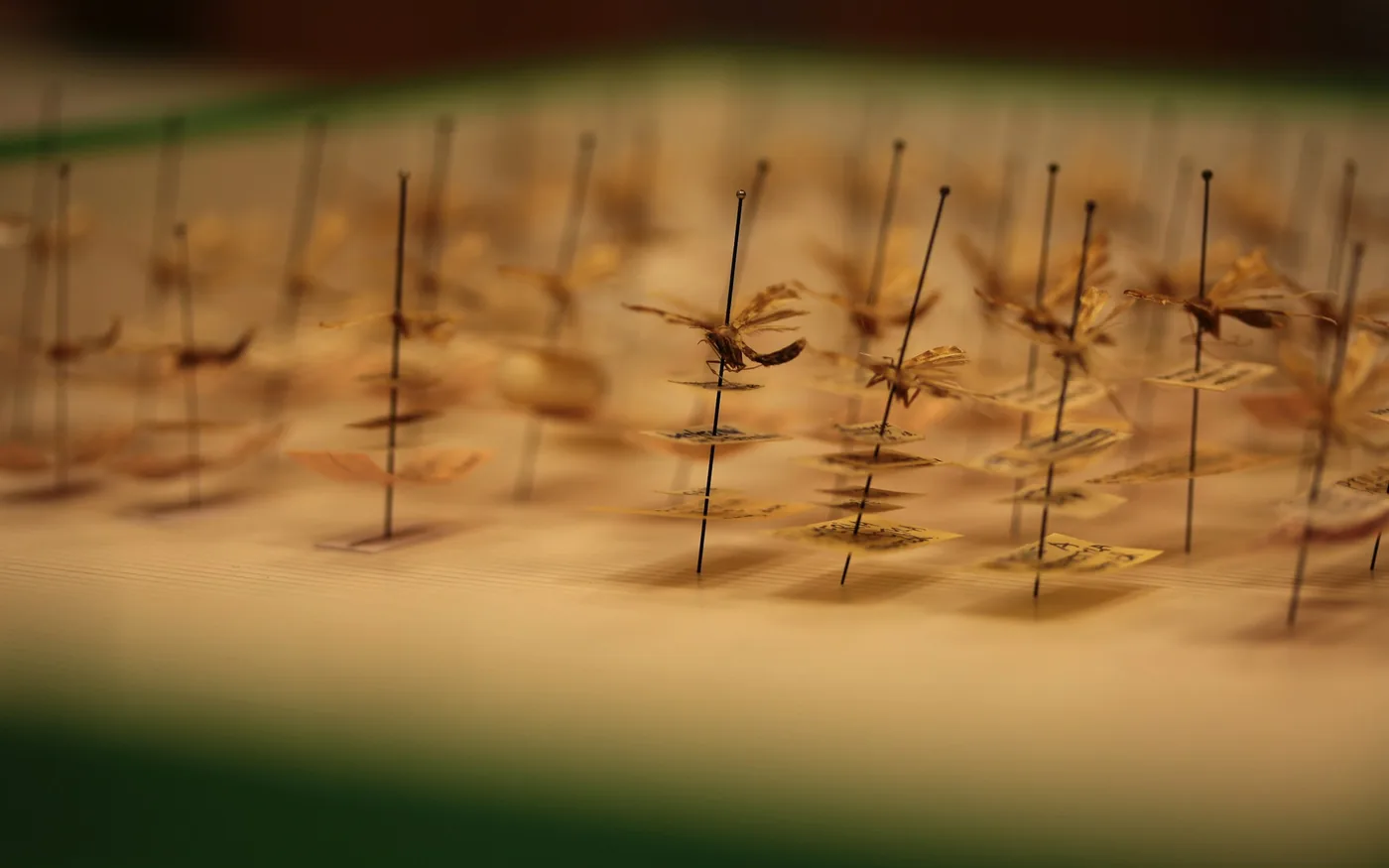
    Needles placed along the back during a session
    Six to fifteen needles is typical, retained for twenty to thirty minutes.

    Why the train changes the arithmetic

    This sounds like a small point and is not. The single biggest reason people abandon a course of treatment halfway through is not cost or scepticism — it is that the journey stopped being convenient in week three.

    A weekly appointment that needs a car, a parking space and a gap in the working day is a different commitment from one you can reach on a five-minute train ride. If you are in Salem and weighing up whether six weekly sessions is realistic, the commuter rail is the reason it probably is.
    The waiting area at a small single-practitioner clinic
    The waiting area at a two-practitioner clinic.

    What people come to us for

    Harvard Health keeps a plain-language overview of acupuncture and what it is used for if you want a neutral summary before deciding.

    Practical details for a first visit

    • Eat something light an hour or so beforehand. Arriving hungry is the most common cause of light-headedness during a session.
    • Wear loose clothing that moves easily above the elbow and knee. Many points are on the arms and lower legs, so extensive undressing is often unnecessary.
    • Bring a list of medication, particularly any blood thinners, and mention pregnancy or a pacemaker.
    • Skip alcohol beforehand, and heavy exercise for a few hours afterwards.
    • Say if you are nervous. It genuinely changes how a first session is handled — fewer needles, more warning, shallower insertion.

    Parking at this end is straightforward: there is street parking on Cabot Street and municipal parking a short walk away in the downtown district. If you are coming by train, Beverly Depot is close enough that you will not need either.

    One last practical note. Book ahead rather than hoping for a same-day slot — the practice runs by appointment only, and the Saturday morning acupuncture hours in particular fill up well before the week ends.

    A small practice, deliberately

    Two practitioners, by appointment only, since 1998. You see the same person each visit, appointments are not stacked back to back, and treatment is built around what you want from it rather than a block of sessions sold up front.

    The questions worth asking any practice — including this one — are in our guide to choosing a licensed acupuncturist on the North Shore.

    Careful, unhurried hands-on work
    Unhurried, and the same practitioner each visit.

    Booking from Salem

    Acupuncture runs Tuesday, Wednesday and Friday from 9am to 6pm and Saturday 8am to 2pm. Massage runs Monday, Tuesday, Wednesday and Friday 7am to 3pm and Saturday 8am to noon.

    All rates are on our rates page. Read more about acupuncture at our Cabot Street practice, or get in touch to book from Salem.


    Frequently asked questions

    Can I get from Salem to Beverly without a car?

    Yes, and this is the useful bit: Salem and Beverly Depot are adjacent stops on the Newburyport/Rockport commuter line, so it is a single short ride. Cabot Street is a walk from Beverly Depot. Driving takes about ten minutes via Route 1A.

    How long is the train from Salem to Beverly?

    It is one stop, typically five to seven minutes of travel time. Check the current timetable before relying on a specific train, as off-peak frequency varies.

    How many acupuncture sessions will I need?

    For most complaints, a block of around six weekly sessions with an honest review at the end. If nothing has shifted by then, we will say so rather than keep booking you.

    What does it cost?

    Acupuncture is $75 a session. Massage is $45 for 30 minutes, $75 for 60 and $105 for 90, and reflexology is $65. Every rate is published rather than quoted on request.

    Do you treat people who are not Beverly residents?

    Yes, most of the practice travels in. Salem is one of the closest towns and one of the easiest to reach us from.

    This article is general information, not medical advice. Acupuncture is intended to work alongside the care of your doctor, not to replace it. Please speak to a clinician about any new, severe or changing symptom.


  • Acupuncture for Danvers, MA: Ten Minutes Down the Road

    Acupuncture for Danvers, MA: Ten Minutes Down the Road

    Danvers is unusual among North Shore towns in one specific way: it has no commuter rail station of its own. Residents drive, or they use Beverly Depot or Salem, both about ten minutes away.

    For acupuncture that turns out not to matter much, because Danvers and Beverly share a border. Getting to 146 Cabot Street is a short drive across a town line rather than a journey.

    It is a fair contrast with the towns further out: people travelling in from Ipswich, two stops up the Newburyport branch, have to plan around a timetable in a way Danvers residents never do.

    The ten-minute drive from Danvers into Beverly
    Ten to twelve minutes by car from most of Danvers.

    Getting here from Danvers

    Danvers borders six communities — Salem, Beverly, Peabody, Topsfield, Middleton and Wenham — and Beverly is the one directly to the east. Most of the town is ten to twelve minutes from Cabot Street, either along Route 62 or straight down Cabot Street itself.

    If you would rather not drive, Beverly Depot sits on the Newburyport/Rockport line and is a short walk from the practice. You can check current times on the MBTA Newburyport/Rockport schedule, though for most Danvers residents driving is simply faster.

    FromApproximate driveRoute
    Danvers centre10 minutesRoute 62 east, then Cabot Street
    Danversport8–10 minutesStraight across the Danvers River
    Hathorne / north Danvers13–15 minutesRoute 62 or Route 1 south
    Liberty Tree Mall area12 minutesEndicott Street then Route 62
    Danvers, by trainNot directBeverly Depot or Salem, both ~10 minutes by car
    Danvers is the North Shore town without its own rail stop, so these are driving times.
    Street parking on Cabot Street, a short walk from the practice
    Street parking on Cabot Street, plus municipal parking a short walk away.

    What we see most often

    The complaints people bring across from Danvers are the same ones we see from everywhere else, in roughly the same order:

    If you are not sure which of the two would suit you, our comparison of acupuncture and massage works through it by complaint.

    Acupuncture needles placed during a treatment session
    Needles are fine, single-use and opened in front of you.

    Which treatment fits which complaint

    Danvers callers most often open with “I am not sure whether I want acupuncture or a massage”. This is roughly how we answer it.

    What is going onUsually betterWhy
    Low back pain for monthsAcupunctureStronger evidence for persistent pain
    Stiff neck and shouldersMassageDirect release of the tissue involved
    Recurring migrainesAcupunctureThe preventive effect is the best-supported use
    Stress you feel physicallyEitherPick the one you will keep attending
    Sore after trainingMassageLong-established for muscular recovery
    Would rather not undressReflexologyShoes and socks off, nothing else
    If you are still unsure, say so when you call and we will talk it through before booking anything.
    A quiet treatment room set up for an appointment
    A quiet room, set up before you arrive.

    What a first appointment involves

    The first visit runs longer than those that follow, and most of it is conversation rather than treatment. Vanessa will take a full history — what brought you in, your general health, sleep, digestion, energy and any medication — then take your pulse at both wrists and look at your tongue.

    Needling itself usually takes a fraction of the appointment. Somewhere between six and fifteen needles is typical, and they stay in for twenty to thirty minutes while you rest. If the needles are the part you are unsure about, what an acupuncture needle actually feels like answers that honestly.

    The first appointment is mostly conversation
    Most of a first appointment is spent talking.

    Allow a few extra minutes on a first visit. Arriving unhurried is worth more to a session than most people expect.

    Why a small practice is worth the short drive

    There are larger clinics closer to some parts of Danvers. The argument for coming here is continuity: the same practitioner every visit, appointments that are not stacked back to back, and a review point rather than an open-ended course.

    Acupuncture builds across a course of appointments, and that depends on somebody remembering what changed last time without rereading notes from scratch. That is easier in a practice with two people than one with a rota.

    The questions worth asking any practice you are considering are set out in our guide to choosing a licensed acupuncturist on the North Shore.

    A practice that has been here a while

    Beverly Holistic Health has been providing holistic healthcare on the North Shore since 1998. That matters less as a boast than as a practical point: a practice that has been on the same street for that long is generally there for the whole of a course of treatment, and for the one after it.

    It is a small practice by choice. Two practitioners, by appointment only, with time built into each session to talk about what has changed since the last one. Nobody is passed between rooms and nobody has to be brought up to speed at the start of an appointment.

    Rates and hours

    Acupuncture is $75 a session, published in full alongside massage and reflexology on our rates page. Nothing is added at the end and there is no package to buy up front. If cost is the deciding factor, what acupuncture actually costs in Massachusetts covers insurance, Medicare and HSA use.

    Acupuncture runs Tuesday, Wednesday and Friday from 9am to 6pm and Saturday 8am to 2pm. Massage runs Monday, Tuesday, Wednesday and Friday 7am to 3pm and Saturday 8am to noon. By appointment only.

    Read more about acupuncture treatment at our Beverly practice, or get in touch to book an appointment from Danvers.

    Booking an appointment from anywhere on the North Shore
    Booking ahead is worth it — the practice runs by appointment only.

    Frequently asked questions

    How far is Beverly from Danvers?

    Ten to twelve minutes by car for most of Danvers. The two towns share a border, so you are not really travelling to another part of the North Shore — you are crossing a town line. Route 62 or Cabot Street will both get you here.

    Is there a train from Danvers to Beverly?

    No. Danvers is the notable North Shore town without its own commuter rail station. Residents typically use Beverly Depot or Salem, both around ten minutes away. In practice almost everyone coming to us from Danvers drives.

    Do you treat people from Danvers regularly?

    Yes. Danvers is one of the towns we see most, which is unsurprising given the two towns border each other. You do not need to be a Beverly resident to book.

    What does a session cost?

    Acupuncture is $75 a session. There are no packages to buy up front and nothing is added at the end. Massage is $45 for 30 minutes, $75 for 60 and $105 for 90, and reflexology is $65.

    Do I need a referral?

    No. Massachusetts does not require a referral to see a licensed acupuncturist. We would still encourage you to keep your doctor informed, particularly for an ongoing condition.

    This article is general information, not medical advice. Acupuncture is intended to work alongside the care of your doctor, not to replace it. Please speak to a clinician about any new, severe or changing symptom.

  • Acupuncture or Massage: Which One Do You Actually Need?

    Acupuncture or Massage: Which One Do You Actually Need?

    This is the question we field most often, usually phrased as “I don’t know which one I need”. It is a fair question, and the honest answer is that it depends on what is wrong and how quickly you need it to change.

    Here is a straight comparison, including the cases where the answer is neither.

    The short version

    AcupunctureTherapeutic massage
    Best atPersistent pain, migraine prevention, stress, sleepMuscular tightness, restricted movement, immediate release
    How it worksFine needles at specific pointsDirect hands-on pressure on soft tissue
    SpeedBuilds over 2–4 sessionsOften noticeable the same day
    How it lastsLonger, with occasional top-upsShorter unless the cause is addressed
    Session lengthAbout an hour30, 60 or 90 minutes
    Cost here$75$45 / $75 / $105
    UndressingUsually minimalYes, to the area being worked
    Strongest evidence forMigraine prevention, chronic low back painNeck and shoulder pain, short-term relief
    Both are complementary therapies. Neither replaces care from your doctor.
    Acupuncture uses fine needles at specific points
    Acupuncture places fine needles at specific points.

    Pick by the complaint

    The most reliable way to choose is to start from what is actually bothering you rather than from the treatment.

    If this is the problemStart withWhy
    Long-standing low back painAcupunctureBetter evidence for chronic pain; see our guide to acupuncture for back pain
    Stiff, aching neck and shouldersMassageDirect release of the tissue involved; see massage for neck and shoulder pain
    Frequent migrainesAcupuncturePreventive effect is where the evidence is strongest
    Tension headaches from the neckEitherOften best combined
    Anxiety, poor sleepAcupunctureThough reflexology suits some people better
    Recovery after heavy trainingMassageLong-established use for muscle recovery
    Restricted movement in a jointMassageStretching can be built into the session; for the shoulder specifically see frozen shoulder
    Pain on the bony point of the hipEither, with exerciseSee lateral hip pain
    Widespread pain with fatigueGentler acupunctureSee fibromyalgia
    General stress, no specific painEitherPick whichever you find more comfortable
    Where a row says “either”, it usually means the one you will actually keep attending is the right choice.
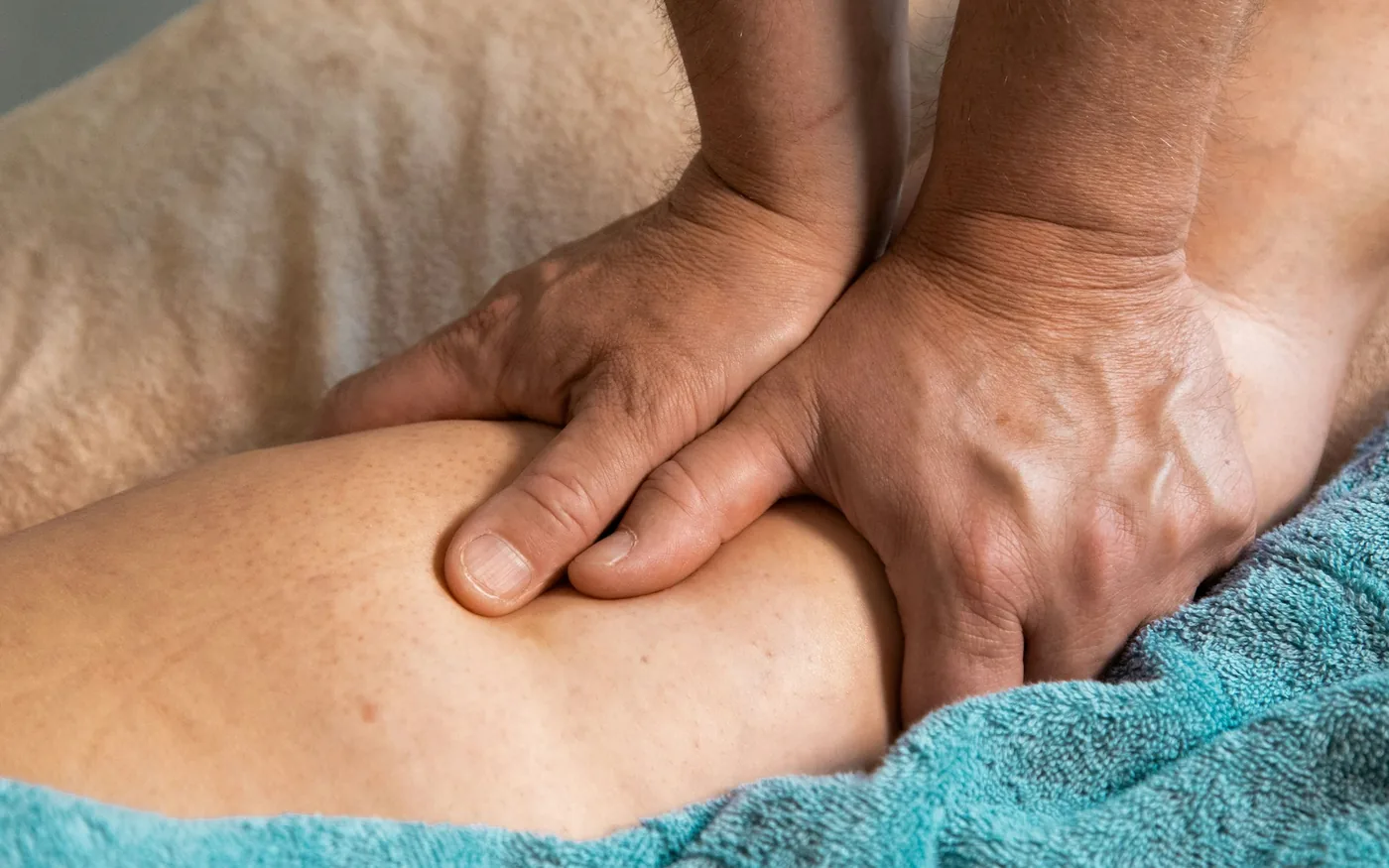
    Massage works directly on soft tissue with hands-on pressure
    Massage works directly on soft tissue with hands-on pressure.

    What a first appointment involves, either way

    Both start with a conversation rather than a treatment, and both first visits run longer than the appointments that follow.

    For acupuncture, that means a full health history, taking the pulse at both wrists and looking at the tongue, before any needles. For massage, it means establishing what hurts, what makes it worse, how you sleep and what you do all day, then agreeing the pressure before starting.

    Neither is a service you should feel rushed through. If you want to read further on how these therapies are assessed generally, the NHS overview of acupuncture and what it is used for is a level-headed summary.

    Working out what a course of treatment will cost before you commit
    Working out the cost before you commit to a course.

    The case for using both

    These are not competing options, and the people who get most out of the practice generally use both.

    A common pattern for persistent pain is acupuncture and massage on alternating weeks: the massage releases the muscular guarding that has built up around a painful area, and the acupuncture works on the underlying pattern. Neither has to be abandoned for the other to be tried.

    It also spreads the cost across the month rather than doubling up in one week.

    Many people alternate the two treatments week by week
    Alternating weeks is the most common pattern here.

    What each one asks of you

    There is a practical difference that rarely gets mentioned and often decides the matter.

    Acupuncture asks for a run of appointments before you can fairly judge it — usually around six, spread weekly. That is a commitment of time as much as money, and it works badly if your schedule means you will miss half of them.

    Massage asks for less up front. A single session tells you something useful straight away, and you can stop after one without having wasted the exercise. If you are testing the water rather than committing, that matters.

    How to decide if you are still stuck

    1. Is it a muscle you can point to? If yes, start with massage.
    2. Has it lasted more than three months? If yes, acupuncture is worth the course.
    3. Do you need relief this week? Massage is the more reliable bet for speed.
    4. Is stress the thread running through it? Either works; pick the one you will find easier to attend.
    5. Are you uneasy about needles? Start with massage — though what the needles actually feel like may change your mind.
    If you are unsure which suits you, say so when you book
    If you are unsure, say so when you book and we will talk it through.

    When the answer is neither, yet

    Some things need a doctor before they need a treatment room. Please get assessed first for: new weakness, numbness or pins and needles in a limb; any change in bladder or bowel control; pain following a significant fall or collision; unexplained weight loss; fever alongside pain; or a sudden severe headache unlike any you have had before.

    None of these rules out treatment afterwards. They simply mean something else should be excluded first.

    Booking either, in Beverly

    Everything we charge is on our published rates page: acupuncture $75, massage $45 for 30 minutes, $75 for 60 and $105 for 90, reflexology $65. There are no packages to buy up front.

    Acupuncture runs Tuesday, Wednesday and Friday 9am to 6pm and Saturday 8am to 2pm. Massage runs Monday, Tuesday, Wednesday and Friday 7am to 3pm and Saturday 8am to noon.

    Read more about acupuncture at our Beverly practice, therapeutic massage and reflexology, or what to look for in a North Shore acupuncturist. If you are still unsure, get in touch and describe what is going on — we would rather point you to the right thing than book you into the wrong one.

    Both treatments are given at our Cabot Street practice
    Both treatments are given at 146 Cabot Street.

    Frequently asked questions

    Can I have acupuncture and massage on the same day?

    You can, though most people find it a lot in one go. If you want both, alternating weeks usually works better — it spreads the cost and gives you a clearer sense of which one is doing the work.

    Which is better for back pain?

    For long-standing low back pain, acupuncture has the stronger evidence base. For pain that is clearly muscular and recent, massage often gives faster relief. Many people with chronic back pain do best alternating the two.

    Which is cheaper?

    At this practice acupuncture is $75 a session and massage is $45 for 30 minutes, $75 for 60 and $105 for 90. A 30-minute focused massage is the least expensive way to address one specific area.

    Which works faster?

    Massage usually produces something you notice the same day. Acupuncture more often builds over two to four sessions. If you need relief before an event this week, massage is the more reliable bet.

    Do I have to choose at all?

    No, and you do not have to decide before you get in touch. Say what is going on when you book and we will tell you which we think fits — including if the honest answer is neither, and you should see your doctor first.

    This article is general information, not medical advice. Acupuncture is intended to work alongside the care of your doctor, not to replace it. Please speak to a clinician about any new, severe or changing symptom.
  • Reflexology: What It Is, What to Expect, and What It Can Honestly Do

    Reflexology: What It Is, What to Expect, and What It Can Honestly Do

    Reflexology attracts more overclaiming than almost any other therapy on a treatment menu, which is a shame, because what it genuinely does is worth having on its own terms.

    This is a straight account: what happens in a session, what the research supports, and what it cannot do.

    Reflexology works on points across the soles of the feet
    Reflexology works on mapped points across the soles of the feet.

    What reflexology is

    Reflexology applies firm, specific pressure to points on the feet — and sometimes the hands or ears — following a traditional map in which areas of the foot correspond to other parts of the body.

    That map is the traditional framework the practice is built on. It is not an anatomical claim that pressing the arch operates on your liver, and any practitioner telling you otherwise has overstated it. What the sequence reliably produces is a sustained, methodical hour of pressure that most people find deeply calming.

    The feet are also densely supplied with nerve endings, which is part of why focused work there registers so strongly.

    Reflexology or a foot massage?

    People use the terms interchangeably. They are not quite the same thing, and the difference matters when you are booking.

    ReflexologyFoot massage
    IntentPressure on mapped points, in sequenceEasing the muscles and tissue of the foot
    StructureMethodical, covers the whole mapFollows wherever the tension is
    PressureFirm and specificUsually lighter and broader
    ClothingFully clothed, shoes and socks offThe same
    Typical lengthAbout an hour15–30 minutes, often part of a longer massage
    Best forOverall stress, sleep, a whole-body sense of settlingTired, aching feet specifically
    At this practice reflexology is $65 for a session; a foot element can also be included within a standard massage.
    You stay fully clothed for reflexology, with only shoes and socks removed
    You stay fully clothed — only shoes and socks come off.

    What happens in a session

    1. A short intake. Any foot problems, recent injuries, circulation issues, diabetes, or anything tender. Your feet are checked for cuts, rashes or verrucas.
    2. Getting comfortable. You settle into a reclining chair or onto the table, shoes and socks off, everything else on.
    3. The work itself. Firm thumb and finger pressure moving through the sequence, usually one foot fully then the other.
    4. Sensitive points. Some spots feel more tender. That is normal and the pressure is adjusted.
    5. Afterwards. Most people feel notably relaxed and occasionally a bit spacey for a few minutes. Take your time getting up.
    Most people describe reflexology as deeply relaxing rather than clinical
    Most people describe it as deeply relaxing rather than clinical.
    Fresh linen prepared before a reflexology appointment
    Fresh linen prepared before a session.

    What the evidence honestly supports

    This is where reflexology needs plain speaking, because the gap between what is claimed and what is demonstrated is wide.

    ClaimWhat the evidence says
    Relaxation and stress reductionReasonably supported. This is its clearest and most consistent effect.
    Reduced anxietySupported in several clinical trials, including in hospital settings.
    Better sleepCommonly reported by patients; the formal evidence is thinner but plausible given the relaxation effect.
    Short-term wellbeingSupported.
    Diagnosing illness from the feetNot supported. Reflexology cannot diagnose anything.
    Removing toxinsNot supported. No mechanism, no evidence.
    Treating or curing diseaseNot supported. It is a complementary therapy, not a treatment for illness.
    MedlinePlus keeps a plain-language overview of complementary therapies and how to weigh claims like these.

    The MedlinePlus guide to complementary and integrative medicine is a good reference point if you want to check any therapy against the evidence.

    Who tends to get the most from it

    • People who want the benefits of bodywork but would rather not undress
    • Anyone whose stress shows up as poor sleep more than as muscular pain
    • People who find a full-body massage too much stimulation
    • Those with a back or shoulder problem that makes lying face down uncomfortable

    If muscular tension is your main complaint, therapeutic massage for neck and shoulder pain is likely the better fit, and our comparison of acupuncture and massage may help you decide.

    Better sleep is the change people most often report after reflexology
    Better sleep is the change people most often report afterwards.

    How often is worth it

    Reflexology is not a course of treatment in the way acupuncture for a specific complaint is. There is no six-session block to commit to, and nobody should be selling you one.

    Most people use it in one of two ways. Either as an occasional reset — every month or two, when things have got on top of them — or as a standing appointment during a stretch they know will be demanding. Both are reasonable. What tends not to work is a single session during the worst week of the year, expecting it to undo the year.

    If you are using it for ongoing stress rather than a one-off, a regular rhythm you can actually keep matters more than the gap between appointments.

    Reflexology is a complementary therapy that works alongside medical care
    A complementary therapy that works alongside your medical care, not instead of it.

    When to check with your doctor first

    Mention any circulation problems, diabetes affecting the feet, active infection, recent foot or ankle surgery, deep vein thrombosis or a history of it, or pregnancy. None of these necessarily rules reflexology out, but each changes how it is delivered — and foot ulceration in diabetes needs medical attention rather than bodywork.

    Booking a session in Beverly

    Reflexology is one of several modalities used here. Our guide to choosing between deep tissue and relaxation massage covers the others, including craniosacral work and stretching.

    Reflexology is $65, listed with everything else on our published rates for massage and reflexology. Sessions run Monday, Tuesday, Wednesday and Friday from 7am to 3pm, and Saturday 8am to noon, by appointment only.

    You can read more about the bodywork we offer in Beverly, MA, or get in touch to book a reflexology appointment. If you are not sure which treatment suits you, say so when you get in touch and we will talk it through first.


    Frequently asked questions

    Do I need to undress for reflexology?

    No. You stay fully clothed and only remove your shoes and socks. That makes it a comfortable option for people who would rather not undress for a conventional massage.

    Is reflexology just a foot massage?

    They overlap, but the intent differs. A foot massage works the muscles and tissue of the foot for their own sake. Reflexology applies specific pressure to mapped points in a set sequence. In practice a reflexology session is more structured and more methodical, and it usually feels firmer.

    Does reflexology hurt?

    It should not. Firm pressure is normal, and some points feel more sensitive than others, but it should stay comfortable throughout. Say so if a point is genuinely painful and the pressure is eased.

    What does the evidence actually show?

    The reasonable reading is that reflexology is well supported for relaxation, stress and short-term wellbeing, and not supported as a way to diagnose or treat disease. Trials in clinical settings have shown reductions in anxiety. Claims that it detoxifies organs or cures conditions are not supported.

    How long is a reflexology session and what does it cost?

    Sessions here run about an hour and cost $65. Most people find one session pleasant and restorative; if you are using it for ongoing stress, a regular rhythm tends to work better than an occasional one-off.

    This article is general information, not medical advice. Acupuncture is intended to work alongside the care of your doctor, not to replace it. Please speak to a clinician about any new, severe or changing symptom.
  • Massage for Neck and Shoulder Pain: What Actually Helps

    Massage for Neck and Shoulder Pain: What Actually Helps

    Neck and shoulder pain is the most common thing that brings people to a massage table, and it is also the complaint most often described in the same three words: tight, stiff, and “always there”.

    Here is what massage can realistically do about it, which style suits which problem, and what has to happen between appointments for the relief to last.

    Reaching for a stiff neck, the most common way this pain presents
    Reaching for a stiff neck — the most common way this pain presents.

    What the evidence supports

    Massage has a decent evidence base for neck and shoulder pain, with an important caveat about how long the benefit lasts.

    A systematic review pooling twelve studies and 757 participants found massage more helpful than doing nothing, though not clearly better than other active treatments such as exercise therapy. Benefits for shoulder pain in particular were short-term.

    One finding is genuinely useful for planning: a trial of 228 people with chronic neck pain found that 60-minute sessions given more than once a week outperformed shorter or less frequent ones. Dose matters. A single monthly massage is pleasant, but it is not a treatment plan. The American Massage Therapy Association publishes ongoing research summaries if you want to read further.

    Which style suits which problem

    Lynn incorporates several modalities and will adapt within a single session. This is roughly how they map onto complaints.

    StyleBest forHow it feelsTypical session
    Deep tissueStubborn bands of tension, long-standing shoulder tightnessSlow, firm, a “good ache”60–90 minutes
    Swedish / relaxationStress-driven holding, whole-body tensionFlowing, lighter pressure60 minutes
    Trigger point workA specific painful spot that refers elsewhereBrief, concentrated pressure30–60 minutes
    Stretching within the sessionRestricted movement, turning the headAssisted, gentleIncluded as needed
    ReflexologyOverall stress rather than the neck itselfFirm pressure on the feet60 minutes
    Lynn is also a certified yoga instructor, so stretching and home exercises are usually built into the work.
    Slower, deeper work across the upper back and shoulder girdle
    Deep tissue work is slower and more specific, not simply harder.

    How long a session, and how often

    Length is the decision people get wrong most often. Booking thirty minutes for a whole-body ache leaves the therapist rushing; booking ninety for one tight shoulder is more than the area needs.

    SessionBest used forCostTypical rhythm
    30 minutesOne specific area — a single stiff shoulder$45Weekly while it settles
    60 minutesNeck, shoulders and upper back together$75Weekly, then fortnightly
    90 minutesWhole body, or neck pain with a lower back component$105Every 2–4 weeks
    Reflexology, 60 minStress driving the tension rather than the tissue itself$65Monthly
    For an active neck problem, sixty minutes weekly for the first month is the usual starting point.
    Oils and fresh linen set out before a massage appointment
    Oils and fresh linen set out before an appointment.

    What is usually driving it

    Neck and shoulder pain is rarely a neck problem alone. The common contributors are unglamorous and mostly modifiable.

    • Screen height. A laptop on a desk puts the head forward and down for hours at a time.
    • Carrying on one side. Bags, toddlers, tool belts — anything habitually one-sided.
    • Sleeping position. Front-sleeping rotates the neck for hours; a pillow that is too high does something similar.
    • Stress. Shoulders rise under sustained tension and stay there. This one is genuinely physical.
    • Breathing pattern. Shallow upper-chest breathing recruits neck muscles that were not designed for it.
    • An old injury. Neck pain dating from a collision behaves differently — see whiplash and neck injury.
    • Jaw clenching. The jaw and neck muscles work together, so jaw pain and neck tension usually arrive as a pair.

    That last pair is why people with persistent shoulder tension often get further by addressing the way sustained stress sits in the body alongside the hands-on work.

    Hunched screen posture, which drives much of the neck pain we see
    Hunched screen posture drives a large share of the neck pain we see.

    What to do between appointments

    The massage releases it. What you do in the following fortnight decides whether it stays released.

    1. Raise the screen. Top of the monitor at eye level. A stack of books works.
    2. Move every 40 minutes. Even standing and rolling the shoulders back a few times.
    3. Two stretches daily. Ear towards shoulder, held thirty seconds each side; then chin tucked back, held five seconds, ten times.
    4. Check the pillow. It should fill the gap between ear and shoulder, no more.
    5. Breathe into the ribs. Hand on the belly, slow breath, exhale longer than the inhale.
    Simple neck and shoulder stretches used between appointments
    Two stretches a day hold the benefit better than a session on its own.

    Consistency beats intensity here. Two short stretch breaks a day will do more for a stiff neck over a month than one heroic session at the gym on a Sunday.

    When to see a doctor first

    Get a medical opinion before booking massage if you have pain radiating down an arm with numbness, pins and needles or weakness; neck pain after a fall or collision; neck stiffness with fever or headache; or pain that wakes you consistently at night. Massage works alongside medical care, not in place of it.

    Booking a session in Beverly

    Massage is $45 for 30 minutes, $75 for 60 and $105 for 90, with reflexology at $65 — all listed on our published rates page. For an active neck problem, sixty minutes is usually the right starting length.

    If you are unsure whether to ask for deep work or a lighter full-body session, deep tissue and Swedish massage compared sets out what each is actually for.

    And if this came on overnight rather than building up over months, waking with a stiff neck covers the acute version, which behaves quite differently. If a scan has reported degenerative change, what that phrase actually means is worth reading before worrying about it.

    Therapeutic massage runs Monday, Tuesday, Wednesday and Friday from 7am to 3pm, and Saturday 8am to noon. Read more about therapeutic massage at our Beverly practice, or get in touch to book an appointment. If the neck tension is also producing headaches, our piece on acupuncture for migraines and tension headaches covers where the two overlap.

    Ease across the shoulders after a session
    Ease across the shoulders is the point of the exercise.

    Frequently asked questions

    How often should I have massage for neck and shoulder pain?

    For an active problem, weekly or fortnightly for the first month is a reasonable starting point, then spacing out as things settle. The trials that showed the clearest benefit used 60-minute sessions given more than once a week, so a single monthly massage is unlikely to shift a persistent problem on its own.

    Should a massage for neck pain hurt?

    It should feel like firm, purposeful pressure — sometimes a “good ache” — but never sharp pain, and you should be able to breathe normally throughout. Pain makes muscles guard, which works against the treatment. Say something the moment pressure tips over; a good therapist adjusts immediately.

    What is the difference between deep tissue and a regular massage?

    Deep tissue works more slowly and at a deeper layer, targeting specific bands of tension rather than covering the whole body. It is not simply harder pressure. For a stubborn shoulder, thirty focused minutes often beats an hour of general work.

    Will one massage fix my neck pain?

    It may well ease it for a few days, and that is genuinely worth having. Whether it lasts depends on what caused it. Pain driven by eight hours a day at a screen returns unless something about the eight hours changes too.

    Is massage safe if I have a disc problem or nerve pain?

    Often yes, but get it assessed first. Pain that radiates down an arm with pins and needles, numbness or weakness needs a medical opinion before massage, not instead of it. Tell your therapist what you have been told and what makes it worse.

    This article is general information, not medical advice. Acupuncture is intended to work alongside the care of your doctor, not to replace it. Please speak to a clinician about any new, severe or changing symptom.
  • Acupuncture on the North Shore: How to Choose a Licensed Practitioner

    Acupuncture on the North Shore: How to Choose a Licensed Practitioner

    If you have searched for acupuncture on the North Shore, you will have noticed the results sprawl across a dozen towns and tell you very little about who is actually qualified. This is a practical guide to sorting that out.

    It covers what the Massachusetts licence genuinely requires, what to ask before you book anywhere, and where our own practice sits in relation to the rest of the region.

    A licensed acupuncturist placing needles during a treatment
    A licensed acupuncturist at work. In Massachusetts the credential to look for is Lic.Ac.

    What the Massachusetts licence actually means

    Acupuncture is a licensed profession in Massachusetts, and the bar is higher than many people assume. Practitioners are regulated by the Committee on Acupuncture, which sits under the state Board of Registration in Medicine.

    Massachusetts also uses its own credential abbreviation. You will see Lic.Ac. here where most states write L.Ac. If you see Lic.Ac. after a practitioner’s name in this state, that is the state licence.

    Since January 2009 an initial licence has required national certification first — through the NCCAOM, the national certification body for acupuncture and Oriental medicine. So a Massachusetts acupuncturist has passed a national examination and then cleared a state licence on top of it.

    Vanessa Grimes practises here as Lic.Ac., Dipl. O.M. The second designation indicates certification in Oriental medicine, which covers herbal knowledge alongside acupuncture itself.

    Framed credentials on a clinic wall - Massachusetts licenses acupuncturists as Lic.Ac.
    Massachusetts licenses acupuncturists through the Board of Registration in Medicine.

    What to check before you book anywhere

    This applies to any practice on the North Shore, not only ours. Five questions will tell you most of what you need to know.

    What to askA good answer sounds likeA worrying answer
    Are you licensed in Massachusetts?Yes — Lic.Ac., and happy to say soVagueness, or a certificate from a weekend course
    How long is a first appointment?Longer than the rest, because most of it is history-takingThe same as every other slot
    What does a session cost?A single figure, published, with nothing added afterwardsA price that depends on what is “found” on the day
    How many sessions before we review?A specific number, usually around six, then an honest lookAn open-ended course, or a package sold up front
    Will I see the same practitioner?Yes, every visitWhoever is available that day
    The last two questions are the most revealing. Anyone unwilling to name a review point is asking you to commit indefinitely.

    Our own answers are published rather than quoted on request: sessions are $75, listed with everything else on our rates page for acupuncture and massage in Beverly, and you can read about the two practitioners you would actually be seeing.

    A prepared tray of single-use needles before a session
    Needles are single-use and opened in front of you, wherever you go.

    Where Beverly sits on the North Shore

    Beverly is central, which is the main reason people travel here from the surrounding towns. Approximate drive times to 146 Cabot Street:

    TownApproximate driveNotes
    Salem10 minutesStraight up Route 1A
    Danvers10–12 minutesVia Route 62 or Cabot Street
    Wenham10 minutesDown Route 1A
    Peabody15 minutesVia Route 62
    Hamilton15 minutesRoute 1A south
    Marblehead20 minutesAlong the coast road
    Ipswich20–25 minutesRoute 1A south
    Gloucester25 minutesRoute 128 west
    Times are typical off-peak. Cabot Street is also a short walk from Beverly Depot on the Newburyport/Rockport commuter line.
    The short drive into Beverly from the surrounding North Shore towns
    Beverly sits centrally, which is why people travel in from across the North Shore.

    Why a small practice suits this kind of treatment

    Acupuncture is not a drop-in service. The value builds across a course of appointments, and that depends on somebody remembering what changed since last time without having to reread notes from scratch.

    That is the argument for a small practice over a larger clinic with a rota. You see the same practitioner every visit, appointments are not stacked back to back, and there is room in the session to say what has actually changed.

    • Continuity. The same person each time, so nothing has to be explained twice.
    • Unhurried appointments. Time to talk is part of the treatment, not an overrun.
    • A plan, not a package. Treatment is built around what you want from it, rather than a block bought up front.
    A small single-practitioner treatment room
    A single-practitioner room, which is what continuity actually looks like.

    What we treat most often

    The complaints that bring people in from across the region are fairly consistent, and we have written about the common ones in more depth:

    If you are weighing acupuncture against hands-on bodywork, our guide to choosing between acupuncture and massage sets the two side by side.

    A related question worth asking, since the needle looks the same either way: how dry needling differs from acupuncture explains what each qualification actually covers.

    Booking from anywhere on the North Shore

    Acupuncture runs Tuesday, Wednesday and Friday from 9am to 6pm, and Saturday from 8am to 2pm, by appointment only. Therapeutic massage runs Monday, Tuesday, Wednesday and Friday from 7am to 3pm, and Saturday 8am to noon.

    You can read more about how acupuncture treatment works at our Beverly practice, see what therapeutic massage on the North Shore involves, or request an appointment at 146 Cabot Street, Beverly. We have been providing holistic healthcare on the North Shore since 1998.

    Booking an appointment by phone, which is how most first visits start here
    Most first visits start with a phone call to 978.524.4888.

    Frequently asked questions

    What does Lic.Ac. mean in Massachusetts?

    Massachusetts uses the title Lic.Ac. rather than the L.Ac. seen in most other states. It means the practitioner is licensed by the Committee on Acupuncture under the Board of Registration in Medicine. Since 2009 an initial licence has required national certification through the NCCAOM, so a Massachusetts acupuncturist has cleared both a national exam and a state licence.

    How far is Beverly from the rest of the North Shore?

    Beverly sits in the middle of it. Salem, Danvers and Wenham are all roughly ten minutes away, Peabody and Hamilton around fifteen, and Ipswich, Marblehead and Gloucester twenty to twenty-five. Cabot Street is also a short walk from the Beverly Depot commuter rail station on the Newburyport/Rockport line.

    What should I ask before booking an acupuncturist?

    Ask whether they are licensed in Massachusetts, how long a first appointment runs, what a session costs and whether that is the whole cost, how many sessions they would expect before reviewing, and whether you would see the same practitioner each visit. A straight answer to the last two tells you a lot.

    Is there parking on Cabot Street?

    Yes. There is street parking on Cabot Street itself and municipal parking a short walk away in the downtown district. Allow a few extra minutes on a first visit so you are not arriving rushed.

    Do I need a referral from my doctor?

    No referral is needed to book acupuncture in Massachusetts. That said, we would always encourage you to keep your GP or specialist informed, particularly if you are being treated for an ongoing condition.

    This article is general information, not medical advice. Acupuncture is intended to work alongside the care of your doctor, not to replace it. Please speak to a clinician about any new, severe or changing symptom.
  • Does Acupuncture Hurt? What a First Session Is Really Like

    Does Acupuncture Hurt? What a First Session Is Really Like

    It is the first question almost everyone asks, and it deserves a straight answer rather than a reassuring one. Acupuncture is not usually painful — but “not usually painful” is not the same as “you will feel nothing”, and being told the latter tends to make people trust the rest less.

    Here is an honest description of what you will actually feel, from the practitioners who would be treating you.

    The needles are not what you are picturing

    Most people picture the needle used to take blood. That is a hollow tube with a cutting bevel, designed to carry fluid. An acupuncture needle is solid, flexible, and roughly the thickness of a human hair.

    Needle typeApproximate diameterWhat it is forTypical sensation
    Acupuncture needle0.16–0.30 mmSolid, inserted between tissueOften nothing; sometimes a brief tap
    Insulin needle0.23–0.33 mmHollow, delivers fluidA distinct sting
    Blood draw needle0.8–0.9 mmHollow, wide bore for flowA clear sharp scratch
    Sewing needle0.6–1.0 mmFor comparison onlyWould be very noticeable
    The difference in diameter is the reason acupuncture feels nothing like an injection.
    A sewing needle shown for scale against the far finer acupuncture needle
    A household sewing needle is several times thicker than the needles used in treatment.

    What you will actually feel

    Sensation varies by point, by person, and by day. This is the realistic range.

    MomentWhat people commonly reportShould it hurt?
    InsertionNothing at all, or a brief tap like a fingernailNo — and it lasts under a second if felt
    Needle in placeHeaviness, warmth, dull ache, faint spreadingNo — tolerable, and it fades
    During the rest periodUsually nothing; often deep drowsinessNo
    WithdrawalAlmost always nothingNo
    AfterwardsOccasional mild ache at a point, tirednessMild only, and short-lived
    Sharp, electrical or lasting pain is not part of the treatment. Say so and the needle is adjusted or removed.

    That heavy, slightly aching feeling has a name in the tradition — de qi — and it is generally taken as a sign the point has been engaged. Some people find it oddly satisfying. Nobody should find it sharp.

    What happens at a first appointment

    The welcome desk of a small clinic, where a first visit begins
    A first visit begins with a conversation at the desk, not a needle.

    The first visit is longer than the ones after it, and most of it is talking rather than needling.

    1. The conversation. Vanessa will take a full history — what brought you in, your general health, sleep, digestion, energy, medication, and what you are hoping for.
    2. Examination. This usually includes taking the pulse at both wrists and looking at the tongue, both traditional diagnostic methods.
    3. Getting comfortable. You will lie on a treatment table. Many points are on the arms and lower legs, so extensive undressing is often unnecessary.
    4. Needling. Somewhere between six and fifteen needles is typical, placed one at a time.
    5. Resting. The needles stay in for twenty to thirty minutes in a quiet room. Falling asleep is common and entirely fine.
    6. Afterwards. Needles are removed quickly and painlessly, and you get a moment to sit up slowly.
    A practitioner taking a health history before the first treatment
    Most of a first appointment is conversation, not treatment.

    How to prepare

    • Eat something light an hour or so before. Arriving hungry is the most common cause of light-headedness.
    • Wear loose clothing that moves above the elbow and knee.
    • Skip alcohol beforehand, and heavy exercise for a few hours afterwards.
    • Bring a list of your medications, particularly blood thinners.
    • Say if you are nervous. It genuinely changes how a first session is handled — fewer needles, more warning, shallower insertion.
    A patient resting under a blanket while the needles are retained
    The needles are retained while you rest, usually for twenty to thirty minutes.

    Safety, and who should take extra care

    Acupuncture performed by a trained, licensed practitioner has a good safety record. Serious adverse events are rare; the common ones are minor bruising, a spot of bleeding, or brief light-headedness. the Cleveland Clinic’s overview of acupuncture and its risks gives a good general summary.

    Tell your practitioner before treatment if you are pregnant, take anticoagulants, have a pacemaker or other implanted electrical device, have a bleeding disorder, or have a compromised immune system. None of these automatically rule treatment out, but each changes how it is delivered.

    Needles here are single-use, sterile and individually sealed, opened in front of you and disposed of straight into a sharps container.

    Single-use needles in sealed sterile packaging, opened in front of the patient
    Every needle is single-use, sealed, and opened in front of you.

    If you are still hesitant

    Saying you are nervous changes how a first session is handled
    Saying you are nervous genuinely changes how a first session is handled.

    Say so when you book. A first session can be deliberately conservative — a handful of needles in the least sensitive points, shallow insertion, and a stop the moment you want one. Nobody is going to talk you into more than you are comfortable with, and there is no advantage to pushing.

    It is also worth knowing that the point of the first appointment is as much the conversation as the treatment. If you decide partway through that it is not for you, that is a perfectly reasonable outcome.

    The question people ask next is what happens once you leave. what to expect in the day after a session covers the bruising, the drowsiness and the rare risks worth naming.

    Booking a first session in Beverly

    A session is $75, with the full list on our published rates for acupuncture and massage in Beverly. Acupuncture runs Tuesday, Wednesday and Friday from 9am to 6pm and Saturday from 8am to 2pm, by appointment only.

    You can read more about what acupuncture treatment involves at our Cabot Street practice, or request a first appointment in Beverly, MA. If you have a particular complaint in mind, we have written in more depth about acupuncture for ongoing low back pain, acupuncture for anxiety and everyday stress, and acupuncture for migraines and tension headaches.


    Frequently asked questions

    Does acupuncture hurt?

    For most people, no. Acupuncture needles are roughly the thickness of a human hair and nothing like the hollow needles used for injections. Some points are felt more than others, and a brief sensation on insertion is normal, but sharp or lasting pain is not expected. Tell your practitioner if you feel it — the needle can be adjusted or removed.

    How thin is an acupuncture needle really?

    A typical acupuncture needle is around 0.16 to 0.30 mm across. A blood-draw needle is roughly 0.8 mm. You could fit several acupuncture needles inside the hollow of one hypodermic needle, which is why the two feel so different.

    What is the heavy or aching feeling around the needle?

    That sensation has a name — de qi — and it is generally considered a sign the point has been engaged properly. People describe it as heaviness, warmth, dull aching or a faint spreading feeling. It should be tolerable and it usually fades within seconds. It should not be sharp.

    Will I bleed or bruise?

    A small spot of blood on withdrawal happens occasionally and is not a problem. Minor bruising occurs in a small number of cases, more often in people taking blood thinners. Mention any anticoagulant medication before your first treatment.

    Should I eat before an acupuncture appointment?

    Yes — have something light an hour or so beforehand. Arriving very hungry makes light-headedness more likely. It is also worth avoiding alcohol beforehand and heavy exercise straight afterwards.

    Are the needles reused?

    Never. Needles are single-use, sterile and individually packaged, opened in front of you and disposed of in a sharps container immediately afterwards. Reuse is prohibited.

    This article is general information, not medical advice. Acupuncture is intended to work alongside the care of your doctor, not to replace it. Please speak to a clinician about any new, severe or changing symptom.
  • Acupuncture for Migraines and Tension Headaches: What to Expect

    Acupuncture for Migraines and Tension Headaches: What to Expect

    Of all the conditions people bring to an acupuncture clinic, migraine is the one where the evidence is strongest. That is not a marketing line — it reflects a fairly large body of randomised trials, and it is why acupuncture appears in migraine guidance that is otherwise conservative about complementary treatment.

    Here is what that evidence supports, and what a course of treatment at our Beverly practice actually involves.

    A person shielding their eyes from light during a migraine attack
    Light sensitivity during an attack is one of the features that distinguishes migraine from tension headache.

    What the evidence shows

    A systematic review covering 22 clinical trials and close to 5,000 people found that acupuncture reduced how often migraine attacks occurred, with an effect broadly similar to that seen with preventive medication. Acupuncture also outperformed sham acupuncture, which is the comparison that matters most.

    A review in American Family Physician on acupuncture for migraine prevention reached a similar conclusion: a course of at least six sessions is a reasonable option for people willing to try it.

    One finding is worth flagging honestly: the advantage over preventive medication held at three months but not at six. Treatment tends to need topping up. Anyone promising a permanent cure is not describing the same research.

    Migraine or tension headache?

    These are treated somewhat differently, and a surprising number of people arrive unsure which they have. Many people have both.

    FeatureMigraineTension-type headache
    Pain qualityThrobbing or pulsingSteady pressure or tightness
    LocationOften one sideUsually both sides, band-like
    SeverityModerate to severeMild to moderate
    MovementMakes it worseUsually no effect
    Light and soundCommonly unbearableOccasionally mild sensitivity
    NauseaCommonRare
    Duration4 hours to 3 days30 minutes to several hours
    Warning signsAura or mood change may precedeUsually none
    A rough guide only — diagnosis should come from a clinician, and the two frequently overlap.

    Where neck and shoulder tension is clearly driving the headaches, treatment often combines acupuncture with therapeutic massage for the neck and shoulders, which tends to work better than either on its own.

    Neck and shoulder tension, a frequent driver of tension-type headache
    Neck and shoulder tension is a frequent driver of tension-type headache.

    What a course of treatment involves

    Migraine treatment is preventive, which means the schedule matters more than it does for a one-off ache.

    PhaseFrequencyPurpose
    Weeks 1–3WeeklyEstablishing a baseline effect
    Weeks 4–6WeeklyThe point at which frequency usually starts to shift
    Weeks 7–8Weekly or fortnightlyReviewing the diary and deciding whether to continue
    MaintenanceEvery 4–8 weeksHolding the reduction in attack frequency
    A typical migraine course. The review point at week six or eight is where the diary earns its keep.

    Needling for migraine commonly includes points on the head, neck and upper back, along with points on the hands and feet. If the idea of needles near the head is off-putting, it is worth reading about what acupuncture needles feel like in practice first.

    A headache diary kept to identify triggers and measure treatment progress
    A simple headache diary is the most reliable way to tell whether treatment is working.

    Keep a diary — it settles the question

    This is the single most useful thing you can do, and it takes about ten seconds a day. Record four things:

    1. The date of each attack
    2. Severity out of ten
    3. How many hours it lasted
    4. Anything notable in the preceding day — sleep, missed meals, alcohol, stress, weather, hormonal timing

    Start it two to four weeks before your first appointment if you can. Without a baseline, judging a treatment against memory is close to guesswork.

    Common triggers worth ruling out

    • Irregular sleep — including weekend lie-ins, which are a genuinely common trigger
    • Skipped meals and the blood sugar dip that follows
    • Dehydration, particularly alongside caffeine
    • Caffeine withdrawal as often as caffeine itself
    • Sustained neck posture — screens, driving, phones
    • Jaw clenching — see acupuncture for TMJ and jaw pain, which refers pain to the temple surprisingly often
    • An old neck injury — headache is a common lingering feature after a whiplash injury
    • Stress let-down — attacks that arrive on the first day off rather than during the busy week
    An alarm clock beside a bed — irregular sleep is one of the most common migraine triggers
    Irregular sleep, including weekend lie-ins, is among the most common triggers.

    That last one surprises people. If your migraines reliably arrive at the weekend, the way sustained stress affects the body is likely part of the mechanism.

    A darkened, quiet room used for rest during a migraine attack
    A dark, quiet room remains the most reliable relief during an attack itself.

    What a course of treatment costs

    Because migraine treatment is preventive, it is priced by the session rather than as a package, and the review point matters more than the total. This is what a typical course comes to at our published rates.

    StageSessionsAt our published ratesWhat it buys you
    Initial block6 weekly$450Enough treatment to judge the result against your diary
    Extended block8 weekly$600Where attacks are frequent or long-standing
    MaintenanceEvery 4–8 weeks$75 per visitHolding a reduction in attack frequency
    Added massageAs needed$75 per 60 minutesWhere neck and shoulder tension drives the headaches
    Acupuncture is $75 a session. Six sessions is the point at which most reviews suggest judging the result.
    A glass of water, part of the routine changes that reduce migraine frequency
    Hydration and regular meals are among the most modifiable migraine triggers.

    When to see a doctor first

    Seek medical assessment before booking acupuncture if you experience a sudden severe headache unlike any before, headache with fever, a stiff neck, confusion or visual loss, headache after a head injury, or a clear change in your usual headache pattern. New headaches beginning after age 50 also warrant assessment first.

    One distinction worth checking before booking: headaches that are always on the same side and reliably brought on by neck movement may be referred from the upper neck rather than migraine, and they are managed differently.

    Booking a session in Beverly

    Acupuncture is $75 a session, with everything listed on our rates page for acupuncture and massage. Appointments run Tuesday, Wednesday and Friday 9am to 6pm and Saturday 8am to 2pm.

    More on acupuncture treatment at our Beverly, MA clinic, the practitioners who would be treating you, or book an appointment on Cabot Street. Where headaches and low back tension travel together, our guide to acupuncture for ongoing low back pain covers the overlap.


    Frequently asked questions

    How many acupuncture sessions are needed for migraine?

    The evidence points to at least six sessions before judging the result, and most reviews base their conclusions on courses of six to ten treatments. Weekly appointments over six to eight weeks is the usual pattern, followed by less frequent maintenance if it has helped.

    Does acupuncture stop a migraine that has already started?

    It is used far more as a preventive treatment than as a rescue one. The evidence is for reducing how often attacks happen, not for aborting an attack in progress. During a severe attack most people want a dark, quiet room rather than an appointment.

    Is acupuncture as effective as migraine preventive medication?

    Some reviews have found the effect on headache frequency to be broadly comparable to preventive medication, with fewer side effects. The benefit does appear to fade over months without ongoing treatment, so it is better thought of as an alternative route to a similar place than as a permanent fix.

    Can I have acupuncture alongside my migraine medication?

    Yes. Acupuncture is regularly used alongside both preventive and acute migraine medication and does not interact with them. Do not adjust any prescription yourself — that is a conversation for your prescriber.

    How do I know whether it is working?

    Keep a simple headache diary from before you start: the date of each attack, roughly how severe, and how long it lasted. A meaningful result is usually a reduction in frequency of around half. Memory is unreliable here, and a diary makes the answer obvious either way.

    This article is general information, not medical advice. Acupuncture is intended to work alongside the care of your doctor, not to replace it. Please speak to a clinician about any new, severe or changing symptom.
  • Acupuncture for Anxiety and Stress: A Practitioner’s Honest Guide

    Acupuncture for Anxiety and Stress: A Practitioner’s Honest Guide

    Anxiety is now one of the most common reasons people book acupuncture, and it is the area where the gap between what is advertised and what is supported gets widest. So this is a deliberately measured account of where acupuncture genuinely helps with anxiety and stress, and where it does not.

    Hands resting during slow breathing, used to settle the nervous system
    Slow, settled breathing is often the first thing to change during a session.

    What the evidence supports

    The research base for acupuncture and anxiety has strengthened noticeably over the past few years. A 2025 systematic review and meta-analysis pooling 41 randomised controlled trials and more than 3,200 participants with generalised anxiety disorder found acupuncture was associated with greater reductions in anxiety symptoms than the control conditions it was tested against.

    An earlier review of 27 trials reached a similar conclusion, and noted that acupuncture produced fewer side effects than the medications it was compared with. You can read one of these systematic reviews of acupuncture for generalised anxiety disorder in full.

    The caveats are real, though. Trial quality varies, blinding is genuinely difficult with a physical intervention, and most studies follow people for weeks rather than years. The reasonable reading is that acupuncture is a promising complementary option with a good safety profile — not a replacement for established treatment.

    How acupuncture fits with everything else

    The most useful question is not whether acupuncture beats therapy or medication. It is where it fits alongside them.

    ApproachWhat it is best atEvidence strengthWorks well combined with
    AcupuncturePhysical tension, sleep, the bodily side of anxietyModerate and improvingTherapy, medication, exercise
    CBT and talking therapyThought patterns, avoidance, long-term relapse preventionStrongAcupuncture, medication
    SSRI medicationModerate to severe symptoms needing reliable controlStrongTherapy, acupuncture
    Regular exerciseBaseline mood and stress resilienceStrongEverything on this list
    Therapeutic massageHeld muscular tension, shoulders, jaw, neckModestAcupuncture
    Acupuncture is a complement to established anxiety treatment, not a substitute for it.

    In practice, the people who do best are usually already doing something else that works and are adding acupuncture to it.

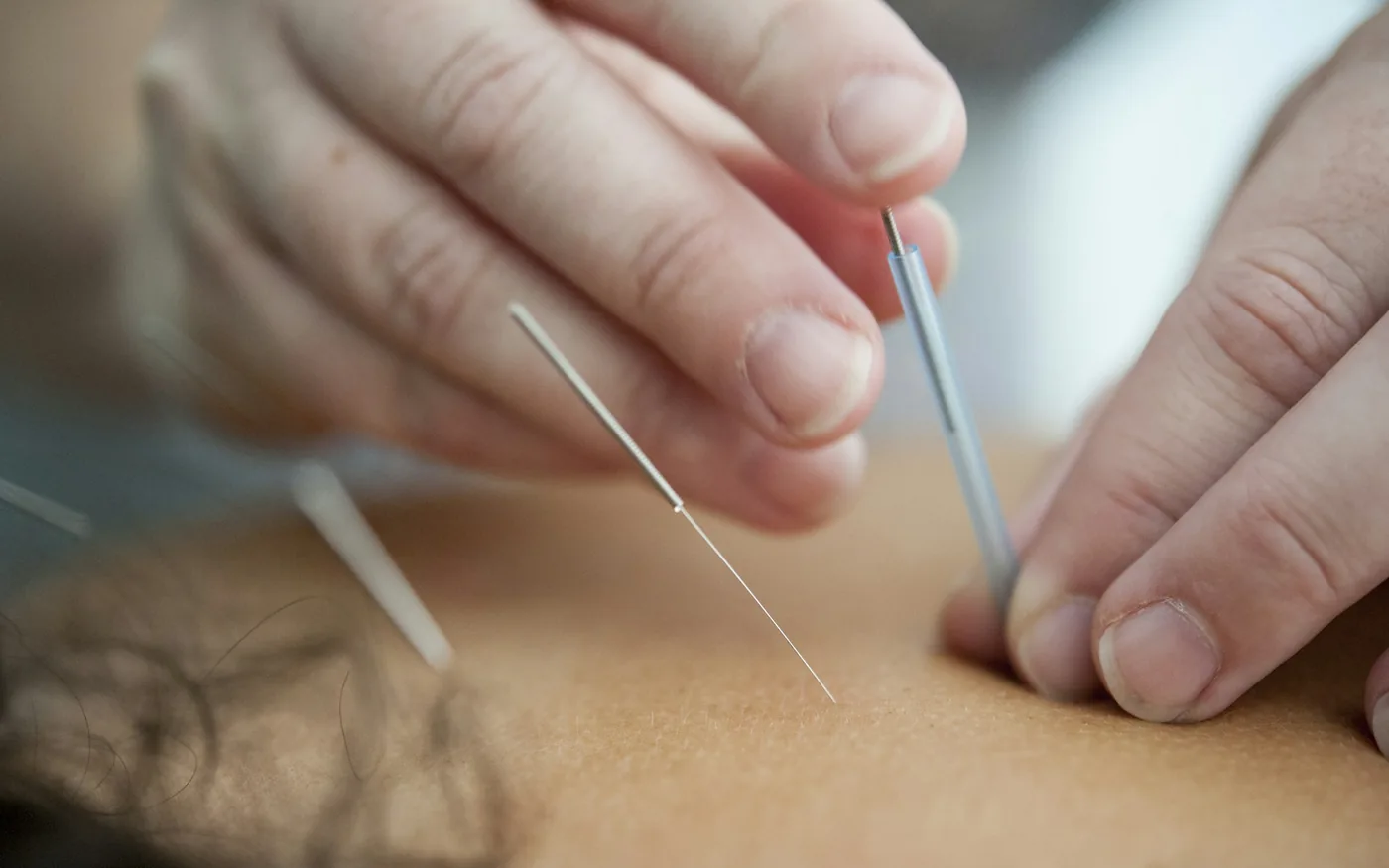
    Fine needles placed at auricular points on the outer ear
    Auricular points are frequently used in treatment for stress and anxiety.

    What tends to change, and in what order

    One thing worth setting expectations on: anxiety rarely improves in the order people expect. The racing thoughts are usually not the first thing to go.

    1. Sleep, first. Falling asleep faster, or waking less often, is the most commonly reported early change — sometimes after two or three sessions.
    2. Physical tension, second. Jaw, shoulders and chest tend to loosen before the mental picture shifts.
    3. Reactivity, third. People describe a slightly longer gap between something happening and their reaction to it.
    4. Baseline worry, last. The general hum of anxiety is usually the slowest to move and the most dependent on what else you are doing.

    That ordering is a useful diagnostic. If nothing at all has changed after six sessions, including sleep, acupuncture is probably not the right tool for you and we would rather say so.

    A quiet morning cup of tea by a window, part of a steadying daily routine
    Small, repeatable daily routines hold the benefit between appointments.

    What a session looks like

    Treatment for anxiety generally uses fewer needles than treatment for a musculoskeletal complaint, and points are often on the hands, feet, ears and scalp rather than anywhere that requires much undressing.

    Points on the hand and wrist, commonly used in treatment for anxiety
    Points on the hand and wrist are often used, so little undressing is needed.

    Needles stay in for twenty to thirty minutes in a quiet room. Many people describe it as the most genuinely restful half hour of their week, which is itself part of the effect. If the idea of needles is the thing holding you back, our piece on what acupuncture needles actually feel like covers that honestly.

    What supports it between sessions

    • Extend the exhale. Breathing out for longer than you breathe in is one of the few reliably calming things you can do in thirty seconds.
    • Protect the hour before bed. Sleep is the earliest thing to improve and the easiest to undo.
    • Walk outdoors daily. Twenty minutes, ideally in daylight. The North Shore makes this easy for most of the year.
    • Watch caffeine after midday. A common and entirely reversible contributor to both anxiety and poor sleep.
    A softly lit bedroom, where improved sleep is often the first change people notice
    Better sleep is the change people most often report first.

    What a course of treatment usually costs

    Anxiety treatment is usually a course rather than a single visit, so the arithmetic is worth doing before you start rather than after. Every rate we charge is published, and there is nothing to buy up front.

    What you might bookSessionsAt our published ratesWhen it tends to suit
    A single trial session1$75You want to know how you find it before committing
    An initial course4 weekly$300The usual starting point, with a review at the end
    A full course6 weekly$450Longer-standing anxiety, or slower early progress
    MaintenanceMonthly$75 per visitHolding a gain once things have settled
    Acupuncture with massageAlternating weekly$75 / $75 per 60 minWhere physical tension is a large part of the picture
    Acupuncture is $75 a session. Massage is $45 for 30 minutes, $75 for 60 and $105 for 90.
    A wooded walking path on the North Shore, used alongside treatment for stress
    A daily walk outdoors supports the work done in the treatment room.

    When to speak to a doctor first

    Please seek medical or psychological support directly, rather than starting with acupuncture, if you are experiencing thoughts of harming yourself, if anxiety is stopping you working or leaving home, or if symptoms have appeared suddenly without an obvious cause. Sudden-onset anxiety occasionally has a physical driver that should be excluded.

    Booking a session in Beverly

    Sessions are $75, listed in full on our published rates for acupuncture in Beverly, MA. Acupuncture runs Tuesday, Wednesday and Friday from 9am to 6pm and Saturday from 8am to 2pm, by appointment only.

    You can read more about our approach to acupuncture on the North Shore, meet the practitioners at our Cabot Street practice, or get in touch to book an appointment. If tension headaches are part of your picture, our article on acupuncture for migraines and tension headaches may also help, and where the anxiety sits alongside widespread pain and fatigue, see acupuncture for fibromyalgia.


    Frequently asked questions

    Can acupuncture replace therapy or anxiety medication?

    No, and it should not be presented that way. Acupuncture is best used alongside talking therapy, medication, or both. Never stop or reduce a prescribed medication because you have started acupuncture — that decision belongs with the person who prescribed it.

    What does acupuncture for anxiety actually feel like?

    Most people describe a heavy, settled feeling that arrives about ten minutes in and stays for the rest of the session. It is common to become drowsy or fall asleep. A number of people find it is the first time in weeks they have been still without reaching for a phone.

    How many sessions before anxiety improves?

    Weekly sessions for four to six weeks is the usual starting point. Sleep is often the first thing to shift, sometimes within two or three visits, and daytime anxiety tends to follow. Improvements generally accumulate rather than arriving all at once.

    Is acupuncture safe if I am already taking an SSRI?

    Acupuncture does not interact pharmacologically with antidepressants, and the two are commonly used together. Tell your acupuncturist what you take so that treatment can be planned around it, including any side effects such as disturbed sleep.

    Does acupuncture help panic attacks specifically?

    The research is largely on generalised anxiety rather than panic disorder, so the evidence is thinner for panic specifically. Some people find regular treatment reduces overall baseline tension, which makes attacks less frequent. For panic disorder, evidence-based psychological treatment should be the foundation.

    This article is general information, not medical advice. Acupuncture is intended to work alongside the care of your doctor, not to replace it. Please speak to a clinician about any new, severe or changing symptom.
  • Acupuncture for Back Pain: What the Evidence Shows and What to Expect

    Acupuncture for Back Pain: What the Evidence Shows and What to Expect

    Low back pain is the most common reason anyone walks through our door on Cabot Street, and it is also the condition acupuncture has been studied for most heavily. That combination lets you make an informed decision rather than a hopeful one.

    A person resting a hand against their lower back where the pain sits
    Low back pain is the most common reason people book their first acupuncture session.

    What the research actually says

    The evidence is real but not spectacular, and anyone saying otherwise is overselling. The National Center for Complementary and Integrative Health rates it low to moderate quality for chronic low back pain, and weaker for acute episodes.

    In practice: across many trials, people receiving acupuncture report modest but real improvements in pain and mobility, particularly against no treatment at all. The benefit shows in the short term, and occasional ongoing treatment is usually needed to hold it. You can read the summary from the NIH’s review of acupuncture effectiveness and safety.

    So: a reasonable option, particularly for people who would rather not lean on pain medication or who have not got far with other approaches. Not a cure, and not the obvious first choice for everyone.

    How acupuncture compares with other common approaches

    Most people arriving with back pain have already tried something else. Here is roughly how the options sit next to each other — and the best results usually come from combining two of them rather than picking one.

    ApproachBest suited toTypical time to noticeMain drawback
    AcupunctureChronic low back pain, muscular and postural pain, people avoiding medication2–4 sessionsNeeds a course of visits; benefit may fade without occasional top-ups
    Therapeutic massageMuscular tightness, stress-related holding patternsOften the same dayRelief can be shorter-lived on its own
    PhysiotherapyWeakness, post-injury recovery, movement retraining3–6 weeksRequires consistent home exercise to hold gains
    Chiropractic careJoint restriction and alignment complaints1–3 sessionsLess suited to diffuse muscular or stress-driven pain
    Pain medicationAcute flare-ups and short-term controlHoursSide effects; addresses symptoms rather than contributors
    How acupuncture sits alongside the other options people commonly try for low back pain.

    At this practice the pairing we see work most often is acupuncture with therapeutic massage for the muscular tightness that builds up around a painful back, usually on alternating weeks.

    Close view of a single sterile acupuncture needle, finer than a sewing needle
    The needles used are far finer than the ones most people picture.

    What a back pain session involves here

    The first visit

    The first appointment is longer than those that follow, because most of it is conversation. Vanessa will ask when the pain started, what worsens it, how you sleep, what your working day involves, and what has already been tried.

    That history matters. Back pain that flares after a long drive is treated differently from back pain that is worst on waking, even when both get called “lower back pain”.

    The treatment itself

    Needles go into the low back and gluteal muscles, and often into points on the leg or hand away from the painful area. They stay in for twenty to thirty minutes while you rest.

    A quiet treatment room with a made-up table, ready for a session
    Sessions are unhurried, and you see the same practitioner each visit.

    If you are apprehensive about the needles themselves, that is worth reading about separately — we have written in detail about what an acupuncture needle actually feels like going in.

    How many sessions, and how to tell if it is working

    An open-ended course is a bad deal for you. A defined block with a review point is a better one.

    StageTypical scheduleWhat you are looking for
    Sessions 1–2WeeklyAny change at all — looser mornings, better sleep, a shorter flare after activity
    Sessions 3–4WeeklyPain that is less intense, less frequent, or recovers faster
    Session 5–6Weekly or fortnightlyA clear enough pattern to decide whether to continue
    Beyond sixMonthly or as neededHolding the gain rather than chasing more of it
    A six-session block with an honest review is more useful than an open-ended commitment.

    If six sessions have produced nothing, we will say so. A referral back to your doctor serves you better than a seventh.

    Gentle floor stretching of the kind used between acupuncture sessions
    Gentle daily movement between sessions holds the benefit better than rest alone.

    What helps between sessions

    The work between appointments matters as much as the appointments, and none of it costs anything.

    Side-lying sleep with a pillow between the knees, which takes load off the lumbar spine
    How you sleep matters as much as how you sit.
    • Keep moving. Prolonged bed rest makes most low back pain worse, not better. Short, frequent walks beat one long one.
    • Break up sitting. Stand up every forty minutes or so. Setting a timer is less annoying than the flare-up it prevents.
    • Warmth over ice for persistent muscular back pain, unless there has been a recent acute injury.
    • Sleep position. A pillow between the knees when side-lying, or under the knees when on your back, takes load off the lumbar spine.
    • Note what preceded a flare. Patterns are easier to spot on paper than from memory.
    Seated desk posture, one of the common contributors to ongoing low back strain
    Long stretches of unbroken sitting are one of the most common contributors we see.

    When acupuncture is not the right first step

    Some back pain needs a doctor first. Seek assessment if any of these apply:

    • New weakness or numbness in a leg or foot
    • Any change in bladder or bowel control
    • Back pain following a significant fall or accident
    • Unexplained weight loss, fever, or night pain that wakes you
    • A history of cancer, osteoporosis, or long-term steroid use

    None of these rule acupuncture out permanently. They mean something else should be excluded first.

    Booking a session in Beverly

    Acupuncture is $75 a session, and the full price list is on our rates page for acupuncture and massage in Beverly — there are no packages to buy up front and nothing is added at the end.

    Appointments run Tuesday, Wednesday and Friday 9am to 6pm, and Saturday 8am to 2pm. You can see the full picture of how we approach acupuncture treatment at our Beverly clinic, read about the practitioners you would actually be seeing, or request an appointment at 146 Cabot Street.


    Where stress and muscular tension are part of the picture, our piece on using acupuncture for anxiety and everyday stress is also worth reading. If the pain is on the bony point of the hip rather than across the back, see pain on the outside of the hip; if it is widespread rather than local, acupuncture for fibromyalgia may be more relevant.


    Frequently asked questions

    How many acupuncture sessions does back pain usually take?

    Most people are advised to commit to a short course rather than a single visit. Six sessions over four to six weeks is a common starting point, with a review at the halfway mark. If nothing has shifted by the sixth session, that is useful information, and it is a reasonable point to stop and reconsider rather than keep going.

    Does acupuncture help sciatica as well as general back pain?

    Sciatic-type pain that radiates down the leg is common in practice, and treatment usually addresses the low back, hip and gluteal muscles together rather than the leg alone. Radiating pain with new weakness, numbness or any change in bladder or bowel control needs medical assessment first, not acupuncture.

    Can I have acupuncture while taking pain medication?

    Yes. Acupuncture is used alongside medication, physiotherapy and chiropractic care rather than in place of them. Tell your acupuncturist what you are taking, and do not change or stop a prescription without speaking to whoever prescribed it.

    Is acupuncture for back pain covered by insurance in Massachusetts?

    Some Massachusetts plans include acupuncture benefits and many do not, and coverage varies by employer as well as by insurer. Check your specific plan before booking. Our rates are listed in full on the rates page so you can work out the cost either way.

    How soon after a session might I notice a difference?

    Some people feel looser the same afternoon, others notice nothing until after the second or third visit. A mild ache or tiredness for a few hours afterwards is common and settles on its own. Sharp or worsening pain after a session is not expected and is worth a call.

    This article is general information, not medical advice. Acupuncture is intended to work alongside the care of your doctor, not to replace it. Please speak to a clinician about any new, severe or changing symptom.