146 Cabot Street, Beverly, MA 01915 978.524.4888 View Hours Get Directions

Category: Acupuncture & Wellness

Guides to acupuncture, massage and reflexology written by our practice at 146 Cabot Street, Beverly, MA. Every article listed newest first.

  • Acupuncture for Nausea: The Strongest Evidence We Have

    Acupuncture for Nausea: The Strongest Evidence We Have

    We have written about thirty conditions on this site, and for most of them the honest summary has been some version of “promising, low certainty, worth trying”. This one is different, and it is worth saying so clearly.

    Stimulation of a single point on the wrist for nausea is among the best-evidenced things in this field.
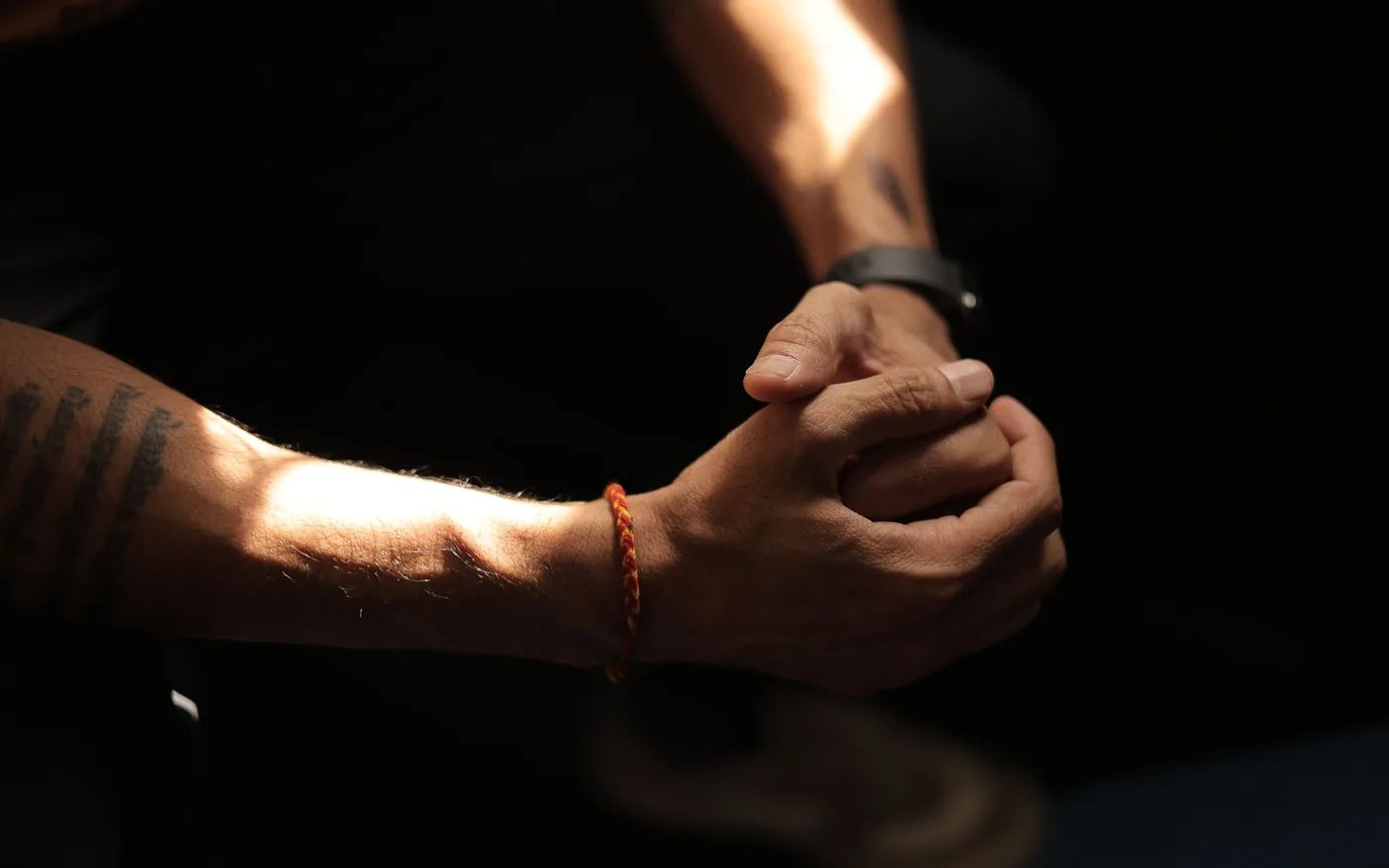
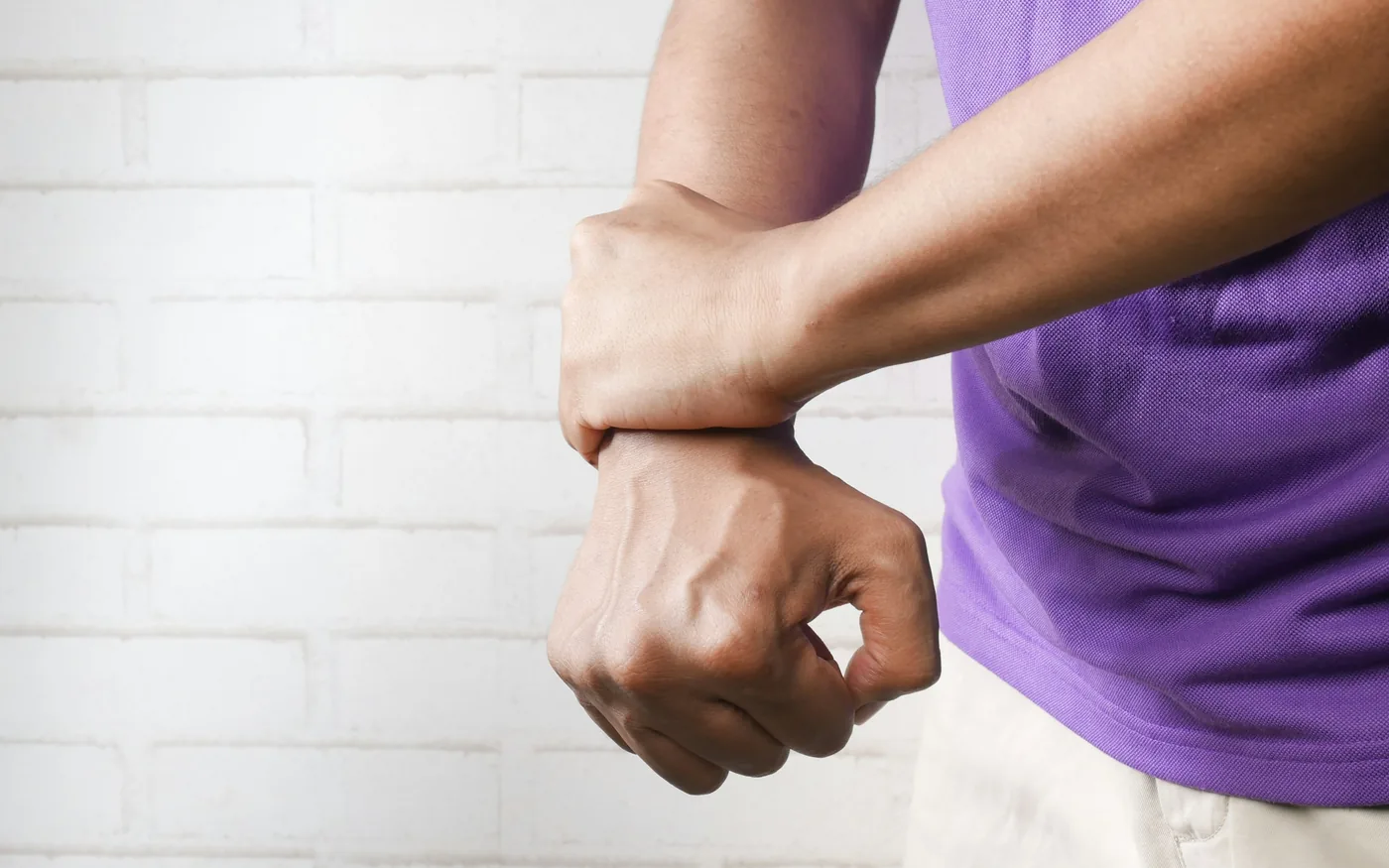
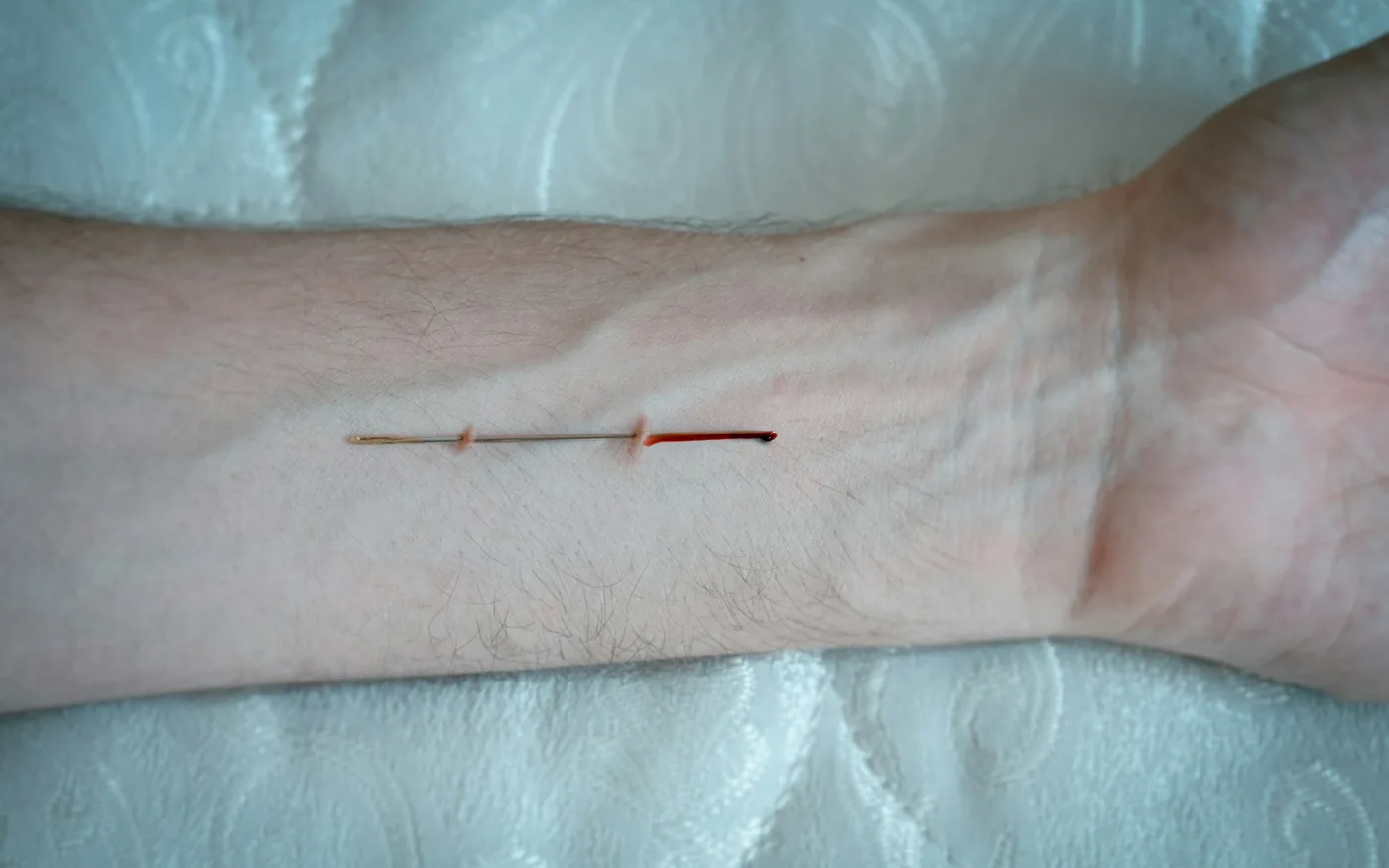
    P6, or Neiguan, sits on the inner forearm about three finger-widths from the wrist crease
    P6 sits on the inner forearm, three finger-widths from the wrist crease.

    What the evidence shows

    A Cochrane systematic review of stimulation at P6 for postoperative nausea and vomiting pooled 26 trials and more than 3,000 patients. It found real P6 stimulation superior to sham for both nausea and vomiting, in adults and in children.

    That combination — large trial count, consistent direction, and beating sham rather than merely beating no treatment — is what the other conditions on this site mostly lack.

    ComparisonFindingWhy it matters
    vs sham stimulationSuperior for nausea and vomiting, 26 trials, 3,000+ patientsPasses the hard test
    vs antiemetic drugsEquivalent for vomiting; possibly better for nauseaA real alternative, not just an add-on
    Adults vs childrenEffective in bothUnusual consistency
    Needles vs acupressure bandsSimilarly effectiveYou do not necessarily need a practitioner
    Guideline statusRecommended in Society for Ambulatory Anesthesia consensus guidanceIt has crossed into mainstream practice
    Anaesthetists use this. That is not something we can say about most of what is on this site.

    The professional body for anaesthesiology, the American Society of Anesthesiologists, publishes patient information on what to expect around surgery if that is your situation.

    Where P6 is, and how to find it

    This is worth knowing because you can use it yourself.

    1. Turn one arm palm up.
    2. Place three fingers of the other hand across the wrist, with the edge of your index finger on the wrist crease.
    3. Just past your ring finger, you are at the right level.
    4. Feel for the two tendons running down the middle of the forearm. The point sits between them.
    5. Press firmly for a minute or two, then swap arms.

    An acupressure band does the same job continuously, which is why they are sold for travel and morning sickness. The button should sit on that spot, not on the back of the wrist — worn wrongly they do nothing, which is probably why some people conclude they do not work.
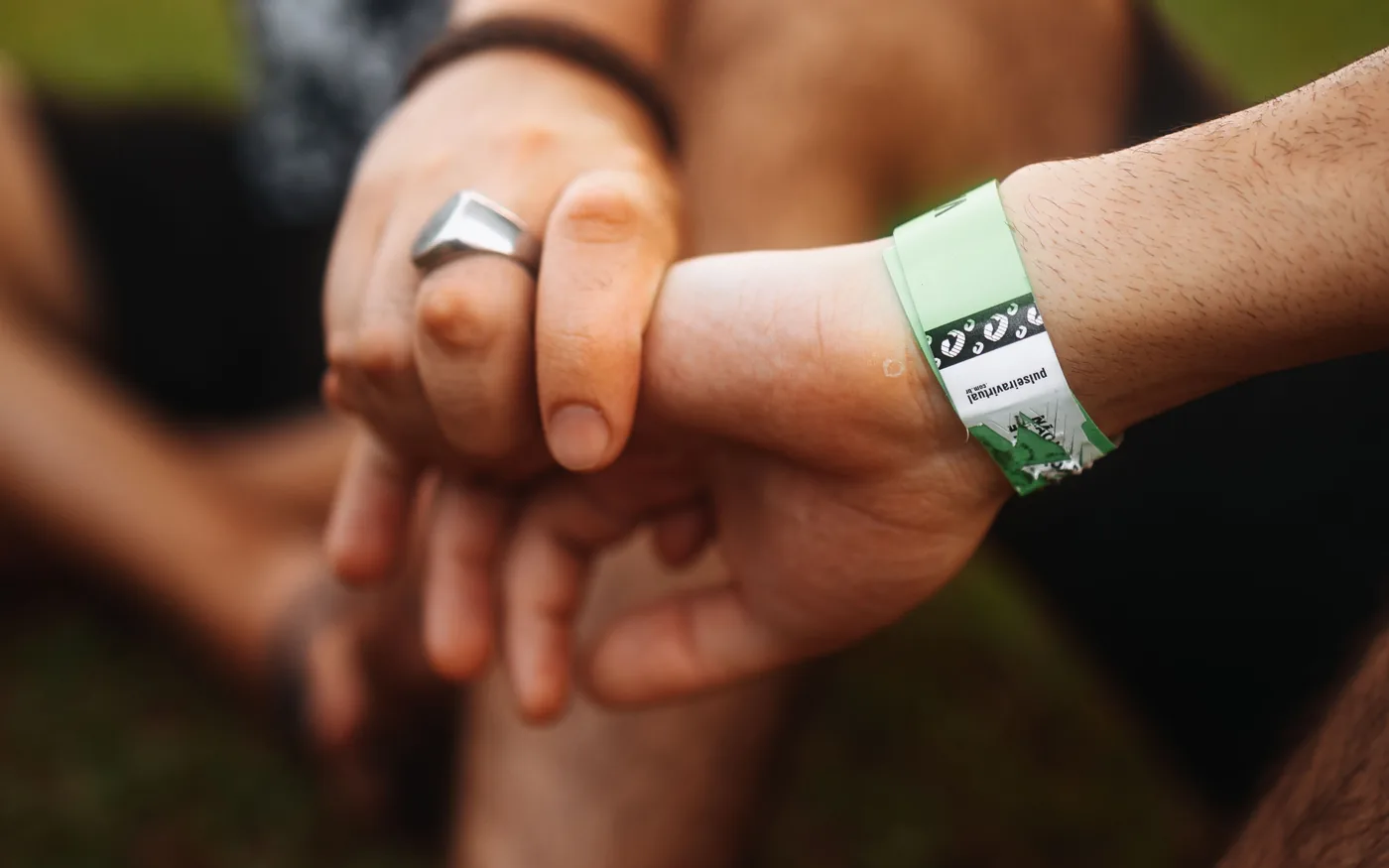
    Acupressure bands stimulate the same point without needles
    Acupressure bands stimulate the same point without needles.

    Why we are saying this so plainly

    Most of this site is careful to the point of being unhelpful about what acupuncture can do, because most of the evidence deserves that caution. Fibromyalgia, menopausal hot flashes and tennis elbow all get an honest “the trials do not really support this”.

    That is exactly what makes it worth saying when a use does have good support. A practice that claims everything works tells you nothing. One that tells you where the evidence is thin has earned the right to point at the place where it is not.

    What it covers, and what it does not

    The strength of the evidence varies a lot by cause, and it is worth being specific rather than claiming it helps “nausea”.

    CauseEvidenceSensible use
    After surgeryStrongestDiscuss with your anaesthetist; bands are easy to use
    Motion sicknessReasonableA band before travelling is low cost and low risk
    PregnancySome supportBands are commonly used; raise it with your midwife or doctor
    ChemotherapySome supportOnly alongside your oncology team, never instead
    Migraine-relatedIndirectTreating the migraine matters more
    New, unexplained nauseaNot applicableNeeds a diagnosis first
    Persistent nausea without an obvious cause is a symptom to have investigated, not managed with a wristband.
    Post-operative nausea is where the trial evidence is strongest
    Post-operative nausea is where the trial evidence is strongest.

    Why one point, and why the wrist

    It is a fair question. Most of acupuncture involves individual diagnosis and a different set of points for each person. Nausea is the exception: the research has converged on a single point used the same way for almost everyone.

    P6 sits directly over the median nerve, which is thought to be part of why stimulating it has such a consistent effect. It is also the reason the technique transfers so readily to a band — there is no point selection to get wrong.
    Motion sickness is one of the everyday uses people ask about
    Motion sickness is one of the everyday uses people ask about.

    What else helps

    • Ginger has its own modest evidence, and works independently of the acupressure.
    • Small, dry, plain food rather than nothing at all. An empty stomach usually makes nausea worse.
    • Cool air and a fixed horizon for motion sickness — front seat, window open, eyes on the road.
    • Sips rather than glasses. Large volumes come straight back.
    • Avoid strong smells, which are a bigger trigger than most people credit.

    Ginger has its own modest evidence and works alongside acupressure
    Ginger has modest evidence of its own and works alongside acupressure.

    None of this needs a practitioner. We would rather you knew it than paid us for it.
    Rest, air and small sips remain the practical basics
    Rest, air and small sips remain the practical basics.

    When to see a doctor

    Please seek medical advice for nausea that is persistent or unexplained; nausea with severe abdominal pain, a headache unlike any before, chest pain, or a stiff neck; vomiting blood or anything resembling coffee grounds; inability to keep fluids down for more than a day; or nausea alongside unexplained weight loss.

    Booking a session in Beverly

    Acupuncture is $75 a session, published with everything else on our rates page. Honestly though, for travel sickness a five-dollar wristband is the sensible first step, and we would rather tell you that than book you in.

    Browse all our articles, read how acupuncture works, or get in touch.


    Frequently asked questions

    Does acupuncture really work for nausea?

    For this one, the evidence is unusually good. A Cochrane review of stimulation at the P6 point covering 26 trials and more than 3,000 patients found it superior to sham for both nausea and vomiting, in adults and children. It is one of very few uses that reaches this standard of support.

    Where is the P6 point?

    On the inner forearm, about three finger-widths up from the wrist crease, between the two tendons you can feel running down the middle. Its traditional name is Neiguan, meaning inner gate. It sits over the median nerve.

    Do the wristbands work as well as needles?

    The reviews found P6 stimulation similarly effective across methods, invasive and non-invasive. So an acupressure band is a reasonable option, particularly for travel sickness where you want something you can apply yourself.

    Is it as good as anti-sickness medication?

    Pooled trial data put P6 stimulation as broadly equivalent to antiemetics for vomiting, and possibly better for nausea itself. It is not a replacement for prescribed medication, but it is a genuine option alongside it, or where medication is unsuitable.

    What kinds of nausea does this cover?

    The evidence is strongest for nausea after surgery. There is also support for chemotherapy-related and pregnancy-related nausea, though those need to be managed with the team treating you, not instead of them. Motion sickness is a common everyday use.

    This article is general information, not medical advice. Acupuncture is intended to work alongside the care of your doctor, not to replace it. Please speak to a clinician about any new, severe or changing symptom.
  • Pain on the Outside of the Hip: What It Usually Is

    Pain on the Outside of the Hip: What It Usually Is

    Pain on the bony point of the hip, worst when you lie on that side at night, is one of the most commonly mislabelled complaints we see. People arrive having been told it is arthritis, or sciatica, or bursitis.

    It is usually a tendon problem, and that changes what helps.

    Lying on the painful side at night is the most recognisable symptom
    Lying on the painful side at night is the most recognisable symptom.

    Working out what it actually is

    Hip pain gets treated as one thing. It is at least four, and where it hurts is the best clue.

    Where the pain isLikely causeTypical giveaway
    Bony point on the outsideGluteal tendinopathyWorst lying on it at night
    Groin, deep in frontHip joint — often osteoarthritisStiff turning the leg; worse putting socks on
    Buttock, running down the legReferred from the back or nerveSee sciatica
    Front of the hip on flexingHip flexor or joint impingementWorse on deep squatting
    All over, with fever or swellingNeeds medical assessmentSee a doctor
    Gluteal tendinopathy accounts for up to 20% of hip presentations and predominantly affects women over 40.

    The Arthritis Foundation and the American College of Rheumatology’s patient resources both cover the joint-related causes if the pattern above points at the groin instead.

    Why lying down is the worst part

    This is the detail that makes the condition recognisable, and it has a mechanical explanation worth knowing because it suggests the fix.

    Lying on the painful side compresses the tendon straight against the bone. But lying on the other side is often just as bad, because the top leg drops across the body and stretches the tendon over that same bony point.

    A pillow between the knees keeps the top hip in line and removes the second problem entirely. It is free, and for a fair number of people it is the single most effective thing they do.

    A pillow between the knees keeps the top hip from dropping across at night
    A pillow between the knees stops the top hip dropping across at night.

    What the evidence supports

    Targeted physiotherapy has the best long-term results. One study found around 60% of patients reporting symptom resolution at fifteen months, outperforming both shockwave therapy and corticosteroid injection over that period.

    Steroid injection gives good short-term relief and worse long-term outcomes when used alone — a pattern that repeats across tendon problems. Combined with rehabilitation it does better.

    There is no good trial evidence for acupuncture in this condition specifically. What applies is the general musculoskeletal pain literature, which makes it a reasonable adjunct rather than an evidenced treatment for the tendon itself.

    Progressive gluteal strengthening has the best long-term evidence
    Progressive gluteal strengthening has the best long-term evidence.

    How the options compare

    OptionShort termAt 12-15 monthsNote
    Targeted physiotherapySlowerBest — around 60% report resolutionThe treatment; everything else supports it
    Load and posture changesGradualSubstantialFree, and prevents recurrence
    Corticosteroid injectionGoodWorse than physiotherapy aloneBetter combined with rehabilitation
    Shockwave therapyModerateBelow physiotherapyPromising, limited evidence
    Acupuncture and massageSymptom reliefNo specific trial evidenceAdjunct while you do the loading work
    RestFeels betterWorseTendons weaken without load
    The pattern repeats across tendon problems: the passive options win the first month and lose the year.

    What makes it worse

    Almost all of these involve compressing the tendon against the bone, and most are habits rather than activities.

    • Standing with your weight hitched onto one hip. Extremely common, and directly compressive.
    • Sitting cross-legged, or with knees together and feet apart.
    • Figure-four and cross-body stretches. These feel like they should help and usually make it worse.
    • Hills and stairs, which load the tendons heavily.
    • Sleeping without a pillow between the knees.
    Standing with weight hitched onto one hip compresses the tendon
    Standing with weight hitched onto one hip compresses the tendon.

    Why it is so often called bursitis

    For decades this was labelled trochanteric bursitis, and the name persists. Current understanding is that the primary problem is usually the tendon, with bursal inflammation secondary or absent altogether.

    That matters practically. If the problem is inflammation of a fluid sac, an anti-inflammatory injection is the obvious answer. If it is a degenerative tendon that has lost its capacity to take load, the answer is graded loading, and repeated injections may weaken it further.

    It is the same reframing that happened with tennis elbow, and it points in the same direction: load the tendon rather than calm it down.

    Where treatment fits

    Needling addresses the gluteal muscles and the lateral hip, along with the low back, which is frequently involved. Hands-on work helps the surrounding muscular tension.

    But we would say the same thing here as for tennis elbow: the loading programme is the treatment, and what we do is make it easier to get on with. If a practice tells you otherwise about a tendon, be sceptical.

    Needles placed around the gluteal muscles and lateral hip
    Needles placed around the gluteal muscles and lateral hip.

    When to see a doctor

    Seek assessment for hip pain following a fall, particularly if you cannot weight-bear; for a hip that is hot, swollen or accompanied by fever; for night pain that is constant rather than positional; or for pain with unexplained weight loss.

    That third one is the distinction worth holding onto. Tendon pain is positional — it hurts because of how you are lying. Pain that is there regardless of position, and wakes you from sleep on its own, is a different question.

    Booking a session in Beverly

    Acupuncture is $75 a session and massage is $45 for 30 minutes, $75 for 60 and $105 for 90 — all on our rates page.

    Browse all our articles, see acupuncture for knee and joint pain if the pain is in the groin rather than the side, or get in touch to book an appointment.

    Hills and stairs load the gluteal tendons and often provoke the pain
    Hills and stairs load the gluteal tendons and often provoke the pain.

    Frequently asked questions

    What causes pain on the outside of the hip?

    Most often gluteal tendinopathy — irritation of the tendons attaching at the bony point of the hip — sometimes with bursitis alongside. Together these are called greater trochanteric pain syndrome. It accounts for up to a fifth of hip presentations and affects women over 40 around four times as often as men.

    Is it arthritis?

    Usually not. Hip osteoarthritis typically causes pain in the groin and stiffness turning the leg, not pain on the bony point of the hip. The distinction matters because the treatment is different.

    Why does it hurt so much at night?

    Lying on the affected side compresses the tendon directly against the bone. Lying on the other side is often just as bad, because the top leg drops across and stretches the tendon over the bone. A pillow between the knees fixes the second problem.

    What helps most?

    Progressive gluteal strengthening. Targeted physiotherapy outperforms both shockwave therapy and corticosteroid injection at longer follow-up, with around 60% reporting resolution at fifteen months. Everything else supports that.

    Should I stretch it?

    Careful with the classic figure-four and cross-body stretches — they compress the tendon against the bone and often make this worse. Strengthening is more useful than stretching here.

    This article is general information, not medical advice. Acupuncture is intended to work alongside the care of your doctor, not to replace it. Please speak to a clinician about any new, severe or changing symptom.
  • Whiplash: What Helps, and What the Evidence Says to Do First

    Whiplash: What Helps, and What the Evidence Says to Do First

    The most useful advice after a whiplash injury is also the least satisfying: keep moving, and expect it to take weeks rather than days.

    This sets out what the evidence supports, where hands-on treatment fits, and the symptoms that mean going to a doctor rather than a treatment room.

    Low-speed collisions produce whiplash as readily as high-speed ones
    Low-speed collisions produce whiplash as readily as high-speed ones.

    What actually happens

    The head is thrown rapidly forward and back, loading the neck muscles, ligaments and joints beyond their usual range. Symptoms usually appear over the following twelve to seventy-two hours rather than at the moment of impact.

    Two things surprise people. First, that delay is normal. Second, the relationship between how bad the car looks and how bad you feel is weak — a low-speed shunt can produce genuine symptoms, and a badly damaged car can leave everyone in it unhurt. Vehicle damage is a poor proxy for injury in either direction.

    Move early: this is the main message

    The advice on this has reversed over the past few decades, and not everyone has caught up.

    ApproachCurrent standingWhy
    Return to normal activity earlyRecommendedConsistently better outcomes than resting up
    Neck-specific exerciseBest evidence for persistent casesSupervised programmes outperform general activity
    Reassurance and informationRecommendedFor mild cases, advice performs as well as intensive physio
    Soft collarNo longer recommendedAssociated with slower recovery
    Prolonged restNot recommendedStiffness and deconditioning compound the problem
    Manual therapy and massageUseful adjunctEffective for neck pain generally
    AcupunctureLimited evidenceReasonable for symptom relief alongside exercise
    Exercise is the treatment. Everything else on this list supports it.

    For background on how persistent pain develops and is managed, the International Association for the Study of Pain publishes patient-facing resources.

    Neck-specific exercise has the strongest evidence for chronic whiplash
    Neck-specific exercise has the strongest evidence for chronic whiplash.

    The grades, and why they matter

    Whiplash-associated disorder is graded, and the grade largely determines what should happen next.

    GradeWhat it meansWhat is usually advised
    Grade 0No neck complaint, no signsNothing needed
    Grade 1Pain or stiffness, no physical findingsAdvice and normal activity; performs as well as intensive physiotherapy
    Grade 2Neck complaint with musculoskeletal signsAdvice plus exercise; hands-on treatment as an adjunct
    Grade 3Neck complaint with neurological signsMedical assessment first
    Grade 4Fracture or dislocationEmergency care
    For grades 1 and 2, simple advice and staying active is as effective as an intensive programme. That is a genuinely reassuring finding.

    Most people who come to us are grade 1 or 2, several weeks in, with pain that has not settled as quickly as they hoped. That is a normal timeline rather than a sign something is wrong.

    Needles placed through the neck and upper back
    Needles placed through the neck and upper back.

    Where we fit

    Honestly: as an adjunct, for the symptoms that make it hard to do the exercises.

    Muscular guarding after a neck injury is real and painful, and it is the thing that most often stops people moving normally. Hands-on work and needling both help with that, which indirectly helps the recovery that the movement is actually driving.

    Where headache from the upper neck is a feature — and it often is — our guides to massage for neck and shoulder pain and acupuncture for tension headaches cover the overlap.

    Headache from the upper neck is one of the commonest lingering symptoms
    Headache from the upper neck is a common lingering symptom.

    The recovery curve, and what predicts it

    Most whiplash follows a fairly consistent path, and knowing it removes a good deal of unnecessary worry.

    1. First 72 hours. Symptoms appear and build. This is expected and is not a sign of deterioration.
    2. First two weeks. Usually the worst of it. Movement feels counterintuitive and matters most here.
    3. Two to six weeks. Steady improvement for most people, often with the occasional bad day rather than a smooth line.
    4. Six to twelve weeks. The majority are substantially better.
    5. Beyond three months. A minority have persistent symptoms, at which point supervised neck-specific exercise has the best evidence.

    The strongest predictors of a slower recovery are not the speed of the collision or the damage to the car. They are high early pain intensity and high early distress — which is part of why being reassured, staying active and sleeping reasonably matter as much as any treatment.

    What helps in the first fortnight

    1. Keep the neck moving gently in all directions, several times a day, within comfort.
    2. Carry on with normal activities, modified rather than abandoned.
    3. Use warmth after the first day or two to ease the muscular guarding.
    4. Sleep with one supportive pillow, not a stack.
    5. Take simple pain relief regularly at first if you need it, so you can move rather than brace.
    Returning to normal activity early is better supported than resting up
    Returning to normal activity early is better supported than resting up.

    When it needs urgent assessment

    Most whiplash is soft-tissue injury. Some is not, and these need immediate medical attention rather than any treatment we offer:

    • Numbness, tingling or weakness in the arms or legs
    • Severe neck pain with midline tenderness over the bones
    • Loss of consciousness at the time, or confusion afterwards
    • Severe headache unlike any before, or a worsening one
    • Difficulty swallowing or speaking
    • Any change in bladder or bowel control

    If you have not been assessed since the collision and any of these apply, please go to a doctor before booking anything. We would decline the appointment anyway, and it is better for you to hear that from a clinician who can examine you than from us over the phone.

    Booking a session in Beverly

    Acupuncture is $75 and massage is $45 for 30 minutes, $75 for 60 and $105 for 90 — all on our rates page. For an acute neck injury we would usually suggest waiting until you have been assessed.

    Browse all our articles, or get in touch to book an appointment.

    Most whiplash settles within weeks; a minority does not
    Most whiplash settles within weeks; a minority does not.

    Frequently asked questions

    How long does whiplash take to settle?

    Most people improve substantially within six to twelve weeks. A minority develop persistent symptoms, and the strongest predictor is not the severity of the collision but early pain intensity and distress — which is part of why early reassurance and movement matter.

    Should I rest or move?

    Move. Prolonged rest and collars are no longer recommended for ordinary whiplash and are associated with slower recovery. Returning to normal activity early, within comfort, has better outcomes.

    Does acupuncture help whiplash?

    The evidence is thin. A service evaluation found reduced pain and improved neck disability scores, but no systematic review has been published since 2014. Neck-specific exercise has considerably better evidence, so acupuncture is best used alongside it for symptom relief rather than as the treatment.

    Why did symptoms start the next day?

    That is the usual pattern rather than a complication. Pain and stiffness typically appear over the following twelve to seventy-two hours as the soft tissue response develops.

    Do low-speed collisions cause whiplash?

    Yes. There is a poor relationship between vehicle damage and symptoms. A minor-looking bump can produce real symptoms, and a badly damaged car can leave someone unhurt.

    This article is general information, not medical advice. Acupuncture is intended to work alongside the care of your doctor, not to replace it. Please speak to a clinician about any new, severe or changing symptom.

  • Acupuncture for Fibromyalgia: A Careful Look at What Helps

    Acupuncture for Fibromyalgia: A Careful Look at What Helps

    Fibromyalgia is the condition where we are most careful about what we say, for two reasons. People with it have usually been dismissed by somebody already, and they have usually also been sold something.

    So this is a deliberately measured account.

    Widespread pain and exhaustion are the defining features
    Widespread pain and exhaustion are the defining features.

    What the evidence actually shows

    The findings split in a way worth understanding rather than glossing.

    ComparisonFindingWhat it means
    vs no treatment or usual careImproves pain — low-quality evidencePeople do feel better than doing nothing
    vs sham acupunctureReasonably good evidence of no advantageThe needling location may not be the active part
    Function (2020 AHRQ review)Small improvement vs shamA modest genuine effect on daily function
    Adverse effectsNone attributed to acupuncture in the reviewsLow risk if you try it
    Overall certaintyLowNothing here is settled
    This is the same pattern as menopausal hot flashes: a real response, but not clearly from the specific needling.

    The Arthritis Foundation publishes a plain overview of fibromyalgia and its management if you want a broader picture of the options.

    What has better evidence

    We would rather point you at these first, even though they are not things we sell.

    1. Graded movement. Tai chi, qi gong and yoga have the most consistent support. Start far below what you think you can manage.
    2. Pacing. Working within your limits on good days rather than catching up. The boom-and-bust cycle is the single biggest driver of flares.
    3. Mindfulness-based approaches. Reasonable evidence, and useful for the distress that accompanies chronic pain.
    4. Sleep. Unrefreshing sleep is a core feature, not a side effect, and improving it improves everything else.
    5. Then adjuncts like acupuncture, for symptom relief alongside the above.
    Gentle movement such as tai chi has some of the best evidence
    Gentle movement such as tai chi has some of the best evidence.

    How treatment differs here

    If you have fibromyalgia, a standard session is often too much. Heightened sensitivity to pressure and touch is part of the condition, and vigorous treatment reliably produces a flare.

    • Fewer needles, placed more shallowly.
    • Shorter sessions to begin with, building only if they are tolerated.
    • Distal points — hands, feet, lower legs — rather than the most tender areas.
    • No deep tissue work unless you specifically ask for it and know how you respond.

    Say at the outset if previous treatment has flared you. That changes the plan rather than being a complication.

    Treatment is deliberately gentler where sensitivity is heightened
    Treatment is deliberately gentler where sensitivity is heightened.

    A realistic ranking of the options

    Fibromyalgia attracts an enormous number of proposed treatments. This is roughly how the mainstream ones sit against each other.

    ApproachEvidencePractical note
    Graded movementBest of anything on this listTai chi, qi gong, yoga; start absurdly small
    Pacing and activity managementGoodFree, difficult, and the biggest lever most people have
    Mindfulness-based approachesReasonableHelps the distress as well as the pain
    Sleep treatmentReasonableOften the most productive first target
    AcupunctureLow quality; no advantage over shamLow risk; reasonable as an adjunct
    MassageLimitedComfort value; keep the pressure light
    Rest and avoidanceCounterproductiveDeconditioning makes everything worse over time
    Nothing on this list is a cure, and any practitioner offering one for fibromyalgia is not describing the evidence.

    We include acupuncture on that list in the position the evidence puts it, not higher. It is worth trying if the things above it are already in place and you want additional symptom relief.

    Pacing matters more than any appointment

    This is the intervention that changes most people’s weeks, and it is free.

    The pattern most people fall into is doing everything on a good day and then losing three to a flare. Pacing means doing somewhat less than you could on the good day, so the next two stay usable. It is genuinely difficult and it works better than anything in a treatment room.

    Pacing activity across the week matters more than any single treatment
    Pacing across the week matters more than any single treatment.

    Why the sham finding is not a dismissal

    “No better than sham” reads like a debunking, and it is worth unpacking, because it is not quite that.

    Sham acupuncture is not nothing. It usually involves real needles at non-standard points, or blunt needles pressed against the skin, delivered by an attentive practitioner over a quiet half hour. It is an active comparison, not an empty one.

    What the finding tells you is that the traditional point selection may not be doing the work. It does not tell you that people leave feeling the same as when they arrived, because against no treatment they do not.

    Sleep is not a side issue

    Unrefreshing sleep is one of the diagnostic features, and the relationship runs both ways: poor sleep amplifies pain, and pain disrupts sleep.

    It is often the most productive thing to treat first, partly because progress is easier to measure. Our guide to acupuncture for sleep and insomnia sets out what the evidence supports there, including the parts it does not.

    Waking unrefreshed is one of the core features rather than a side issue
    Waking unrefreshed is a core feature rather than a side issue.

    If the idea of a nervous system that has become more sensitive is new to you, it is worth reading in its own right — why pain persists after the injury has healed sets out the mechanism that sits underneath a good deal of this.

    When to see a doctor

    See your doctor if widespread pain is new and undiagnosed — thyroid disease, vitamin D deficiency, inflammatory arthritis and sleep apnoea can all produce a similar picture and are treatable. Also if you have joint swelling, fever, rash or unexplained weight loss, none of which belong to fibromyalgia.

    Being taken seriously is part of what makes treatment work
    Being taken seriously is part of what makes treatment work.

    Booking a session in Beverly

    Acupuncture is $75 a session, published with everything else on our rates page. Say when you book that you have fibromyalgia so the first session can be planned gently.

    Browse all our articles, or get in touch to talk it through first. If we do not think we can help, we will say so.


    Frequently asked questions

    Does acupuncture help fibromyalgia?

    Modestly, and with an important caveat. Reviews find low-quality evidence that it improves pain compared with no treatment or usual care, and reasonably good evidence that it is no better than sham acupuncture. A 2020 review found a small improvement in function against sham. So: a real effect for many people, but the specific needling may not be what produces it.

    What has better evidence?

    Graded movement, particularly tai chi, qi gong and yoga, along with mindfulness-based approaches. These have more consistent support than acupuncture does, and they are things you can keep doing without an appointment.

    Is fibromyalgia real?

    Yes. It is a recognised condition involving changes in how the nervous system processes pain signals. Being told otherwise is unfortunately common and does real harm. Any practitioner who implies it is imaginary is not one to see.

    Will treatment make me flare?

    It can, if it is too vigorous. Sensitivity to touch and pressure is part of the condition, so treatment here is deliberately gentler — fewer needles, shallower, shorter sessions to start. Tell us if previous treatment has flared you.

    How would I know if it is helping?

    Pick two concrete things before you start: hours of useful activity in a day, and how you feel on waking. General “am I better” questions are unreliable in a condition that fluctuates this much.

    This article is general information, not medical advice. Acupuncture is intended to work alongside the care of your doctor, not to replace it. Please speak to a clinician about any new, severe or changing symptom.

  • Acupuncture for Tennis Elbow: Where the Evidence Is Thin

    Acupuncture for Tennis Elbow: Where the Evidence Is Thin

    We have written about twenty-five conditions on this site. Of all of them, this is the one where the evidence for acupuncture is thinnest, and it seems worth leading with that rather than burying it.

    Gripping and lifting are the movements that reproduce the pain
    Gripping and lifting are the movements that reproduce the pain.

    What the evidence actually says

    A systematic review of randomised trials covering just over 300 participants found that people receiving acupuncture were likely to show improvement in elbow function and grip strength.

    The same review then rated the quality of that evidence as very low to low on GRADE, and concluded that no firm conclusion can be drawn, because the studies were few and methodologically poor. More recent work suggests acupuncture combined with manual therapy may do better than acupuncture alone.

    That is not a reason to refuse to treat it. It is a reason not to promise anything. Given the safety profile, trying it is a defensible decision — but you should make that decision knowing where the evidence stands.

    What matters more

    Progressive tendon loading. This is not a hedge; it is what the evidence supports most strongly for tendinopathy generally.

    ApproachEvidenceRealistic role
    Progressive strengtheningStrongThe foundation — everything else is an addition
    Load managementStrongReduce the aggravating activity without stopping
    Counterforce braceModerateUseful while the tendon settles
    Manual therapyModerateHelps the surrounding forearm muscles
    AcupunctureVery low to lowReasonable to try alongside the above
    Steroid injectionGood short term, worse long termFaster relief, higher recurrence
    That last row surprises people: injections work well at six weeks and worse than doing nothing at a year.

    Guidance on the exercise side is published by the American Orthopaedic Society for Sports Medicine.

    Loading the tendon progressively is the best-evidenced treatment
    Loading the tendon progressively is the best-evidenced treatment.

    Where acupuncture might add something

    Two situations, honestly stated.

    First, pain that is limiting the loading exercises. If it hurts too much to do the strengthening, anything that reduces the pain enough to let you start has value, even if it is not treating the tendon itself.

    Second, the forearm muscle tightness that builds up around a painful elbow. That responds to needling and to hands-on work reasonably well, and it is often a meaningful part of the day-to-day discomfort even when it is not the core problem.

    Needles placed along the forearm extensors rather than only at the elbow
    Needles along the forearm extensors rather than only at the elbow.

    Using a brace sensibly

    A counterforce strap sits just below the elbow and reduces the pull on the tendon attachment. It is a genuinely useful stopgap and a poor long-term plan.

    Wear it for the activities that provoke the pain rather than all day. Worn constantly it lets you keep doing the thing that caused the problem, which delays the point at which you address the load properly.

    A counterforce strap can reduce load on the tendon while it settles
    A counterforce strap reduces load on the tendon while it settles.

    Why “tendinitis” is the wrong word

    Tennis elbow used to be called lateral epicondylitis, the “-itis” implying inflammation. Tissue studies have largely overturned that: what is found is disorganised, degenerative tendon rather than an inflammatory process.

    That is not pedantry, because it changes what makes sense. Anti-inflammatory approaches target something that is largely not there, which is part of why rest and ice disappoint so many people, and why progressive loading — which stimulates the tendon to remodel — outperforms them.

    What actually causes it

    Rarely tennis. The overwhelming majority of cases we see come from repetitive gripping at work.

    • Trades — screwdrivers, wrenches, anything with sustained torque
    • Hairdressing and anything involving scissors all day
    • Kitchen work — knives, pans, repetitive chopping
    • Extended mouse use, particularly a mouse that is too small
    • New or increased gym loading, especially pulling movements

    Identifying which of these applies matters more than the treatment does, because unchanged load means recurrence.

    Repetitive gripping at work causes far more tennis elbow than tennis does
    Repetitive gripping at work causes far more tennis elbow than tennis does.

    Why we still offer it

    A fair question, given everything above. Three reasons.

    • The risk is low. Few adverse events are reported, so the cost of trying is money and time rather than harm.
    • Pain relief has instrumental value. If it lets you start the loading programme that actually treats the tendon, it has earned its place even without treating the tendon itself.
    • The forearm work helps regardless. The muscular tightness around a painful elbow responds well, and that is a real part of the daily discomfort.

    What we would not do is present it as an established treatment for the tendon problem, because it is not.

    A realistic timeline

    Six to twelve months is common for full resolution. Tendons remodel slowly and there is no shortcut.

    That long natural history is also why so many treatments appear to work: start almost anything at month five and it will look effective. Being aware of that is part of judging any claim made about this condition, including ours.

    Tendon problems recover over months rather than weeks
    Tendons recover over months rather than weeks.

    Tennis elbow or golfer’s elbow?

    The same problem on opposite sides of the joint, and people often use the wrong name for theirs.

    Tennis elbowGolfer’s elbow
    Where it hurtsOutside of the elbowInside of the elbow
    Tendons involvedWrist extensorsWrist flexors
    Provoked byGripping, lifting with the palm downGripping, lifting with the palm up
    Treatment principleProgressive loadingIdentical
    TimelineMonthsMonths
    Everything on this page applies to both. Only the side and the specific loading exercises differ.

    If yours is the inside of the elbow, our guide to golfer’s elbow covers it in its own right — including the ulnar nerve problem it is most often mistaken for, which needs assessing rather than loading.

    When to see a doctor

    Seek assessment for elbow pain following a fall or direct blow, numbness or tingling into the hand, a joint that locks or gives way, swelling with warmth and redness, or pain that is not improving at all after three months of appropriate loading.

    Booking a session in Beverly

    Acupuncture is $75 a session and massage is $45 for 30 minutes, $75 for 60 and $105 for 90 — all on our rates page. For an elbow, thirty minutes of focused forearm work is often the sensible booking.

    The same principles apply to the other tendon problems on this site — plantar fasciitis and gluteal tendinopathy at the hip — because they are the same kind of problem in a different place.

    Browse all our articles, see recovery work for active people, or get in touch. If we do not think we can help, we will tell you.


    Frequently asked questions

    Does acupuncture work for tennis elbow?

    The honest answer is that nobody can say confidently. Systematic reviews find some improvement in elbow function and grip strength, but rate the evidence very low to low quality and decline to draw a firm conclusion. It is a reasonable thing to try, not a reliable thing to promise.

    What works better?

    Progressive loading of the tendon. Structured strengthening exercise has the best evidence for tendinopathy by a clear margin. It is slow and dull and it works, and any treatment is an addition to it rather than a replacement.

    How long does tennis elbow take to get better?

    Months rather than weeks — often six to twelve. Tendons remodel slowly. Most cases do eventually resolve, which is why plenty of treatments appear to work if you start them late enough.

    Do I have to stop playing or working?

    Reduce the load rather than stopping. Complete rest weakens the tendon further and the pain returns on resuming. Modify grip size, technique and volume instead.

    Is it caused by tennis?

    Rarely. Most cases come from repetitive gripping at work — trades, hairdressing, cooking, plumbing, extended mouse use. The name is historical rather than descriptive.

    This article is general information, not medical advice. Acupuncture is intended to work alongside the care of your doctor, not to replace it. Please speak to a clinician about any new, severe or changing symptom.
  • Acupuncture for Carpal Tunnel Syndrome: An Adjunct, Not a Cure

    Acupuncture for Carpal Tunnel Syndrome: An Adjunct, Not a Cure

    Carpal tunnel syndrome has a symptom pattern people recognise immediately once it is described: numbness and tingling in the thumb, index and middle fingers, worst at night, often waking you needing to shake the hand out.

    This post is more cautious than most of ours, because the evidence here is more cautious.

    Waking at night needing to shake the hand out is the classic symptom
    Waking needing to shake the hand out is the classic symptom.

    What it actually is

    The median nerve passes through a narrow tunnel at the wrist alongside nine tendons. Anything that reduces the space — swelling, fluid retention, thickened tissue — compresses the nerve.

    That is a mechanical problem in a confined space, and it matters for expectations: no needle changes the size of the tunnel. Any benefit is symptomatic.

    It is also worth knowing the risk factors are mostly not what people assume. Pregnancy, diabetes, thyroid disease and rheumatoid arthritis are stronger associations than office typing. The American Society for Surgery of the Hand has a clear patient explanation.

    What the evidence supports

    A systematic review and meta-analysis of 16 randomised trials covering 1,025 people found a split result worth understanding.

    ComparisonFindingReading
    Acupuncture alone vs night splintBetter for pain; no better for symptom severity or functionPartial benefit only
    Acupuncture alone vs medicationNo advantage on symptom severity or nerve measuresNot a replacement
    Acupuncture added to treatmentImproved symptoms, function, pain and some nerve measuresThis is where it earns its place
    Certainty of all the aboveLow to very lowPromising rather than established
    Adverse eventsFew reportedLow risk if you try it
    The pattern is consistent: useful as an addition, unconvincing as a substitute.

    So we would not suggest acupuncture instead of a splint. We would suggest it alongside one, if symptoms are persisting.

    A night splint keeps the wrist neutral and is a well-supported first step
    A night splint keeping the wrist neutral is the usual first step.

    What to do first

    1. Try a night splint. Cheap, well supported, and it addresses the night-time wrist flexion that drives the symptoms.
    2. Check your wrist position. Wrists should be neutral at a keyboard, not bent up. A lower keyboard or a different chair height often does more than any treatment.
    3. Break up sustained grip. Vibrating tools and heavy repetitive gripping matter more than typing does.
    4. Mention it to your doctor if you are pregnant, diabetic or have thyroid disease — treating the underlying condition sometimes resolves it.
    5. Then consider acupuncture as an addition if things are not settling.
    Wrist position at a keyboard is worth checking before anything else
    Wrist position at a keyboard is worth checking before anything else.

    Recognising it properly

    Several things cause hand numbness, and they are treated differently. The distribution of the symptoms is the clue.

    Where the numbness isLikely sourceNote
    Thumb, index, middle fingersMedian nerve — carpal tunnelThe classic pattern
    Little and ring fingersUlnar nerve, often at the elbowA different problem
    Whole hand, plus the armPossibly the neckNerve root irritation
    Both hands, with other symptomsPossibly systemicWorth blood tests
    Sudden, one-sided, with weaknessNeeds urgent assessmentNot a treatment-room problem
    If the little finger is involved, it is probably not carpal tunnel — and treatment aimed at the wrist will not help.
    Nerve glide exercises are often given alongside other treatment
    Nerve glide exercises are often given alongside other treatment.

    What a session involves

    Needles are placed at the wrist and forearm, and often at points further up the arm and at the neck, since the nerve can be irritated at more than one point along its course.

    Sessions run weekly for around six weeks with a review. Track the night waking specifically — it is the symptom that tends to shift first and the one that most affects daily life.

    Needles placed at the wrist and forearm during treatment
    Needles at the wrist and forearm during treatment.

    Why the timing of assessment matters

    Most musculoskeletal complaints can be given a few months of conservative treatment with little downside. Nerve compression is the exception, and it is worth understanding why.

    A nerve under sustained pressure eventually loses function, and that loss does not always reverse once the pressure is relieved. Someone who spends a year trying conservative measures on a severely compressed nerve can end up with permanent numbness or weakness that earlier surgery would have prevented.

    So the sensible approach is a defined trial of conservative treatment with a clear review point, rather than an open-ended one. If six weeks of splinting and acupuncture has not shifted things, that is information, and the next step is assessment rather than another six weeks.

    When to stop and get it assessed

    This matters more here than for a muscular complaint, because prolonged nerve compression can cause damage that does not recover.

    • Constant numbness rather than intermittent tingling
    • Weakness — dropping things, difficulty with buttons or jar lids
    • Visible wasting of the muscle at the base of the thumb
    • Symptoms in both hands that are worsening

    Any of these warrants prompt medical assessment and probably nerve conduction studies. Continuing with conservative treatment while a nerve is being damaged is the outcome to avoid.

    Persistent numbness or weakness needs assessment rather than more needles
    Persistent numbness or weakness needs assessment rather than more needles.

    Booking a session in Beverly

    Acupuncture is $75 a session, on our published rates page with everything else. Appointments run Tuesday, Wednesday and Friday 9am to 6pm and Saturday 8am to 2pm.

    If the whole arm aches and it is worse with the arms held overhead rather than at night, thoracic outlet syndrome is the fourth explanation and the one people reach last.

    Related reading: acupuncture for tennis elbow, a pinched nerve in the neck where the symptoms come from the neck rather than the wrist, hand and thumb arthritis if the pain is on gripping rather than tingling, and how acupuncture works if you want the mechanism rather than the condition.

    Browse all our articles, or get in touch to talk it through before booking. If the honest answer is that you should see your doctor first, we will say so.


    Frequently asked questions

    Can acupuncture cure carpal tunnel syndrome?

    No. Carpal tunnel syndrome is compression of the median nerve in a confined space, and acupuncture does not change that anatomy. What the evidence supports is symptom relief, most reliably when used alongside other treatment rather than instead of it.

    How does it compare with a night splint?

    A review of 16 trials and 1,025 people found acupuncture alone better than night splints for pain, but no better for symptom severity or hand function. As an adjunct added to other treatment, it improved symptoms, function, pain and even some electrophysiological measures. Certainty was low to very low throughout.

    What should I try first?

    A night splint keeping the wrist neutral is cheap, well supported and the usual first step. Check your wrist position at work at the same time. Acupuncture is a reasonable addition if symptoms persist or you want to avoid injection.

    When does it need surgery?

    Persistent numbness, weakness, or wasting of the muscle at the base of the thumb suggests nerve damage that will not reverse on its own. That needs assessment rather than more conservative treatment — delay is what causes lasting damage.

    Is it caused by typing?

    Less than popular belief suggests. Strong risk factors include pregnancy, diabetes, thyroid disease, rheumatoid arthritis and obesity, along with heavily repetitive or vibrating tool work. Ordinary office typing is a much weaker association.

    This article is general information, not medical advice. Acupuncture is intended to work alongside the care of your doctor, not to replace it. Please speak to a clinician about any new, severe or changing symptom.

  • Acupuncture for TMJ and Jaw Pain: What the Trials Show

    Acupuncture for TMJ and Jaw Pain: What the Trials Show

    Jaw pain is miserable in a particular way, because you cannot rest a jaw. You talk, eat and swallow with it several hundred times a day whether it hurts or not.

    Of the three upper-body complaints in this batch, temporomandibular disorder is the one where acupuncture has the best support. Here is what that rests on, and what has to happen first.

    Night-time clenching and grinding is one of the commonest drivers
    Night-time clenching and grinding is one of the commonest drivers.

    See a dentist first

    This is not a formality. Jaw pain has several distinct causes and they need different treatment.

    If the problem isIt is likelyWhat helps
    Aching muscles, tender to pressMyofascial, muscle-origin TMDWhere acupuncture has its evidence
    Clicking without painDisc movementOften needs nothing at all
    Locking or catchingStructural, within the jointDental or specialist assessment
    Pain on biting a specific toothDental in originSee a dentist
    Swelling, fever, unable to openPossible infectionUrgent dental care
    Acupuncture is relevant to the first row. It is not a substitute for a dental assessment on any of the others.

    The NIH dental institute publishes plain-language guidance on temporomandibular disorders, including a useful caution about irreversible treatments.

    A dental assessment should come first for persistent jaw pain
    A dental assessment should come first for persistent jaw pain.

    What the evidence shows

    Reviews consistently find acupuncture superior to placebo or sham needling for TMD pain, and broadly comparable to occlusal splints — the standard conservative dental treatment. A recent randomised trial reported marked pain relief and improved physical and emotional function against sham.

    The honest qualifier: GRADE certainty across these outcomes is rated low to very low, and the benefit is described as short-term. Acupuncture also does not change a structural problem inside the joint. What it appears to do is reduce muscular pain and spasm, which is why it works for the muscle-origin presentation and not the others.

    How it compares with the alternatives

    TMD attracts a wide range of treatments, and they are not equally reversible. That distinction is worth holding onto.

    OptionWhat it doesReversible?
    Self-managementSofter food, jaw rest, heat, awareness of clenchingEntirely
    Occlusal splintProtects teeth and unloads the muscles at nightYes
    AcupunctureReduces muscular pain and spasmYes
    Massage and manual therapyEases jaw, neck and upper back musclesYes
    PhysiotherapyMovement retraining and jaw exercisesYes
    Occlusal adjustment or surgeryAlters the bite or the joint permanentlyNo — reserve for clear structural cause
    Reversible measures come first. The NIH dental institute is explicit that irreversible treatments should not be a first resort for TMD.

    Acupuncture sits comfortably in the reversible group, which is much of its appeal here: if it does not help, you have lost six weeks and no anatomy.

    Why the neck is treated too

    The jaw does not operate in isolation. The muscles that close it work with the neck muscles that stabilise the head, and people with persistent jaw pain very often have a tight neck and upper back as well.

    Treatment usually addresses both. Where the neck component is large, therapeutic massage for the neck and shoulders alongside acupuncture tends to work better than either alone.

    Jaw pain and neck tension frequently travel together
    Jaw pain and neck tension frequently travel together.

    Why it so often flares in a bad month

    TMD is unusual among musculoskeletal complaints for how closely it tracks life circumstances. People routinely report that their jaw was fine for a year and then seized up during a difficult few weeks at work.

    That is not imagination and it is not a character flaw. Clenching is a physical response to sustained tension, and the muscles involved are among the strongest in the body for their size. Several hours a night of that produces exactly the pain people describe.

    Clenching is usually the engine

    Most muscle-origin jaw pain traces back to clenching or grinding, and most of that happens either at night or during concentration without the person noticing.

    1. Notice the daytime clench. Teeth should be apart at rest, with lips together. Most people with jaw pain discover theirs are touching most of the day.
    2. Put a reminder somewhere you look. A dot on the monitor works better than willpower.
    3. Softer food while it settles. Smaller mouthfuls, nothing chewy, no gum.
    4. Warmth before bed across the jaw and the sides of the head.
    5. Address the stress if that is the driver. Jaw pain that flares in bad weeks is telling you something — see acupuncture for anxiety and stress.
    Stress-driven clenching is why jaw pain often flares in a bad week
    Stress-driven clenching is why jaw pain flares in a bad week.

    What a session involves

    Needles are placed around the jaw, temple and cheek, along with points on the hands, forearms and feet. The facial points are shallow and considerably finer than people picture.

    If the idea of needles near your face is the sticking point, say so when you book — there is more than one way to approach this, and what the needles actually feel like may settle it first.

    Needles placed around the jaw, temple and cheek
    Points around the jaw, temple and cheek.

    When to see a doctor or dentist

    Seek assessment promptly for a jaw that locks or will not open, facial swelling with fever, pain following a blow to the face, numbness in the face, or jaw pain with chest pain or breathlessness — that last combination can indicate a cardiac problem and needs urgent attention.

    Softer food and smaller mouthfuls give the joint a chance to settle
    Softer food gives the joint a chance to settle.

    Booking a session in Beverly

    Acupuncture is $75 a session, published with everything else on our rates page. Appointments run Tuesday, Wednesday and Friday 9am to 6pm and Saturday 8am to 2pm.

    One connection worth knowing: a minority of people can change the volume of their tinnitus by clenching the jaw. If that is you, acupuncture for tinnitus sets out what is and is not worth trying.

    Browse all our articles, read more about acupuncture at our Beverly practice, or get in touch to book an appointment.


    Frequently asked questions

    Does acupuncture help TMJ pain?

    For pain of muscular origin, the evidence is reasonably encouraging. Recent trials found acupuncture gave marked pain relief compared with sham, and reviews report results broadly similar to occlusal splints. Certainty is still rated low to very low, so treat it as promising rather than proven.

    Should I see a dentist first?

    Yes. Jaw pain can come from the joint, the muscles, the teeth or the bite, and those need different treatment. A dental assessment establishes which you are dealing with. Acupuncture is most relevant once a muscular component has been identified.

    Will it help if my jaw clicks or locks?

    Clicking alone is common and often needs no treatment. Locking — a jaw that catches or will not open fully — is a structural problem within the joint and needs dental or specialist assessment rather than needling.

    Are needles put into my face?

    Some, yes — around the jaw, cheek and temple. They are shallow and finer than people expect. Points on the hands and feet are usually used as well. If facial needling is not something you want, say so and it can be worked around.

    How many sessions?

    Six weekly sessions with a review is the usual block. Track something concrete: how wide you can open, how often you notice clenching, and whether you are waking with a tight jaw.

    This article is general information, not medical advice. Acupuncture is intended to work alongside the care of your doctor, not to replace it. Please speak to a clinician about any new, severe or changing symptom.

  • Acupuncture for Peabody, MA: Why Travel to a Two-Person Practice?

    Acupuncture for Peabody, MA: Why Travel to a Two-Person Practice?

    Peabody is the largest city on the North Shore, and it is not short of places to book a treatment. So rather than pretend otherwise, this page answers the question a Peabody resident would reasonably ask: why drive past several of them?

    Route 128 and Route 62 both connect Peabody to Beverly
    Route 62 and Route 128 both connect Peabody to Beverly.

    The honest answer

    For a one-off massage before a wedding, convenience should probably win. Book somewhere close.

    For a course of acupuncture, the calculation changes, because acupuncture is not a single-visit treatment. The benefit builds across six or so appointments, and that depends on somebody remembering what shifted last time without starting from the notes each visit.

    A two-practitioner practice can guarantee that. A larger clinic with a rota often cannot, however good the individual practitioners are.

    What to ask any practice, including this one

    If you do book locally instead, these are the questions worth asking. We would rather you asked them than assumed.

    QuestionWhat a good answer sounds like
    Will I see the same practitioner?Yes, every visit
    How many sessions before we review?A specific number, then an honest look at whether it worked
    Is the first session priced differently?A clear answer either way, given up front
    Is anything added on the day?A single published figure, with no extras
    What happens if it is not helping?We will tell you, and suggest something else
    The last one is the most revealing question you can ask anybody.

    Our own answers are on the rates page rather than quoted on request, and our guide to choosing a licensed acupuncturist on the North Shore sets out what the Massachusetts licence actually requires.

    Peabody residents at least have the shortest journey of the towns we write for. People coming from Ipswich, at the far end of the North Shore, make a considerably longer trip for the same appointment.

    A two-practitioner practice rather than a rota of staff
    A two-practitioner practice rather than a rota of staff.

    Getting here from Peabody

    FromApproximate driveRoute
    Peabody centre15 minutesRoute 62 east through Danvers
    South Peabody15–18 minutesRoute 128 north, then Route 62
    West Peabody18–20 minutesRoute 128 north
    Northshore Mall area15 minutesRoute 128 to Route 62
    By trainNot directNo station in Peabody; Salem or Beverly Depot
    Route 128 can be slow at peak times. Allow a margin on a first visit so you are not arriving rushed.

    Parking at this end is straightforward — street parking on Cabot Street and municipal parking a short walk away in the downtown district, so you are not circling the block before an appointment. The City of Peabody publishes local information for residents at peabody-ma.gov.

    Street and municipal parking are both close to the practice
    Street and municipal parking are both close to the practice.

    What a first appointment involves

    Worth knowing before you commit the drive. The first visit runs longer than those that follow, and most of it is conversation rather than treatment.

    Vanessa takes a full history — what brought you in, your general health, sleep, digestion, energy and any medication — then takes the pulse at both wrists and looks at the tongue. Only then does any needling happen.

    Somewhere between six and fifteen needles is typical, retained for twenty to thirty minutes while you rest. Most people find that part unexpectedly restful. If the needles are the sticking point, what an acupuncture needle actually feels like answers that honestly — they are roughly the thickness of a human hair.

    Booking a course that you will finish

    The most common reason a course of treatment fails is not that it did not work. It is that the fourth appointment clashed with something, then the fifth, and it quietly stopped.

    If you are travelling fifteen minutes each way, it is worth picking a regular slot you can actually keep for six weeks rather than booking week to week. Saturday mornings and the 7am massage slots are the ones people find easiest to protect.

    Hours that fit around work

    This is the practical thing that decides whether a course of treatment actually gets completed.

    • Massage from 7am on Monday, Tuesday, Wednesday and Friday — genuinely before work for most people.
    • Acupuncture until 6pm on Tuesday, Wednesday and Friday.
    • Saturday mornings for both, though these fill up well before the week ends.
    • By appointment only, so book ahead rather than hoping.
    Early massage appointments from 7am suit people working in Peabody
    Early massage appointments suit people working in Peabody.

    A practice that has been here a while

    Beverly Holistic Health has been providing holistic healthcare on the North Shore since 1998. That matters less as a boast than as a practical point about continuity: a practice that has been on the same street for that long is generally still there for the course after this one.

    It is small by choice rather than by circumstance. Two practitioners, by appointment only, with time built into each session to talk about what has actually changed since the last one rather than working through a checklist.

    What people come to us for

    The same complaints as everywhere else, in roughly the same order. We have written about each in depth:

    If you are not sure which would suit you, our comparison of acupuncture and massage works through it by complaint, or you can browse everything we have written.

    An unhurried session with the same practitioner each visit
    An unhurried session with the same practitioner each visit.

    Booking from Peabody

    Rates are published in full on our rates page, and what acupuncture costs in Massachusetts covers insurance, Medicare and HSA use if that is the deciding factor.

    Read more about acupuncture at our Cabot Street practice, or get in touch to book an appointment from Peabody. We have been on the North Shore since 1998.

    We would rather point you to the right treatment than book the wrong one
    We would rather point you to the right treatment than book the wrong one.

    Frequently asked questions

    How far is Beverly from Peabody?

    Around fifteen minutes for most of Peabody, via Route 62 or across through Danvers. Traffic on Route 128 can add to that at peak times, so allow a margin for a first appointment.

    Why not just go somewhere in Peabody?

    For a single massage, convenience probably should win. For a course of acupuncture, continuity matters more — seeing the same practitioner each visit, who remembers what changed last time without rereading notes. That is easier to guarantee in a two-person practice than a larger one with a rota.

    Is there a train?

    Not usefully. Peabody has no commuter rail station. Almost everyone coming to us from Peabody drives; the nearest stations are Salem and Beverly Depot.

    Do the hours work around a working day?

    Massage starts at 7am Monday, Tuesday, Wednesday and Friday, which suits people who want an appointment before work. Acupuncture runs until 6pm on Tuesday, Wednesday and Friday, and Saturday mornings are available for both.

    What does it cost?

    Acupuncture is $75 a session. Massage is $45 for 30 minutes, $75 for 60 and $105 for 90, and reflexology is $65. Every rate is published, nothing is added at the end, and there are no packages to buy up front.

    This article is general information, not medical advice. Acupuncture is intended to work alongside the care of your doctor, not to replace it. Please speak to a clinician about any new, severe or changing symptom.

  • Frozen Shoulder: What Actually Helps, and How Long It Takes

    Frozen Shoulder: What Actually Helps, and How Long It Takes

    Frozen shoulder is unusual among musculoskeletal problems in having a fairly predictable natural history — and an unusually long one. Knowing which phase you are in matters more than almost anything else, because it changes what treatment should be attempting.

    Reaching overhead and behind the back are the first movements lost
    Reaching overhead and behind the back are the first movements lost.

    The three phases

    This is the single most useful thing to understand about the condition.

    PhaseTypical lengthWhat it feels likeWhat treatment aims at
    Freezing6 weeks – 9 monthsIncreasing pain, especially at night; movement starting to goPain relief and gentle movement, not stretching
    Frozen4 – 12 monthsPain easing, stiffness dominant; daily tasks restrictedRestoring range; more assertive work tolerated
    Thawing6 months – 2 yearsMovement gradually returningMaintaining progress and full function
    Pushing hard into stretch during the freezing phase usually makes things worse. The same work in the frozen phase is exactly right.

    Taken together that is often one to three years. It is a genuinely long haul, and anyone offering a quick fix is not describing this condition.

    What the evidence says about acupuncture

    Honestly: moderate-to-low certainty overall, and clearly stronger for combination than for acupuncture alone.

    A 2024 systematic review and meta-analysis of 13 studies found that acupuncture combined with physiotherapy produced significantly greater pain reduction and better active and passive range of motion than physiotherapy on its own.

    That is a useful finding precisely because it is specific. It does not say replace your physio with acupuncture. It says the two together outperform one alone, which is how we would suggest using it. The American Physical Therapy Association’s patient resource is a good starting point for the exercise side.

    The evidence is strongest for acupuncture combined with physiotherapy
    The evidence is strongest for acupuncture combined with physiotherapy.

    The options, compared

    Frozen shoulder attracts a long list of treatments, partly because it lasts long enough for people to try most of them.

    OptionBest phaseWhat it offersDrawback
    Physiotherapy and exerciseAll phasesThe foundation; restores range in the frozen phaseSlow; needs daily consistency
    Acupuncture with physioAll phasesBetter pain relief and range than physio aloneModerate-to-low certainty evidence
    Corticosteroid injectionFreezing phase especiallyEffective short-term pain reliefLimits on repeats
    HydrodilatationFrozen phaseStretches the capsule with fluidSpecialist procedure
    Massage and manual therapyAll phasesEases the compensating neck and upper backDoes not treat the capsule itself
    Doing nothingn/aIt usually resolves eventuallyOne to three years of it
    The last row is not a joke. Frozen shoulder is largely self-limiting; the argument for treatment is time and comfort, not whether it eventually gets better.
    Needles placed around the shoulder and upper back
    Needles are placed around the shoulder and upper back.

    What treatment looks like here

    Needling addresses the shoulder itself along with the upper back, neck and the muscles that compensate once the shoulder stops moving properly. Those compensations are often a large part of the day-to-day discomfort.

    Hands-on work has a place too, particularly for the neck and upper back tightness that builds over months of guarding — see massage for neck and shoulder pain for what that involves.

    Sessions run weekly at first, then space out. Given the length of the condition, we would rather plan a sustainable rhythm than an intensive burst that stops.

    What helps at home

    1. Match the effort to the phase. Gentle pendulum movements while it is painful; more range work once it is mainly stiff.
    2. Little and often. Five minutes several times a day beats one long session.
    3. Support the arm at night. A pillow under the elbow when lying on your back, or hugging one when on your side.
    4. Keep using it within comfort. Total avoidance accelerates stiffening.
    5. Warmth before movement. A shower or heat pack makes the exercises considerably easier.
    Gentle pendulum movements are usually tolerated in the painful phase
    Gentle pendulum movements are usually tolerated in the painful phase.

    Why the shoulder freezes at all

    The capsule surrounding the shoulder joint thickens and contracts, which physically limits how far the joint can travel. That is why it does not respond like ordinary muscular stiffness: the restriction is structural rather than a matter of tight muscles that can simply be released.

    It often begins after a period of reduced use — an injury, surgery elsewhere, or an arm kept still for a few weeks. In many cases there is no identifiable trigger at all, which people find frustrating but is genuinely common.

    Living with the night pain

    Night pain is the symptom people find hardest, and it is worth addressing directly rather than treating as something to endure. It disrupts sleep, and poor sleep amplifies pain, which is a loop worth breaking.

    Positioning helps more than people expect. So does treating the sleep problem as its own issue — our piece on acupuncture for sleep and insomnia covers that side.

    Night pain is often the symptom people find hardest to live with
    Night pain is often the symptom people find hardest to live with.

    One differential worth checking before settling on this: if the pain is pinpoint on the very top of the shoulder rather than deep and diffuse, and someone else can still move the arm freely, AC joint pain is the more likely explanation and behaves quite differently.

    When to see a doctor

    See your doctor if the shoulder froze after an injury or fall, if you cannot move it at all, if there is fever or the joint is hot and swollen, or if you have not had blood sugar and thyroid function checked recently — frozen shoulder is notably more common in diabetes and thyroid disease, and an unexplained case is worth mentioning to your doctor.

    Sudden loss of shoulder movement after trauma is a different problem and needs imaging rather than needles.

    Frozen shoulder runs a long natural course measured in months
    Recovery is measured in months, not weeks.

    Booking a session in Beverly

    Acupuncture is $75 a session and massage is $45 for 30 minutes, $75 for 60 and $105 for 90 — all on our published rates page.

    Read more about acupuncture at our Beverly practice, browse all our articles, or get in touch to book an appointment. If the shoulder stiffened after a collision rather than on its own, our guide to whiplash is the more relevant one.


    Frequently asked questions

    How long does frozen shoulder last?

    Longer than almost anyone wants to hear: often one to three years from start to full resolution, running through three phases. It does generally resolve, but slowly. Treatment aims at making the course shorter and considerably less painful.

    Does acupuncture help frozen shoulder?

    The evidence is moderate-to-low certainty, and it is strongest for acupuncture combined with physiotherapy rather than on its own. A 2024 review of 13 studies found combined treatment produced greater pain reduction and better range of motion than physiotherapy alone.

    Should I push through the pain when stretching?

    Not in the painful freezing phase. Aggressive stretching then tends to inflame things further. Gentle movement within a comfortable range is better. In the later stiff phase, more assertive work is usually both tolerated and needed.

    Why does it hurt so much at night?

    Night pain is one of the defining features and one of the hardest to live with. Lying down loads the shoulder differently and there is no distraction from it. Supporting the arm on a pillow often helps more than painkillers do.

    Is it linked to anything else?

    It is notably more common in people with diabetes and in thyroid conditions. If you have an unexplained frozen shoulder and have not had those checked recently, it is worth mentioning to your doctor.

    This article is general information, not medical advice. Acupuncture is intended to work alongside the care of your doctor, not to replace it. Please speak to a clinician about any new, severe or changing symptom.
  • Acupuncture for Plantar Fasciitis and Heel Pain

    Acupuncture for Plantar Fasciitis and Heel Pain

    Heel pain has a recognisable signature: the first few steps of the morning are the worst of the day, it eases as you move about, and it comes back after a long spell on your feet.

    Most people arrive having already tried rest, ice and new trainers. This is what acupuncture adds to that, and what matters more than any treatment does.

    The first steps of the morning are the classic plantar fasciitis symptom
    The first steps of the morning are the classic symptom.
    What it usually is, and what else it could be

    Plantar fasciitis is by far the most common cause of pain under the heel, but it is not the only one, and the distinction changes what should be done.

    If the pain isIt may beSuggests
    Under the heel, worst first thingPlantar fasciitisThe usual picture
    Behind the heel, at the tendonAchilles tendinopathyDifferent loading programme needed
    Sharp, shooting into the toesNerve entrapmentAssessment first
    Constant, including at rest and at nightNot mechanicalSee a doctor
    After a specific impact or fallPossible stress fractureSee a doctor
    With swelling, redness and heatInflammatory or infectiveSee a doctor
    The first-steps-of-the-morning pattern is the strongest indicator of ordinary plantar fasciitis.

    For a plain description of the condition and the conventional options, the American Podiatric Medical Association is a reasonable reference.

    What the evidence supports

    This is a better-studied use than many. Randomised trials report significant pain reduction with acupuncture at one month compared with no treatment, with the benefit sustained out to around sixteen weeks and no major adverse events.

    A 2024 network meta-analysis pooling 32 trials and 2,390 participants ranked acupuncture highest of the non-surgical options for pain reduction at one month. At three months, platelet-rich plasma injection ranked higher — worth knowing rather than glossing over.

    The usual caveat applies about trial quality varying. But for a stubborn heel that has not responded to the standard advice, this is a defensible next step.

    Needles placed around the foot, ankle and calf during treatment
    Needles are placed around the foot, ankle and calf.

    Why treatment includes the calf

    The plantar fascia does not work in isolation. It is functionally continuous with the calf complex through the heel, and a tight calf increases the load the fascia takes with every step.

    That is why treatment addresses the calf and Achilles as well as the foot itself, and why calf stretching is the home exercise that matters most. Needling only where it hurts would miss most of the mechanism.
    What helps more than any treatment

    We would rather be straight about the ordering. Two unglamorous things outperform everything passive.
    1. Supportive footwear, worn consistently. Including indoors. Barefoot on hard floors first thing is the single most common aggravator we hear about.
    2. Daily calf stretching. Thirty seconds each side, three times, every day. It is dull and it works.
    3. Reduce the aggravating load rather than stopping. Swap running for cycling or swimming while it settles.
    4. Roll the arch over a ball for a couple of minutes before getting out of bed.
    5. Then treatment, to make the above tolerable and to shorten the course.
    Supportive footwear does more for heel pain than most treatments
    Footwear does more for heel pain than most treatments.

    How long a course, and what to watch

    Heel pain gives a reasonably clear signal, which makes a short defined block sensible rather than an open-ended arrangement.

    Six weekly sessions is the usual starting point. The measure to watch is not how the heel feels at four in the afternoon, but the first thirty seconds of the morning — that is the symptom that shifts first and the one worth tracking.

    Note how many steps it takes before the pain eases each morning. It is a crude measure and it works: people routinely report the count dropping from twenty steps to five before they notice any change in overall pain level.

    Rolling the arch over a ball is the cheapest useful self-treatment
    Rolling the arch over a ball is the cheapest useful self-treatment.

    How it compares with the alternatives

    OptionBest forTimescaleDrawback
    Footwear and stretchingEveryoneWeeks to monthsRequires consistency
    AcupunctureStubborn pain not settling with the basicsNoticeable within a monthNeeds a course; benefit may fade
    Custom orthoticsStructural foot issuesWeeksCost; not everyone needs them
    Steroid injectionSevere short-term painDaysLimits on repeats; small rupture risk
    Shockwave therapyLong-standing casesSeveral sessionsCost; uncomfortable
    PRP injectionRecalcitrant casesRanked highest at three monthsCost; invasive
    Acupuncture sits sensibly between the free measures and the invasive ones.
    Calf stretching addresses one of the main contributors to heel pain
    Calf stretching addresses one of the main contributors.

    Orthotics are worth a mention here too. They help some people considerably and others not at all, and there is no reliable way to tell which you are without trying. Start with good off-the-shelf support before paying for custom ones.

    A note on reflexology

    People sometimes ask whether reflexology would help, since it works on the feet. It is a fair question with an honest answer: reflexology is a relaxation therapy, not a treatment for a specific musculoskeletal complaint. It may feel pleasant, but for heel pain the acupuncture and the stretching are what is doing the work.

    Long hours standing on hard floors is a common driver
    Long hours standing on hard floors is a common driver.

    Two more foot possibilities worth separating: sudden red hot agony at the base of the big toe is gout, and a gradual bony prominence there is a bunion. Neither behaves like heel pain.

    One thing worth ruling out if the pain is in the ball of the foot rather than the heel: Morton’s neuroma produces burning pain and numbness between the toes, and the fix there is the shape of the shoe rather than the loading programme.

    When to see a doctor

    Please seek assessment for heel pain that is constant including at rest, pain following a specific impact, numbness or tingling in the foot, swelling with redness and heat, or heel pain in a child or adolescent, which is usually a different condition entirely.

    Booking a session in Beverly

    Acupuncture is $75 a session, published with everything else on our rates page. Appointments run Tuesday, Wednesday and Friday 9am to 6pm and Saturday 8am to 2pm.

    Read more about acupuncture at our Beverly practice, browse all our articles, or get in touch to book an appointment. The same loading principles apply to the other tendon problems we see — tennis elbow and gluteal tendinopathy at the hip.


    Frequently asked questions

    What does plantar fasciitis feel like?

    Sharp pain under the heel or along the arch, worst on the first steps of the morning or after sitting for a while. It often eases as you walk about and then returns after a long day standing. That first-steps pattern is the most recognisable feature.

    How long does it take to settle?

    Longer than most people expect. Many cases take six to twelve months to resolve fully, which is precisely why people end up trying several things. Treatment is about shortening that and making it more bearable.

    Does acupuncture work for heel pain?

    The evidence is reasonably encouraging for short to medium term pain relief. A 2024 network meta-analysis of 32 trials ranked acupuncture highest for pain reduction at one month, though platelet-rich plasma injection ranked higher at three months. Trials also report benefit sustained out to around sixteen weeks.

    What helps more than treatment?

    Footwear and calf flexibility, honestly. Supportive shoes worn consistently and daily calf stretching do more for most people than any passive treatment, and they cost almost nothing. Treatment works best alongside them, not instead.

    Should I rest it?

    Reduce the aggravating load rather than stopping altogether. Complete rest tends to stiffen the calf and the fascia, and the pain returns the moment you resume. Swap high-impact activity for lower-impact while it settles.

    This article is general information, not medical advice. Acupuncture is intended to work alongside the care of your doctor, not to replace it. Please speak to a clinician about any new, severe or changing symptom.