146 Cabot Street, Beverly, MA 01915 978.524.4888 View Hours Get Directions

Category: Acupuncture & Wellness

Guides to acupuncture, massage and reflexology written by our practice at 146 Cabot Street, Beverly, MA. Every article listed newest first.

  • Morton’s Neuroma: The Pebble That Is Not There

    Morton’s Neuroma: The Pebble That Is Not There

    Almost everyone describes it the same way: it feels like there is a pebble in the shoe, or a sock bunched under the ball of the foot. They take the shoe off, find nothing, and put it back on.

    That description is so consistent it is nearly diagnostic.

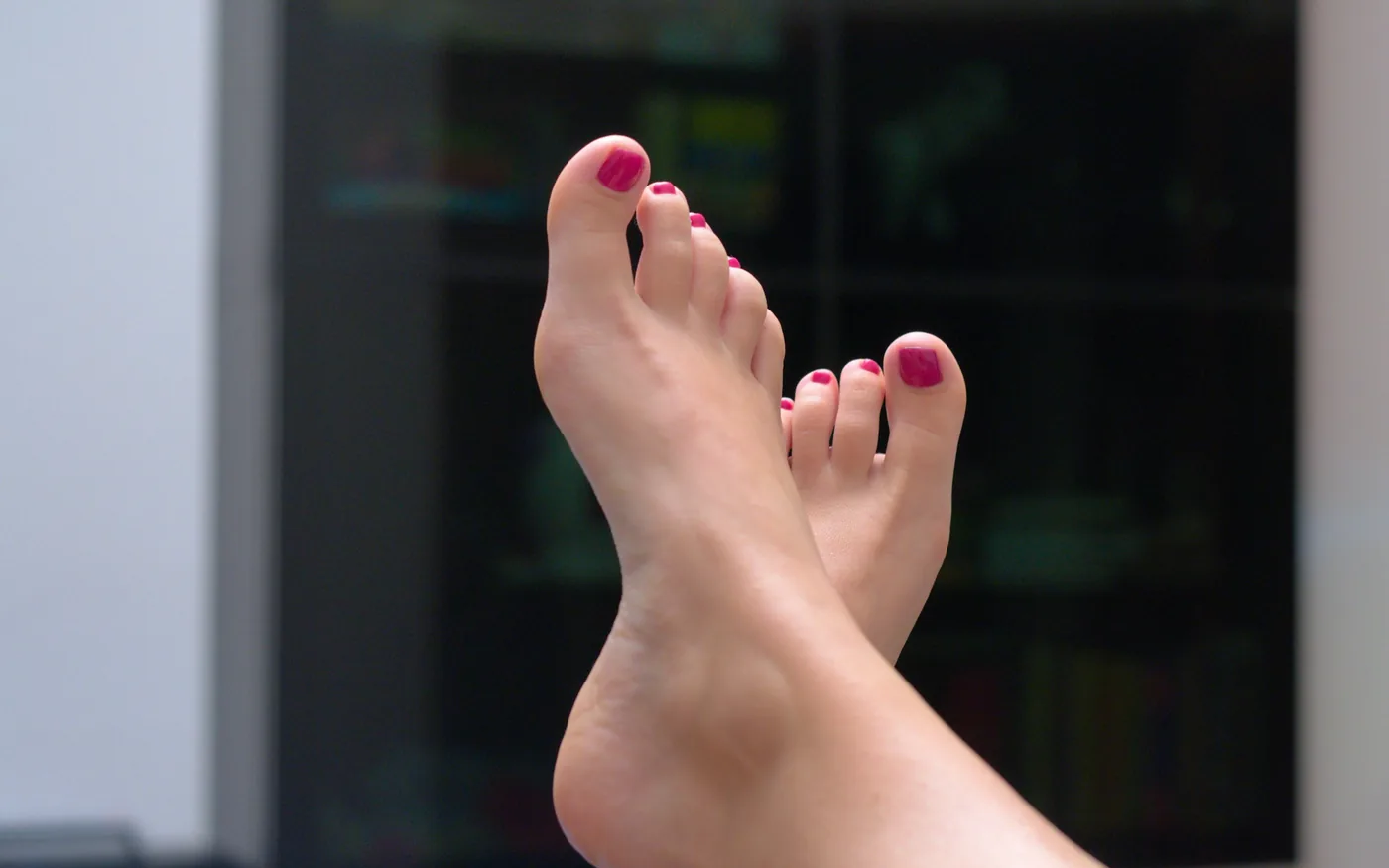
    People describe standing on a pebble or a folded sock
    People describe standing on a pebble or a folded sock.

    What it actually is

    A nerve runs between each pair of long bones in the forefoot. Squeeze those bones together often enough — which is what a narrow shoe does with every step — and the tissue around one of those nerves thickens and becomes irritable.

    It is usually the nerve between the third and fourth toes, sometimes the second and third. Despite the name it is not a tumour, and there is nothing sinister about it.

    Telling it apart from other forefoot pain

    Morton’s neuromaMetatarsalgiaStress fracture
    PainBurning, sharp, shooting into toesDiffuse ache under the ballFocal, over one bone
    NumbnessYes, in adjacent toesNoNo
    TendernessBetween the bonesUnder the bone endsOn the shaft of one bone
    Shoes offMarked reliefSome reliefLittle difference
    SwellingUsually noneSometimesOften, on the top of the foot
    What to doChange footwear firstLoad managementGet it assessed
    Pinpoint tenderness over one bone, particularly after a jump in walking or running, needs assessment rather than new shoes.

    Why it usually starts

    Rarely one thing. Usually a shoe that was always a bit narrow, plus a period of more walking or standing than usual.

    • Narrow or pointed shoes, which squeeze the bones together with every step.
    • Raised heels, which tip the load forward onto exactly the wrong part of the foot.
    • A jump in walking or standing — a new job, a holiday, a fitness push.
    • Thin-soled shoes on hard floors, which removes the cushioning without changing the hours.
    • A foot that has widened, which happens with age and after pregnancy, in shoes bought for the old width.

    Narrow toe boxes and raised heels crowd the nerve between the toes
    Narrow toe boxes and raised heels crowd the nerve between the toes.

    The shoe is the treatment

    This is unusual enough to state plainly. For most people with Morton’s neuroma, footwear change is not a supporting measure — it is the main intervention.

    FeatureWhat to look forWhy
    Toe boxWide, letting toes spreadThis is the one that matters most
    Heel heightLow, ideally under an inchHeight shifts load forward onto the forefoot
    SoleSome stiffness through the forefootReduces how much the foot bends at the sore point
    FitRoom at the end when standingFeet lengthen under load
    FasteningLaces or straps rather than slip-onA slip-on has to grip somewhere, usually the forefoot
    Try shoes at the end of the day, standing up, and buy for the wider foot.
    A wide toe box and a low heel do more than any treatment here
    A wide toe box and a low heel do more than any treatment here.

    The pad, and where it goes

    Once the shoes are sorted, this is the next thing to try, and it costs a few dollars.

    A metatarsal pad is cheap and it works, but only if it is in the right place — and the intuitive place is wrong.

    It goes behind the metatarsal heads, just before the ball of the foot, so it lifts and spreads the bones. Put it directly under the painful spot and it presses on exactly what you were trying to unload.

    Position it by feel: the pad should sit just behind where the tenderness is, not on it. It is worth moving it a few millimetres at a time over a few days.
    A metatarsal pad sits behind the metatarsal heads, not under them
    A metatarsal pad sits behind the metatarsal heads, not under them.

    What else helps

    1. Take the shoe off and rub it when it flares. It is not just comfort — it genuinely decompresses the area.
    2. Reduce the standing hours where you can, particularly on hard floors.
    3. Avoid narrow shoes entirely for a few weeks rather than saving them for special occasions.
    4. Give it time. Footwear changes take weeks to show, not days.
    5. Injection or surgery if conservative measures genuinely fail — a conversation with a foot specialist.

    The American College of Foot and Ankle Surgeons publishes patient information on forefoot conditions if you want to read further before that conversation.
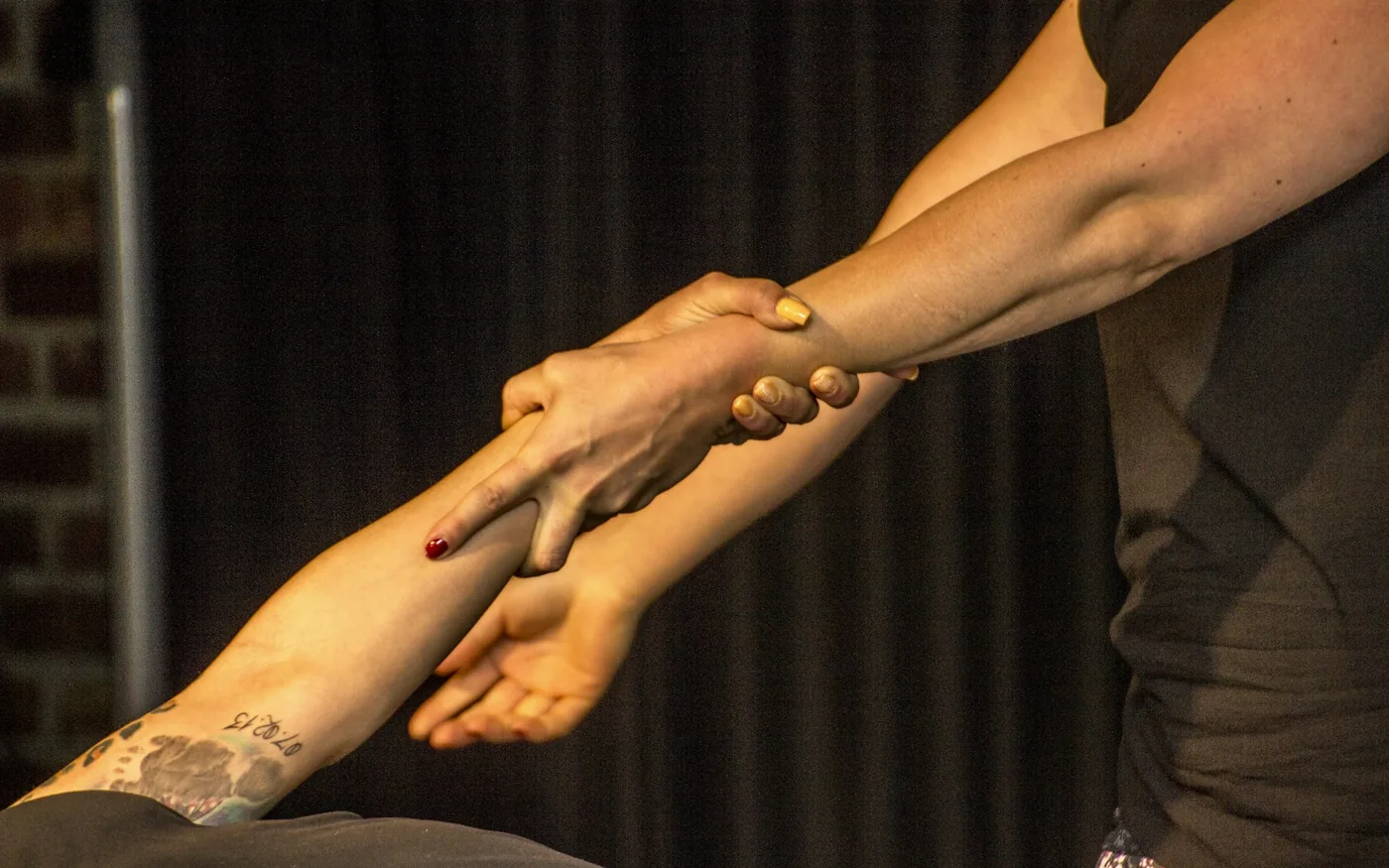
    Relief on removing the shoe and rubbing the foot is characteristic
    Relief on removing the shoe and rubbing the foot is characteristic.

    Give the combination a fair trial before concluding it has failed. Two or three months of genuinely different footwear is the usual benchmark, and most people who say it did not work kept one pair of the old shoes for occasions.

    Where acupuncture and massage fit

    Modestly. There is no strong condition-specific evidence for acupuncture in Morton’s neuroma, and we would rather you spent the first $75 on shoes.

    If the footwear is already sorted and the foot is still irritable, treatment may ease the pain and the calf and foot tightness that tends to build alongside it. That is the same honest positioning as plantar fasciitis, where the free measures also outperform the paid ones.
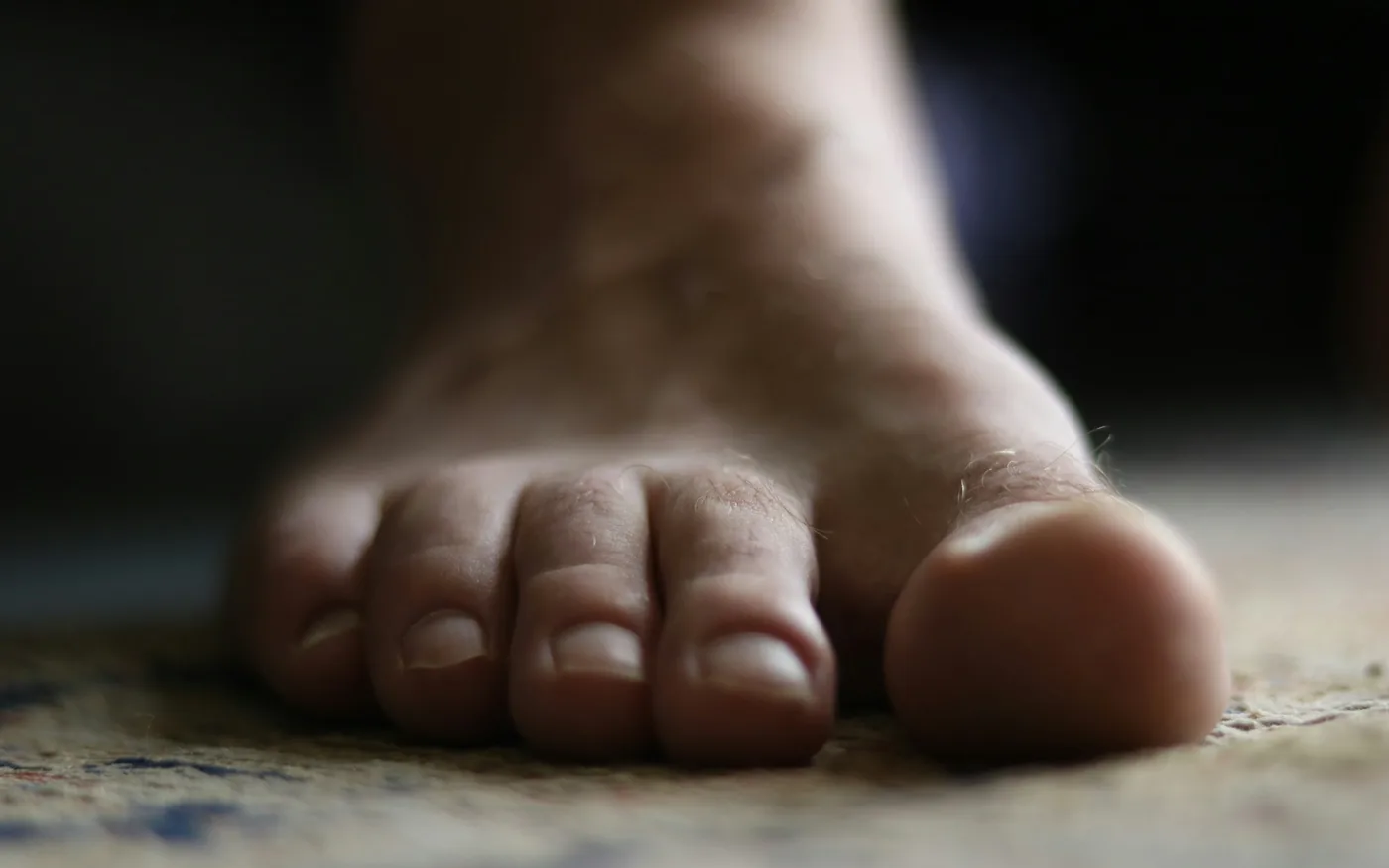
    Treatment may ease symptoms; the footwear change is what alters the load
    Treatment may ease symptoms; the footwear change is what alters the load.

    When to see a doctor

    See a doctor for pinpoint tenderness over one bone, particularly after increasing walking or running; for a hot, red or swollen forefoot; for numbness spreading beyond two toes, which suggests a different problem such as peripheral neuropathy; or for pain that has not improved after two to three months of genuinely different footwear.

    Booking a session in Beverly

    Acupuncture is $75 a session, massage is $45 for 30 minutes, $75 for 60 and $105 for 90, and reflexology is $65 — all on our rates page.

    If the pain is at the big toe joint and the toe has stiffened rather than drifted, a stiff big toe is the one to read — and its footwear advice is the opposite of a bunion’s.

    See also plantar fasciitis for heel rather than forefoot pain, Achilles tendinopathy, and shin splints. Browse all our articles or get in touch.


    Frequently asked questions

    What does Morton’s neuroma feel like?

    Burning or sharp pain in the ball of the foot, usually between the third and fourth toes, often with numbness or tingling in the two toes either side. Most people describe standing on a pebble, a folded sock, or a bunched seam.

    Why does taking my shoe off help so much?

    Because the shoe is doing most of the compressing. Removing it and rubbing the foot relieves the pressure on the irritated nerve directly, and that pattern of relief is characteristic enough to be diagnostically useful.

    What shoes should I wear?

    A wide toe box and a low heel. The toe box matters most — the toes need room to spread rather than being squeezed together, which is exactly what crowds the nerve. This does more than any treatment discussed here.

    Where does a metatarsal pad go?

    Behind the metatarsal heads, not underneath them. Placed correctly it spreads the bones slightly and takes pressure off the nerve; placed under the ball of the foot it can make things worse.

    Is it really a tumour?

    No. The name is misleading. It is a thickening of the tissue around a nerve from chronic irritation, not a growth in any worrying sense.

    This article is general information, not medical advice. Acupuncture is intended to work alongside the care of your doctor, not to replace it. Please speak to a clinician about any new, severe or changing symptom.


  • Cervicogenic Headache: When the Head Pain Starts in the Neck

    Cervicogenic Headache: When the Head Pain Starts in the Neck

    Some headaches are produced by the neck. Many more are simply accompanied by neck pain, and the two get conflated constantly — including by practices that would rather sell you neck treatment either way.

    So this article spends its first half on telling them apart.

    Cervicogenic headache stays on the same side rather than switching
    Cervicogenic headache stays on the same side rather than switching.

    What a cervicogenic headache looks like

    The upper three segments of the neck share nerve pathways with the structures that carry sensation from the head. Irritation up there can be felt in the head rather than the neck, which is why the pain arrives somewhere the problem is not.

    • Side-locked. Always the same side, attack after attack. This is the single most useful feature.
    • Starts at the back. Base of the skull or upper neck, spreading forward to the temple or behind the eye.
    • Provoked by the neck. Turning, looking up, or holding one position for a long time brings it on.
    • Restricted movement. The neck does not turn as far one way.
    • Moderate and steady rather than throbbing, and usually without nausea or aura.
    The upper three neck segments refer pain into the head
    The upper three neck segments refer pain into the head.

    Migraine, tension-type, or cervicogenic?

    CervicogenicMigraineTension-type
    SideSame side every timeCan switch sidesBoth sides
    StartsBack of head and neckAnywhere, often one templeBand around the head
    QualitySteady, moderateThrobbing, often severePressing, mild to moderate
    Nausea, lightUnusualCommonUnusual
    Neck movementProvokes itMakes little differenceLittle difference
    Neck rangeReducedUsually normalUsually normal
    Read moreThis pageMigraine and headachesNeck and shoulder tension
    They coexist more often than the table suggests. Having one does not protect you from another.

    The trap: neck pain in migraine

    This deserves its own section because it leads a great many people to the wrong treatment.

    Neck pain is reported in the large majority of migraine attacks, and it frequently arrives before the headache. That makes it feel causal. It is usually part of the attack rather than the trigger for it.

    The practical consequence: if your headaches switch sides, throb and come with nausea or light sensitivity, treating your neck is unlikely to be the answer even though your neck genuinely hurts. The American Headache Society publishes on headache classification if you want the detail.

    Reduced neck movement is a supporting feature rather than a diagnosis
    Reduced neck movement is a supporting feature rather than a diagnosis.

    What the evidence supports

    This is one of the better cases for hands-on treatment on this site, which is worth saying given how often we conclude the opposite.

    For genuine cervicogenic headache, the combination that performs best is manual therapy of the upper neck plus specific exercise — not either alone.

    The exercise component is more particular than general neck stretching. Deep neck flexor training — a gentle, precise chin nod done lying down, without the big superficial muscles taking over — is the piece with the supporting evidence, and it is easy to do badly.

    The third element is removing the sustained positions that provoke it, which for most people means the desk. Setting up a workstation so it stops provoking your neck covers that in full.

    Specific deep neck flexor training has the best supporting evidence
    Specific deep neck flexor training has the best supporting evidence.

    What a course looks like

    Because this is a headache with a physical source, it is one of the cases where you can set a genuinely concrete review point.

    ElementWhat it involvesRough timeline
    Manual therapyHands-on work at the upper neckWeekly at first, reviewed at six
    Deep neck flexor workA precise chin nod, done lying downDaily, small doses
    Workstation changeScreen height, breaks, position variationOnce, properly
    Headache diaryDays per month, side, and what preceded itFrom day one
    ReviewHas headache frequency actually dropped?At six sessions
    The diary is what makes the review honest. Memory smooths out headache frequency in whichever direction you expect.

    The painkiller trap

    Worth naming because it is common and quietly makes everything worse.

    Taking acute painkillers on more days than not can produce medication overuse headache, in which the treatment becomes a cause. It typically presents as the original headache getting gradually more frequent, which is exactly the thing that makes people take more.

    If you are reaching for something most days, that is a conversation with your doctor rather than a reason to book here first.

    Frequent painkiller use can itself become a source of headache
    Frequent painkiller use can itself become a source of headache.

    Where acupuncture and massage fit

    Aimed at the neck, not at the headache. That distinction is more than semantic: it means the target is the joint stiffness and muscular guarding in the upper neck, and the headache is expected to follow if the neck was genuinely the source.

    Which is also the test. If six sessions aimed at the neck change nothing about the headaches, the neck was probably not the source — and how many sessions people usually need explains why we would rather say that than book a seventh.

    Hands-on work is aimed at the neck rather than at the headache
    Hands-on work is aimed at the neck rather than at the headache.

    When to see a doctor

    Seek urgent assessment for a headache that comes on like a thunderclap; for headache with fever, rash or a stiff neck; for a first significant headache after fifty; for headache with weakness, visual loss or confusion; for headache that is consistently worse lying down or on coughing; or for headache after a head injury.

    Booking a session in Beverly

    Acupuncture is $75 a session and massage is $45 for 30 minutes, $75 for 60 and $105 for 90 — all on our rates page.

    See also acupuncture for migraines, a pinched nerve in the neck if symptoms run into the arm, and TMJ and jaw pain, which refers into the head from a different structure. Otherwise get in touch.


    Frequently asked questions

    How is cervicogenic headache different from migraine?

    Cervicogenic headache is typically side-locked — always the same side — starts at the back of the head and spreads forward, is provoked by neck movement or sustained positions, and comes with reduced neck movement. Migraine can switch sides, throbs, and brings nausea and light sensitivity.

    My neck hurts during migraines. Does that make them cervicogenic?

    No, and this is the commonest misunderstanding. Neck pain occurs in a large majority of migraine attacks, often before the headache itself. Neck pain during a headache is not evidence that the neck is causing it.

    What actually helps?

    The best supported approach combines manual therapy of the upper neck with specific exercise, particularly deep neck flexor training. Addressing sustained positions matters too, which usually means the workstation.

    Can painkillers make headaches worse?

    Yes. Taking acute painkillers on more days than not can produce medication overuse headache, which then looks like the original problem getting worse. If you are reaching for something most days, that is worth raising with your doctor.

    When should I worry about a headache?

    A headache that comes on like a thunderclap, a new headache after fifty, headache with fever and a stiff neck, headache with neurological changes, or headache that is worse lying down or on coughing all need prompt medical assessment.

    This article is general information, not medical advice. Acupuncture is intended to work alongside the care of your doctor, not to replace it. Please speak to a clinician about any new, severe or changing symptom.
  • De Quervain’s: Wrist Pain on the Thumb Side

    De Quervain’s: Wrist Pain on the Thumb Side

    Two tendons run along the thumb side of the wrist inside a narrow sheath. Ask them to do something new and repetitive and the sheath becomes irritated, at which point every lift, grip and wring hurts in one very specific spot.

    It is common, it is treatable, and it is constantly mistaken for arthritis.

    Lifting a baby with the thumbs out is the classic provoking pattern
    Lifting a baby with the thumbs out is the classic provoking pattern.

    The test you can do sitting there

    Few conditions have a self-test this useful, so it is worth doing before reading further.

    Tuck your thumb into your palm, close your fingers over it to make a fist, then tip the wrist downwards towards the little finger side. If that produces sharp pain over the bump on the thumb side of the wrist, that is a strongly suggestive finding.

    A general ache, or pain somewhere else entirely, points elsewhere — which is the next section.

    Tucking the thumb into a fist and bending the wrist reproduces the pain
    Tucking the thumb into a fist and bending the wrist reproduces the pain.

    Not thumb arthritis, and not carpal tunnel

    De Quervain’sThumb base arthritisCarpal tunnel
    WhereThumb side of the wristAt the thumb joint, towards the palmPalm and fingers
    Feels likeSharp on movementDeep ache on grippingTingling and numbness
    Worst whenLifting, wringing, thumb outPinching, jar lids, keysAt night
    SwellingOver the tendon sheathFirm and bonyNone visible
    NumbnessNoNoYes, thumb to ring finger
    First lineSplint and change the movementOrthosis and joint protectionNight splint and assessment
    Three different problems in a small area. The location of the pain separates them more reliably than anything else.

    Where it comes from

    The history is usually more informative than the examination here, because the provoking activity is nearly always identifiable once you look for it.

    Almost always a new or increased repetitive demand on the thumb, held out to the side while the wrist moves.

    • Lifting a baby under the arms with thumbs out, many times a day. Easily the commonest presentation.
    • A new job or task involving gripping, unscrewing, or repetitive thumb movement.
    • Racquet sports and golf, particularly after a grip change.
    • Phone and tablet use, which is a growing contributor and the one people are most reluctant to accept.
    • Gardening seasons, where three months of nothing becomes six hours of pruning.
    Repetitive thumb use is a growing contributor outside new parents
    Repetitive thumb use is a growing contributor outside new parents.

    What actually helps

    In order, and the first two do most of the work.

    MeasureWhat it doesNotes
    Change the movementRemoves the provoking loadScoop a baby from underneath with forearms, thumbs tucked
    Thumb spica splintRests the two tendonsLeaves the fingers free to work
    Ice over the areaEases the local painTen minutes, not longer
    Anti-inflammatoriesReduce pain and swellingAsk your pharmacist or doctor
    Corticosteroid injectionGood evidence for stubborn casesA medical conversation
    SurgeryReleases the sheathRarely needed, and rarely first
    The technique change is free, and it is the one people skip.
    Scooping from underneath with the forearms takes the tendons out of it
    Scooping from underneath with the forearms takes the tendons out of it.

    How long it takes

    Longer than people hope, and the timeline depends almost entirely on whether the provoking movement actually stopped.

    A case caught early, with a splint and a genuine change of technique, often settles in four to six weeks. A case that has been going for months while the same lifting continued can take considerably longer, and is the group most likely to end up discussing an injection.

    Postpartum cases have their own pattern — many improve as the baby gets heavier and the lifting technique changes out of necessity, which is a slightly backhanded form of good news. UW Health publishes patient guidance on hand and wrist tendon problems if you want to read further.

    The splint question

    A thumb spica splint holds the thumb and wrist still while leaving the other fingers usable, which is what makes it tolerable for the people who most need it.

    Worn during provoking activities and overnight is the usual pattern rather than continuously. As with arthritis at the base of the thumb, the aim is unloading the structure at the moments that hurt it, not immobilising a hand you need.

    A thumb spica splint rests the tendons without immobilising the whole hand
    A thumb spica splint rests the tendons without immobilising the whole hand.

    Where acupuncture and massage fit

    As an adjunct. There is no strong condition-specific trial evidence for acupuncture in de Quervain’s and we are not going to invent any.

    What treatment can reasonably do is ease the pain and the forearm tightness that builds around a guarded wrist, which makes the weeks more comfortable while the load management does the actual work. The reasoning is the same one set out in Achilles tendinopathy and shin splints.

    Treatment here is an adjunct to load management, not a substitute for it
    Treatment here is an adjunct to load management, not a substitute for it.

    One small practical note: whatever you change, change it for both hands. People who protect one wrist reliably overload the other, and then have two problems.

    When to see a doctor

    See a doctor for numbness or tingling in the hand, which points elsewhere; for a wrist that is hot, red or swollen with fever; for pain after a fall onto the hand, which needs a fracture excluded; or for pain that has not improved after six weeks of a splint and genuine activity change.

    Booking a session in Beverly

    Acupuncture is $75 a session and massage is $45 for 30 minutes, $75 for 60 and $105 for 90 — all on our rates page.

    If the pain is on the other side of the wrist entirely, ulnar-sided wrist pain covers it — different structure, different provoking movements.

    See also carpal tunnel syndrome, hand and thumb arthritis and tennis elbow, browse all our articles, or get in touch.


    Frequently asked questions

    Where exactly does de Quervain’s hurt?

    On the thumb side of the wrist, roughly where a watch strap would sit, over the bony bump at the base of the thumb side of the forearm. Not at the thumb joint itself, which is further down towards the palm and points at arthritis instead.

    What is the test I can do at home?

    Tuck your thumb into your palm, close your fingers over it, then tip your wrist down towards your little finger. Sharp pain over that thumb-side bump is a strongly suggestive finding. It is called the Finkelstein test.

    Why do new parents get it?

    Lifting a baby repeatedly with the thumbs held out to the side loads exactly these two tendons, dozens of times a day, at a point when the body is already changing. Changing the lifting technique often matters more than any treatment.

    Will a splint help?

    Usually yes. A thumb spica splint rests the two tendons while leaving the fingers free. It is one of the standard first-line measures, and it works best combined with changing whatever movement is provoking it.

    Does it need an injection?

    Sometimes. Corticosteroid injection into the tendon sheath has good evidence for de Quervain’s and is often what settles a stubborn case. That is a conversation with your doctor, and it sits after the splint and the activity change rather than instead.

    This article is general information, not medical advice. Acupuncture is intended to work alongside the care of your doctor, not to replace it. Please speak to a clinician about any new, severe or changing symptom.

  • Acupuncture for Gloucester, MA: Beverly Is the Junction

    Acupuncture for Gloucester, MA: Beverly Is the Junction

    Gloucester is the furthest town on this list by road and one of the easiest by rail, and the reason is a piece of geography most people never think about.

    Beverly Depot is where the line splits. Trains to Gloucester and Rockport and trains to Ipswich and Newburyport share the track as far as Beverly and then divide. Which means Gloucester passengers heading anywhere already come through here.

    Beverly Depot is where the Rockport and Newburyport branches divide
    Beverly Depot is where the Rockport and Newburyport branches divide.

    Getting here

    OptionTimeNotes
    Commuter railAround 25 minutesGloucester towards Beverly Depot; a short walk at this end
    Route 128 by car25–30 minutesThe direct route off Cape Ann
    From West Gloucester20–25 minutesSlightly shorter, closer to the 128 corridor
    From Rockport30–35 minutesAdd five or so at the start
    From Essex or Manchester15–20 minutesThe shortest run on the Cape Ann side
    Summer weekends on 128 are their own consideration. Mornings and the rail option both avoid it.

    Parking at this end is straightforward — street parking on Cabot Street and municipal parking a short walk away. The City of Gloucester publishes local travel and parking information for the other end of the journey.

    Twenty-five to thirty minutes down Route 128 by car
    Twenty-five to thirty minutes down Route 128 by car.

    The junction, and why it matters

    Most of our town pages have to make a case for the journey. This one mostly does not, because for anyone already using the commuter rail the journey is not an additional trip at all.

    The Rockport branch runs Gloucester, West Gloucester, Manchester, Beverly Farms, Prides Crossing, Montserrat and then Beverly Depot, where it joins the line the Newburyport trains use. Everything heading towards Boston from Cape Ann passes through.

    So the practical question for a Gloucester resident is not whether to make a journey to Beverly. It is whether to get off one stop earlier than usual on a day you already travel.

    Cape Ann sits at the far end of the North Shore
    Cape Ann sits at the far end of the North Shore.

    What we see from Gloucester

    Towns do not have their own anatomy, but they do have their own work, and the difference shows.

    The commuter towns send us desk complaints. Gloucester sends more of the physical trades — shoulders that have been loaded overhead for years, lower backs, hands and wrists. That is not a generalisation about the town so much as an observation about the appointment book.

    Physical trades bring shoulders, backs and hands rather than desk complaints
    Physical trades bring shoulders, backs and hands rather than desk complaints.

    The hands are worth singling out. Years of gripping, hauling and working in the cold produce a recognisable pattern of thumb and wrist complaints, and they tend to arrive late — long after the point where changing how a tool is held would have been easy.

    Booking around a working day

    Worth setting out, because it is the practical difference between this page and the ones written for the commuter towns.

    1. Massage starts at 7am Monday, Tuesday, Wednesday and Friday. That is genuinely early, and it exists because people ask for it.
    2. Acupuncture runs to 6pm on Tuesday, Wednesday and Friday.
    3. Saturday mornings cover both, and fill first.
    4. Say what your hours are when you book. We would rather find a slot that survives your week than one you rearrange twice.
    Early massage appointments suit people who start work before dawn
    Early massage appointments suit people who start work before dawn.

    Is the journey worth it?

    Cape Ann is not short of places to book a massage, so the honest answer varies a good deal by what you are actually after — and for two of the rows below it is to stay local and save yourself the drive.

    What you wantTravel from Gloucester?Why
    A single relaxation massageProbably notCape Ann is well served; book closer
    A course of acupunctureOften yesContinuity with one practitioner is the active ingredient
    A licensed acupuncturistWorth checkingNot every practice offering needles has one on staff
    Ninety minutes of deep workWorth a tripLong enough to justify the drive on its own
    You already take the trainYesYou pass through Beverly anyway
    That last row is the Gloucester-specific argument, and it does not apply to any of the other towns we write for.

    If you are weighing up how long a course would run, how many acupuncture sessions people usually need sets out the shape of one and the point at which we would tell you to stop.

    A small practice, since 1998

    Two practitioners, by appointment only. You see the same person each visit, appointments are not stacked back to back, and there is time in the session to say what has changed.

    Choosing a licensed acupuncturist on the North Shore covers the questions worth asking any practice, this one included. We have also written for Manchester-by-the-Sea, one stop closer on the same branch, and for Ipswich, Marblehead, Salem, Danvers and Peabody.

    The same practitioner each visit, by appointment only
    The same practitioner each visit, by appointment only.

    One practical note for anyone travelling in from Cape Ann: if you want both acupuncture and massage, say so when you book and we will arrange them back to back rather than with an hour stranded in between. People coming the furthest ask for this most, and it is easier to arrange in advance than on the day.

    Booking from Gloucester

    Acupuncture runs Tuesday, Wednesday and Friday 9am to 6pm and Saturday 8am to 2pm. Massage runs Monday, Tuesday, Wednesday and Friday 7am to 3pm and Saturday 8am to noon.

    All rates are on our rates page, and what acupuncture costs in Massachusetts covers insurance if that is the deciding factor. Otherwise get in touch to book from Gloucester.


    Frequently asked questions

    How far is Beverly from Gloucester?

    Twenty-five to thirty minutes by road down Route 128. By train, Gloucester and Beverly Depot sit on the same branch, and Beverly is where the Rockport line divides from the Newburyport line.

    Is the train practical from Gloucester?

    More than most people expect, because Beverly Depot is a junction rather than a detour. If you already take the train towards Boston you pass through Beverly anyway, and the station is a short walk from the practice.

    What do people from Gloucester usually come in with?

    More physical-trade complaints than we see from the commuter towns — shoulders, lower backs, hands and wrists. It is a working port, and the pattern of work shows up in the pattern of appointments.

    Can I get an early appointment?

    Massage starts at 7am Monday, Tuesday, Wednesday and Friday, which suits people whose working day starts before dawn. Acupuncture starts at 9am, and 8am on Saturdays.

    What does it cost?

    Acupuncture is $75 a session, massage is $45 for 30 minutes, $75 for 60 and $105 for 90, and reflexology is $65. Every rate is published and nothing is added at the end.

    This article is general information, not medical advice. Acupuncture is intended to work alongside the care of your doctor, not to replace it. Please speak to a clinician about any new, severe or changing symptom.

  • Acupuncture for Tinnitus: An Honest Answer

    Acupuncture for Tinnitus: An Honest Answer

    This article is going to be unflattering to us, so let us get it over with in the second paragraph.

    The evidence for acupuncture in tinnitus is inconclusive. The trials are small, they use different methods and different outcome measures, and systematic reviews consistently decline to draw a conclusion. Anybody advertising acupuncture as a tinnitus treatment is going beyond what the research supports.

    The rest of this page is about what does help, because that is more use to you than a sales pitch.

    A hearing assessment is the first step, because hearing loss is the commonest link
    A hearing assessment is the first step, because hearing loss is the commonest link.

    Start with a hearing assessment

    This is the step people skip, and it is the one that changes things most often.

    Tinnitus is very commonly associated with hearing loss, including hearing loss mild enough that you have not noticed it. The leading explanation is that when the ear sends less input, the brain turns up its own gain — and the tinnitus is what that increased gain sounds like.

    Which is why hearing aids frequently reduce tinnitus: they restore the missing input. An audiologist is the right first appointment, and the American Tinnitus Association is a good place to read further.

    Get these checked promptly

    If your tinnitus isWhy it mattersWhat to do
    In one ear onlyAsymmetry needs explainingSee a doctor or ENT
    Pulsing with your heartbeatSuggests a vascular causeSee a doctor
    With sudden hearing lossTreatment is time-criticalUrgent — same or next day
    With vertigoMay point at an inner ear conditionSee a doctor
    After starting a medicationSome drugs can cause itAsk your prescriber, do not stop
    Steady, both ears, gradualThe commonest patternHearing assessment
    Sudden hearing loss is the one to act on immediately. Treatment works best within days.

    What the evidence does support

    Most effective tinnitus treatment does not target the sound. It targets how much attention and distress the sound commands — and that is a meaningful change, not a consolation.

    • Hearing aids, where there is hearing loss. Frequently the single most effective measure.
    • Sound therapy. Background sound reduces the contrast that makes tinnitus stand out. Silence is what makes it loudest, which is why nights are the worst.
    • Cognitive behavioural approaches. The best supported intervention for tinnitus distress.
    • Tinnitus retraining therapy, combining sound therapy with structured counselling.
    • Protecting your remaining hearing. Nothing undoes noise damage; preventing more is free.
    Background sound reduces the contrast that makes tinnitus stand out
    Background sound reduces the contrast that makes tinnitus stand out.

    The one thing that is entirely in your control

    Protecting the hearing you still have. It is free, it is unglamorous, and it is the only item on this page that reliably changes the future rather than the present.

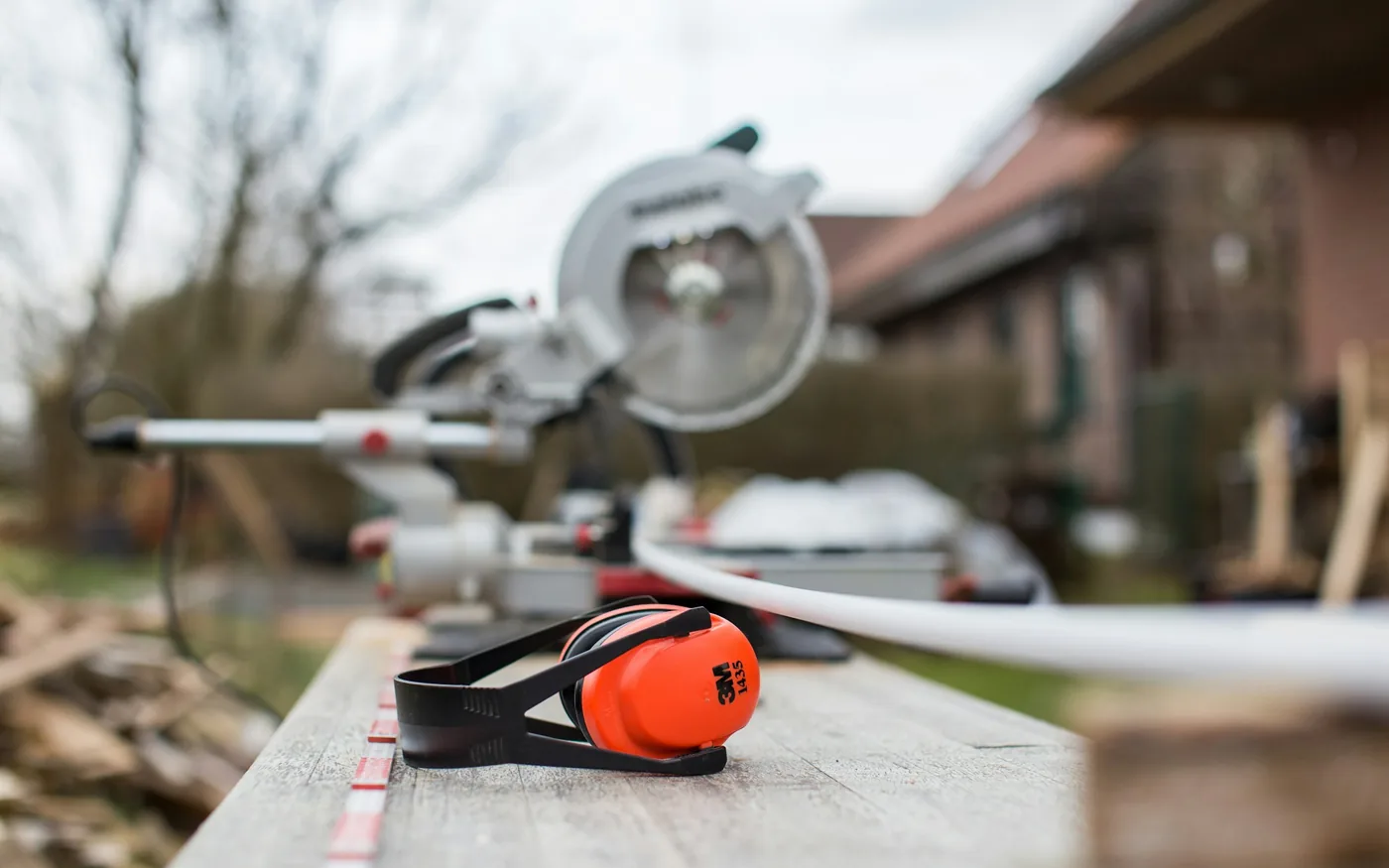
    Noise damage does not reverse. Every further exposure — power tools without defenders, a loud gig, headphones turned up to drown out a commute — adds to it, and for many people tinnitus tracks that accumulation. Ear defenders for the tools and moulded plugs for music cost very little against what they protect.

    The headphone one catches people out. Turning the volume up to mask background noise is the commonest way adults now damage their hearing, and noise-isolating headphones solve it at lower volume.

    Protecting hearing from further noise exposure matters more than any treatment
    Protecting hearing from further noise exposure matters more than any treatment.

    The loop that makes it unbearable

    Tinnitus keeps you awake. Poor sleep raises anxiety and lowers tolerance. Higher anxiety makes the tinnitus more intrusive, which keeps you awake. It is a genuine feedback loop, and for many people it is what turns a manageable sound into a dominating one.

    Anything that interrupts that loop helps, whichever point you break it at — which is the same logic set out in why pain persists after healing, and it applies here for the same reasons.

    Poor sleep and tinnitus distress feed each other in a loop
    Poor sleep and tinnitus distress feed each other in a loop.

    The one honest exception

    There is a subgroup worth naming, because for them hands-on work has a plausible rationale rather than a hopeful one.

    Some people can change the volume or pitch of their tinnitus by clenching the jaw, turning the head, or pressing on the neck. That is called somatosensory tinnitus, and it reflects a genuine connection between the nerves serving the jaw and neck and the auditory pathways.

    If that describes you — and it is worth actually testing — then addressing jaw tension and TMJ pain or neck and shoulder tension may be worth trying. That is a narrower claim than “acupuncture treats tinnitus”, and it is the only one we are prepared to make.

    A minority can change their tinnitus by clenching the jaw or turning the neck
    A minority can change their tinnitus by clenching the jaw or turning the neck.

    So should you book with us?

    Your situationOur honest advice
    New tinnitus, no hearing test yetAudiologist first. Come back to this later
    One-sided or pulsatileDoctor. Not us, and not yet
    Jaw or neck changes the soundReasonable to try treatment for the jaw or neck
    Sleep wrecked by itWorth addressing sleep in its own right
    Hoping to silence the soundWe cannot do that, and we will say so
    Three of those five rows send you somewhere else. That is the honest distribution.
    The honest position: the evidence for acupuncture in tinnitus is inconclusive
    The honest position: the evidence for acupuncture in tinnitus is inconclusive.

    Booking a session in Beverly

    If what you want is help with sleep, stress, jaw tension or neck tension alongside your tinnitus, that is something we can talk about honestly. Acupuncture is $75 and everything is on our rates page.

    If dizziness comes with it, vertigo and dizziness takes the same honest approach and points at what treats the commonest cause.

    Browse all our articles or get in touch — and if the answer is that you should see someone else first, we will tell you.


    Frequently asked questions

    Does acupuncture help tinnitus?

    The evidence does not support saying yes. Systematic reviews find the trials small, inconsistent and at high risk of bias, and the overall conclusion is inconclusive. We would rather tell you that than take your money on a maybe.

    What actually helps tinnitus?

    A hearing assessment first, because hearing loss is the commonest associated finding and hearing aids often reduce tinnitus. Beyond that, sound therapy and cognitive behavioural approaches have the best support — they reduce the distress and intrusiveness rather than the sound itself.

    When is tinnitus urgent?

    Tinnitus in one ear only, tinnitus that pulses in time with your heartbeat, sudden hearing loss, or tinnitus with vertigo all need prompt medical assessment. Sudden hearing loss in particular is treated as an emergency because treatment is time-sensitive.

    Can jaw or neck problems cause tinnitus?

    In a minority of people, yes. If you can change the volume or pitch of your tinnitus by clenching your jaw, pressing on your neck or turning your head, that is called somatosensory tinnitus, and it is the one presentation where hands-on work has a plausible role.

    Will it ever go away?

    For many people it becomes far less intrusive over time even when the sound itself does not change, which is what the effective treatments are actually working on. That is a real outcome, not a consolation prize.

    This article is general information, not medical advice. Acupuncture is intended to work alongside the care of your doctor, not to replace it. Please speak to a clinician about any new, severe or changing symptom.
  • Why Pain Persists After the Injury Has Healed

    Why Pain Persists After the Injury Has Healed

    Almost every condition on this site touches this question somewhere, and none of them has room to answer it properly. So here it is on its own.

    Pain that outlasts the healing of the tissue is common, it is not imagined, and there is a decent explanation for it.

    Persistent pain often reflects a protective system that has become oversensitive
    Persistent pain often reflects a protective system that has become oversensitive.

    Pain is protection, not measurement

    The intuitive model is that pain is a damage meter — more pain, more damage. It is a reasonable guess and it is wrong.

    Pain is better understood as a protective output. The nervous system takes in signals from the tissues, weighs them against everything else it knows about the situation, and produces pain when it concludes protection is warranted.

    That is why the same injury hurts differently in different circumstances, and why a paper cut noticed an hour later stings more than it did unnoticed.

    What changes when pain persists

    Recent injuryLong-standing pain
    What it tracksTissue damage, fairly wellTissue damage poorly
    ThresholdNormalLowered — less input produces more pain
    AreaWhere the injury isOften spreads beyond it
    TriggersLoading the injured partMovement, stress, poor sleep, weather, worry
    What helpsProtection early, then movementGraded movement, sleep, pacing, understanding
    What it meansSomething is damagedThe alarm threshold has dropped
    None of this makes the pain less real. It changes what the sensible response to it is.

    The scan problem

    This is worth knowing because a scan report can do real harm to someone who reads it as a verdict.

    Disc bulges, degenerative change, rotator cuff tears and meniscal wear are all found regularly in people with no pain whatsoever, and the proportion rises steadily with age. They are often better understood as wrinkles than as injuries.

    That does not make imaging useless — it rules out the things that need ruling out. It does mean a finding on a scan is not automatically the cause of your pain.

    Scan findings correlate poorly with how much pain someone has
    Scan findings correlate poorly with how much pain someone has.

    What turns the volume up

    Several of these are modifiable, which is the point of listing them.

    • Poor sleep. A short night measurably lowers pain threshold the next day. This is one of the most reliable findings in the field — see acupuncture for sleep and insomnia.
    • Stress and worry. A system already braced for threat produces pain more readily, which is why stress and anxiety and pain travel together.
    • Fear of movement. Avoiding a movement teaches the system it was right to protect it.
    • Inactivity. Deconditioning lowers the threshold at which activity provokes pain.
    • Not understanding it. Uncertainty is itself a threat signal, which is most of the reason this article exists.
    Poor sleep measurably lowers pain threshold the following day
    Poor sleep measurably lowers pain threshold the following day.

    Boom and bust, and how to stop

    The pattern is universal enough to be almost diagnostic. A good day arrives, you catch up on everything you have been putting off, and you spend the next three days flattened. Then another good day, and the cycle repeats.

    The fix is pacing by quota rather than by pain. Work out what you can do on an average day without a flare — twenty minutes of gardening, say — and then do that amount on the good days too. Increase the quota slowly and on a schedule, not on how you feel.

    It is genuinely difficult, because stopping while you feel fine is counterintuitive. It is also the single most useful habit change on this page.

    Doing too much on a good day and paying for it is the boom and bust pattern
    Doing too much on a good day and paying for it is the boom and bust pattern.

    What helps, in rough order

    ApproachWhat it doesEffort involved
    Understanding itReduces threat, which reduces painReading this, essentially
    Graded activityRaises tolerance, retrains the alarmConsistent, slow
    PacingStops the flare cycleHard, worth it
    SleepRaises pain threshold directlyOften needs its own attention
    Hands-on treatmentReduces pain enough to allow movementAn appointment
    MedicationSame role, with your doctorA conversation
    The pattern: most of what works is done by you, and treatment exists to make that possible.

    Retrain Pain Foundation publishes free patient-facing lessons on this in plain language if you want to go further.

    Where acupuncture and massage honestly fit

    In the fifth row of that table, and we would rather say so than imply otherwise.

    Neither treatment reverses a sensitised nervous system. What they can do is lower the pain enough, for long enough, that you can walk further or start the exercises — and it is the walking and the exercises that change the underlying picture.

    Used that way, as a window rather than a fix, treatment is a reasonable part of a plan. Used as the whole plan, it is an expensive way to stay where you are.

    Treatment can open a window in which movement becomes possible again
    Treatment can open a window in which movement becomes possible again.

    When to see a doctor

    None of this applies to new, severe or changing symptoms. See a doctor for unexplained weight loss, fever, night pain that wakes you consistently, progressive weakness, bladder or bowel changes, or any pain following significant trauma. Persistent pain is a diagnosis reached after those have been excluded, not instead of excluding them.

    A graded return to activity, paced by quota rather than by pain
    A graded return to activity, paced by quota rather than by pain.

    Booking a session in Beverly

    Acupuncture is $75 a session and massage is $45 for 30 minutes, $75 for 60 and $105 for 90 — all on our rates page. How many sessions people usually need sets out how we review rather than book open-endedly.

    This applies most directly to ongoing low back pain, fibromyalgia, long-standing neck and shoulder pain and symptoms after whiplash. Browse all our articles or get in touch.


    Frequently asked questions

    Does persistent pain mean something is still damaged?

    Often not. Tissue healing generally takes weeks to a few months. Pain that continues beyond that usually reflects a nervous system that has stayed on alert rather than ongoing damage. The pain is entirely real; what it is reporting has changed.

    Is my pain “all in my head”?

    No, and that framing is both wrong and unhelpful. All pain is produced by the nervous system, including the pain of a broken bone. Saying the system has become more sensitive is a statement about biology, not about imagination or character.

    Why do my scans not explain my pain?

    Because scan findings correlate poorly with pain. Disc bulges, degenerative changes and rotator cuff tears all show up regularly in people with no symptoms at all. A scan describes structure; it does not measure pain.

    What is boom and bust?

    Doing a great deal on a good day, then paying for it with two or three bad ones, then repeating. It keeps overall activity low and keeps the system on alert. Pacing by a set quota rather than by how you feel breaks the cycle.

    Does that mean treatment is pointless?

    No. Treatment that reduces pain enough to let you move is doing something useful, because movement is what shifts the underlying sensitivity. What it is not doing is fixing a broken part.

    This article is general information, not medical advice. Acupuncture is intended to work alongside the care of your doctor, not to replace it. Please speak to a clinician about any new, severe or changing symptom.
  • Desk Setup and Neck Pain: Movement Beats Posture

    Desk Setup and Neck Pain: Movement Beats Posture

    Almost every article on this subject tells you to sit up straight. The research is less convinced than the advice is, and saying so makes the rest of the page more useful.

    The finding that holds up: how long you hold a position matters more than which position it is. Which means the best desk setup is the one that makes changing position easy.

    Changing position through the day is the best supported single measure
    Changing position through the day is the best supported single measure.

    Start with the screen

    If you only change one thing, change this one. A screen that is too low pulls the head forward, and the muscles at the back of the neck hold it there all day.

    ElementAim forCommon mistake
    Screen heightTop of the screen at or just below eye levelLaptop flat on the desk, everyone looking down
    DistanceRoughly an arm length awayPulled close because the text is too small
    Text sizeBig enough to read leaning backSquinting and creeping forward
    Second screenBeside the first, at the same heightOff to one side, so you turn all day
    VarifocalsScreen lower than standardTipping the head back to find the reading section
    That last row catches people out for years without being noticed. If you wear varifocals, start there.
    The top of the screen sits at or just below eye level, an arm length away
    The top of the screen sits at or just below eye level, an arm length away.

    The laptop problem

    This is the change worth making before any of the others, and it is the one most people put off.

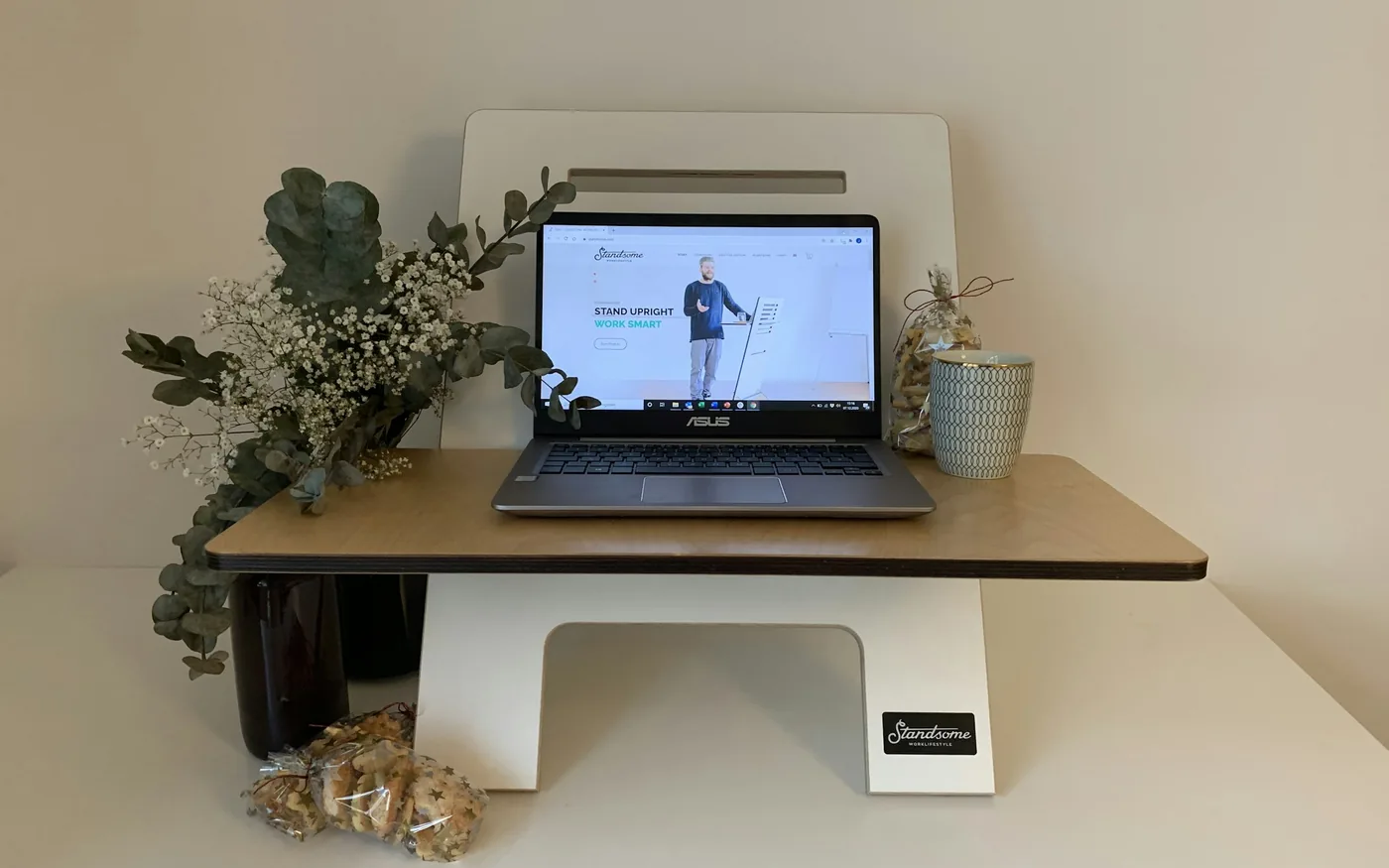
    A laptop cannot be right. If the screen is at the correct height, the keyboard is too high; if the keyboard is right, you are looking down at the screen.

    There is no clever posture that solves this — it is a geometry problem. The fix is separating the two: raise the laptop on a stand or a stack of books and add an external keyboard and mouse, or plug into a separate monitor.

    For anyone working from a laptop several hours a day, this is the highest-value change on the page and it costs very little.

    A laptop used alone forces a compromise; raising it solves half the problem
    A laptop used alone forces a compromise; raising it solves half the problem.

    Arms, and the mouse

    1. Elbows roughly at your sides, bent somewhere near a right angle. Not reaching forward.
    2. Forearms supported by the desk or the chair arms. Unsupported arms hang from the neck muscles all day.
    3. The mouse close in, next to the keyboard rather than out past it. Reaching for a mouse is a shoulder problem in the making.
    4. Shoulders down. If they creep up, the desk or the chair is usually too high.

    That third point matters more than its position in the list suggests — a mouse placed out beyond the keyboard is one of the commonest contributors to shoulder pain and tennis elbow in desk workers.

    Forearms supported and the mouse close in, not out at arm reach
    Forearms supported and the mouse close in, not out at arm reach.

    The chair, briefly

    Chairs attract more attention and more money than they deserve. A few things genuinely matter; the rest is preference.

    FeatureWorth havingWhy
    Height adjustmentEssentialEverything else follows from getting this right first
    Feet flat on the floorEssentialA footrest solves it if the desk cannot go lower
    Adjustable arm restsVery usefulSupported forearms take load off the neck
    Lumbar supportUsefulA rolled towel does most of the job for nothing
    Expensive meshOptionalComfort, not a clinical requirement
    A good chair you sit rigidly in for eight hours is still eight hours in one position.

    Phones and tablets

    You will have seen the claim that looking down at a phone puts sixty pounds through your neck. That figure comes from a paper that has been heavily criticised, and repeating it does nobody any favours.

    What is true and less dramatic: holding the head forward for long stretches makes the muscles at the back of the neck work continuously, and they ache. Bringing the phone up towards eye level, and putting it down periodically, addresses that. No structural damage is being done.

    Sustained looking down loads the muscles at the back of the neck
    Sustained looking down loads the muscles at the back of the neck.

    The part that actually works

    Movement. Not a particular exercise — simply changing position roughly every half hour.

    The reason a sit-stand desk helps is that it makes switching trivial, not that standing is inherently virtuous. Standing rigidly for eight hours has its own consequences. If you have one, the value is in using both settings.

    If you do not have one, the same effect comes free: stand for phone calls, walk to fill a glass of water, take one meeting away from the desk. OSHA publishes a detailed computer workstation guide covering the measurements in more depth.

    A useful way to think about it: the setup decides how good your default position is, and the breaks decide how long you spend in any one position. Both matter, but only one of them is free.

    What a desk cannot fix

    If arm symptoms travel into specific fingers, that is worth reading about separately — a pinched nerve in the neck behaves quite differently from muscular desk ache, and so does carpal tunnel syndrome.

    For ordinary accumulated tension, massage for neck and shoulder pain covers what hands-on work does and how often to go. Jaw clenching at the desk is its own pattern, covered in acupuncture for TMJ and jaw pain.

    A short break every half hour does more than any single adjustment
    A short break every half hour does more than any single adjustment.

    Booking a session in Beverly

    Massage is $45 for 30 minutes, $75 for 60 and $105 for 90, and acupuncture is $75 — all on our rates page. For desk-related neck and shoulder tension, thirty focused minutes is often enough.

    Browse all our articles, see how many sessions people usually need, or get in touch.


    Frequently asked questions

    Is bad posture causing my neck pain?

    Less directly than people assume. The evidence linking a specific sitting posture to neck pain is weaker than the advice suggests. What does show up consistently is how long a position is held without variation, which points at movement rather than alignment.

    How high should my monitor be?

    The top of the screen at or just below eye level, about an arm length away. If you wear varifocals you may need it lower, because otherwise you will tip your head back all day to find the reading section.

    Is a standing desk better?

    It helps by making variation easy, not because standing is inherently good for you. Standing still for eight hours brings its own problems. The benefit is in the switching.

    Does “text neck” damage my spine?

    The alarming figures circulated about head weight at various angles come from a paper that has been widely criticised. Sustained looking down does load the muscles at the back of the neck and can make them ache. That is a comfort problem, not structural damage.

    How often should I get up?

    Roughly every half hour is the figure most guidance settles on. It does not need to be long — standing up, walking to fill a glass of water and sitting back down counts.

    This article is general information, not medical advice. Acupuncture is intended to work alongside the care of your doctor, not to replace it. Please speak to a clinician about any new, severe or changing symptom.
  • Hand and Thumb Arthritis: What Helps With Grip

    Hand and Thumb Arthritis: What Helps With Grip

    It usually starts with a jar lid. Then keys, then taps, then anything that needs a firm pinch — and the pain sits squarely at the base of the thumb rather than in the fingers.

    That joint takes enormous loads for its size. A firm pinch can put several times that force through the joint at the thumb base, which is why it wears before most others.

    Pain on gripping and pinching is the characteristic complaint
    Pain on gripping and pinching is the characteristic complaint.

    Osteoarthritis or rheumatoid?

    Worth settling early, because the two are managed completely differently and one of them needs specialist medical treatment.

    OsteoarthritisRheumatoid arthritis
    PatternOften one hand worse than the otherUsually symmetrical, both hands
    JointsThumb base and the joints nearest the nailsKnuckles and wrists
    Morning stiffnessUnder 30 minutesOver an hour
    SwellingFirm, bonySoft, warm, puffy
    ElsewhereConfined to jointsFatigue and systemic symptoms are common
    Next stepHand therapy and self-managementSee a doctor; blood tests and specialist care
    If both hands are affected symmetrically with long morning stiffness, that is a medical appointment rather than this one.
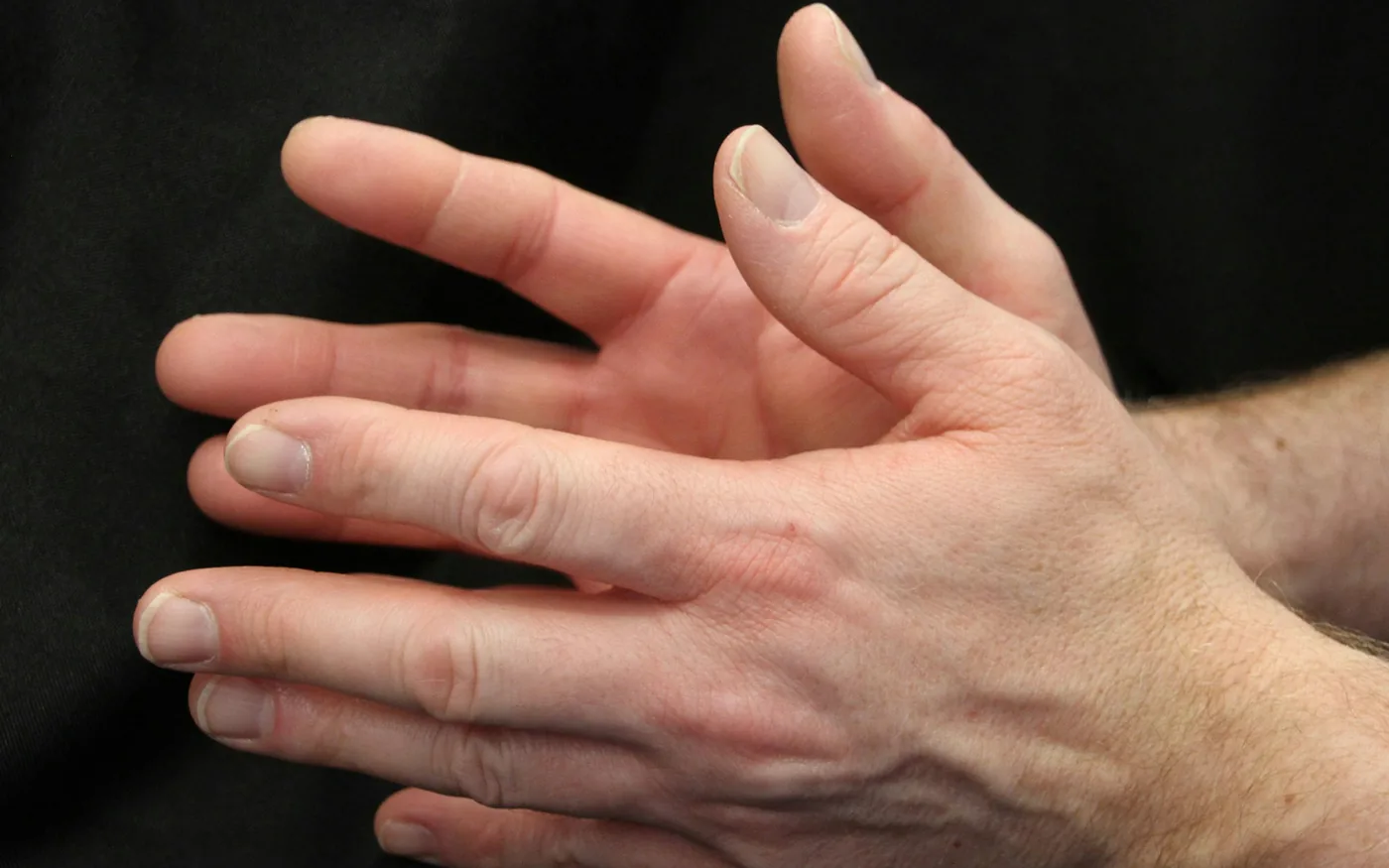
    Firm swellings at the finger joints are a feature of hand osteoarthritis
    Firm swellings at the finger joints are a feature of hand osteoarthritis.

    It is worth knowing what is happening at that joint, because it explains why the advice below is about load rather than rest. The joint at the thumb base is a saddle shape, built for range rather than stability, and it depends on ligaments and small muscles to hold it together under pinch. As those loosen with time the joint shifts slightly under load, and the cartilage wears where it was not designed to take the pressure.

    That is also why the base of the thumb can look squared off or more prominent than it used to. It is a change in the joint position, not swelling.

    The best supported thing is not a treatment

    It is a splint and a change of habits, and it is worth saying plainly that this outperforms anything offered in our treatment room.

    A properly fitted orthosis for the thumb base — fitted by a hand therapist, not bought blind online — reduces pain and improves function in thumb base osteoarthritis. Combined with joint protection technique, it is the first-line approach for good reason.

    The American Society of Hand Therapists is the professional body for this work if you want to understand what a hand therapist actually does.

    A thumb orthosis is one of the better supported first-line measures
    A thumb orthosis is one of the better supported first-line measures.

    Joint protection, which is mostly about tools

    The phrase sounds clinical and the practice is not. It comes down to noticing which everyday movements put a hard pinch through the thumb, and finding another way to do the same thing.

    Instead ofTryWhy
    Twisting a jar lidA jar opener or grip matRemoves the pinch entirely
    Pinching a keyA key turner or larger fobSpreads the load across the hand
    Round tap handlesLever tapsUses the forearm rather than the thumb
    Thin pensA thicker barrel or gripLess pinch force to hold the same pen
    Carrying bags by the handlesOver the forearm or on the shoulderTakes the load off the thumb
    Wringing out clothsPressing insteadWringing is the single worst movement for this joint
    None of this is about doing less. It is about doing the same things with the load somewhere else.
    Thicker handles and lever taps reduce the load through the thumb
    Thicker handles and lever taps reduce the load through the thumb.

    Movement, kept short of pain

    Complete rest is not the answer here any more than it is for shin splints. The muscles that stabilise the thumb weaken if unused, and a less stable joint is a more painful one.

    Gentle range of movement daily, and careful strengthening once the pain settles — but genuinely short of pain, not through it. This is one of the places where a hand therapist earns their fee, because the progressions are specific.

    Gentle range and strength work, kept short of pain
    Gentle range and strength work, kept short of pain.

    A note on when to wear a splint, since it is the question people ask next. Most guidance points at wearing it for activities that provoke the joint and overnight if the pain disturbs sleep, rather than continuously through the day. The point is unloading the joint at the moments that hurt it, not immobilising the hand.

    Where acupuncture fits

    Acupuncture is conditionally recommended for hand osteoarthritis in US rheumatology guidance — the same guidance discussed in acupuncture for knee and joint pain. That is a real endorsement, and a measured one.

    It may help with pain. It does not change the joint, restore cartilage, or replace the orthosis. Used alongside hand therapy rather than instead of it, it is a reasonable addition.

    Acupuncture is conditionally recommended for hand osteoarthritis in US guidelines
    Acupuncture is conditionally recommended for hand osteoarthritis in US guidelines.

    Injections and surgery exist for the thumb base and are genuinely useful for some people, but they sit after the conservative measures rather than instead of them. Most people get a long way with an orthosis, adapted tools and time.

    When to see a doctor

    See a doctor for symmetrical swelling in both hands, for morning stiffness lasting over an hour, for a hot and red joint, for fever alongside joint pain, or for hand symptoms that come with numbness and tingling — the last of those may be carpal tunnel syndrome or a pinched nerve in the neck rather than arthritis at all.

    And if the pain sits higher, on the thumb side of the wrist rather than at the joint itself, de Quervain’s tenosynovitis is the more likely explanation. It has a ten-second self-test worth doing before assuming arthritis.

    And a finger that catches or clicks as it bends, rather than simply aching, is trigger finger — a mechanical problem with a very different and rather more effective treatment.

    Booking a session in Beverly

    Acupuncture is $75 a session; massage is $45 for 30 minutes, $75 for 60 and $105 for 90. Everything is on our rates page.

    See also knee and joint pain and tennis elbow if the problem is further up the arm, browse all our articles, or get in touch.


    Frequently asked questions

    Why does the base of my thumb hurt when I grip?

    The joint at the base of the thumb takes very high loads whenever you pinch or grip, which is why it is one of the commonest sites of osteoarthritis in the hand. Jar lids, keys and taps are the usual things people notice first.

    How do I know it is not rheumatoid arthritis?

    Osteoarthritis is typically asymmetrical, affects the thumb base and the joints nearest the fingertips, and comes with stiffness lasting under half an hour. Rheumatoid tends to be symmetrical, involves the knuckles and wrists, brings morning stiffness lasting over an hour, and often has systemic symptoms. Blood tests settle it.

    What is the most effective thing I can do?

    For thumb base arthritis, a properly fitted orthosis plus joint protection habits is the best supported first-line approach. That is hand therapy territory, and it does more than anything else on this page.

    Does acupuncture help hand arthritis?

    It is conditionally recommended for hand osteoarthritis in US rheumatology guidance, which is a genuine but measured endorsement. It can help with pain; it does not change the joint.

    Should I stop using my hand?

    No. Complete rest weakens the muscles that stabilise the joint. The aim is changing how you load it rather than avoiding load altogether — different tools, different technique, same activity.

    This article is general information, not medical advice. Acupuncture is intended to work alongside the care of your doctor, not to replace it. Please speak to a clinician about any new, severe or changing symptom.
  • A Pinched Nerve in the Neck: How to Tell, and What Helps

    A Pinched Nerve in the Neck: How to Tell, and What Helps

    We have written about sciatica, where a nerve root in the lower back sends symptoms down the leg. The neck has an exact equivalent, and it is far less well understood by the people who have it.

    The pattern is the same: the symptom is in the arm, the problem is not.

    Symptoms follow one nerve path into specific fingers rather than aching vaguely
    Symptoms follow one nerve path into specific fingers rather than aching vaguely.

    What it actually feels like

    Nerve pain has a different quality from muscular pain, and most people can tell the difference once it is described.

    FeatureNerve root involvedMuscular neck pain
    WhereNeck to shoulder blade, then down one armAcross the top of both shoulders
    QualityBurning, electric, shootingAching, tight, heavy
    FingersTingling or numbness reaching named fingersRarely reaches the hand
    WeaknessPossible, in specific movementsNot a feature
    Arm overheadOften eases itMakes no difference
    Neck movementTurning and looking up can provoke the arm symptomsProvokes local pain only
    The single most useful thing you can report is exactly which fingers are involved. It narrows things considerably.
    Resting a hand on the head often eases the symptoms, which is a telling sign
    Resting a hand on the head often eases the symptoms, which is a telling sign.

    Which fingers, and why it matters

    Each nerve root serves a roughly predictable patch of skin, so the fingers involved point at the level. It is not exact, and people overlap, but it is far better than a vague description.

    Fingers affectedUsually points atOften with
    Thumb and indexThe C6 rootWeakness bending the elbow or lifting the wrist
    Middle fingerThe C7 rootWeakness straightening the elbow
    Ring and little fingerThe C8 rootWeakness gripping
    Over the shoulder tip onlyThe C5 rootWeakness lifting the arm out sideways
    All fingers, both handsNot a single rootNeeds assessment rather than this page
    Worth writing down before an appointment. People forget under questioning, and it is the most useful detail you have.

    Telling it apart from carpal tunnel

    This confusion is common enough to be worth its own section, because the two get treated very differently.

    • The little finger. Carpal tunnel spares it. If your little finger is involved, the problem is not the carpal tunnel.
    • Neck symptoms. Carpal tunnel does not cause neck or shoulder blade pain.
    • Night waking. Classic for carpal tunnel syndrome, where shaking the hand helps. Less typical of a nerve root.
    • What provokes it. Neck positions provoke a radiculopathy; wrist positions provoke carpal tunnel.

    It is worth adding that having one does not prevent the other, and a few people genuinely have both.

    One more practical distinction. A nerve root problem tends to be provoked by what your neck is doing — reversing the car, looking up at a shelf, a long stretch at a low screen. If you can identify a neck position that reliably brings on the arm symptoms, that is informative in itself.

    The reassuring part

    Most cases resolve. The majority of people with a cervical radiculopathy improve over weeks to a few months without any surgical intervention, and knowing that changes how you approach the first six weeks.

    The North American Spine Society publishes patient guidance on neck and arm symptoms if you want a fuller clinical picture.

    The nerve root is irritated where it exits the cervical spine
    The nerve root is irritated where it exits the cervical spine.

    What helps in the meantime

    1. Keep moving within comfort. Collars and total rest have fallen out of favour for good reason.
    2. Avoid the provoking position, which is usually sustained looking up or turning to one side.
    3. Sort the sleeping position. A pillow that keeps the neck neutral matters more than how firm it is, and stomach sleeping is the worst option here.
    4. Fix the desk, because eight hours a day of a provoking position undoes everything else — setting up a desk to stop provoking your neck goes through it.
    5. Do not push into the arm symptoms. Stretching harder does not calm an irritated nerve.
    A pillow that keeps the neck neutral matters more than its firmness
    A pillow that keeps the neck neutral matters more than its firmness.

    Where acupuncture and massage fit

    Modestly and honestly. Neither decompresses a nerve root, and we are not going to suggest otherwise.

    What they can do is reduce the muscular guarding that builds up around an irritated nerve — the neck and shoulder tighten protectively, and that tightness becomes a second source of pain in its own right. Easing it makes the weeks more tolerable while the nerve settles.

    The same reasoning applies as in sciatica and whiplash: treatment for comfort, movement for recovery.

    Needling addresses the muscular guarding that builds around an irritated nerve
    Needling addresses the muscular guarding that builds around an irritated nerve.

    When to see a doctor

    Seek urgent assessment for symptoms in both arms; for any change in the legs, balance or walking; for new clumsiness with the hands such as dropping things or struggling with buttons; for bladder or bowel changes; or for progressive weakness in the arm. Those point at the spinal cord rather than a single nerve root, and that is a different problem.

    Also see a doctor for arm pain that has not improved at all after six weeks.

    Most cases settle over weeks with movement rather than rest
    Most cases settle over weeks with movement rather than rest.

    Booking a session in Beverly

    Acupuncture is $75 a session and massage is $45 for 30 minutes, $75 for 60 and $105 for 90 — all on our rates page. For a course, how many sessions people usually need sets out the shape of one.

    See also massage for neck and shoulder pain and whiplash and neck injury, browse all our articles, or get in touch.


    Frequently asked questions

    How do I know it is coming from my neck?

    The giveaway is that symptoms travel in a defined path rather than aching vaguely. Pain from the neck into the shoulder blade and down one arm, with tingling reaching specific fingers, points at a nerve root. A diffuse ache across both shoulders usually does not.

    Is this the same as carpal tunnel syndrome?

    No, though they are confused constantly. Carpal tunnel affects the thumb, index, middle and half the ring finger, spares the little finger, is often worst at night, and causes no neck pain. A pinched nerve in the neck usually involves neck or shoulder blade symptoms as well as the hand.

    Why does putting my hand on my head help?

    Raising the arm over the head reduces tension on the irritated nerve root, and the relief is characteristic enough that clinicians ask about it by name. It is worth mentioning if you have noticed yourself doing it.

    Will it get better on its own?

    Usually. The majority of cases settle over weeks to a few months without surgery. That is genuinely reassuring, and it is also why the sensible approach early on is management rather than intervention.

    When is it urgent?

    Symptoms in both arms, any change in the legs or walking, new clumsiness with the hands, or bladder or bowel changes need urgent assessment. Those suggest pressure on the spinal cord rather than a single nerve root.

    This article is general information, not medical advice. Acupuncture is intended to work alongside the care of your doctor, not to replace it. Please speak to a clinician about any new, severe or changing symptom.

  • Acupuncture for Marblehead, MA: Everyone Drives

    Acupuncture for Marblehead, MA: Everyone Drives

    Marblehead is unusual among the towns we write for, and the reason is geography rather than distance. It sits on a peninsula, it has no commuter rail station, and there is essentially one way off the neck.

    So the practical question is not whether to drive. It is when.

    Narrow historic streets and a single main route off the neck
    Narrow historic streets and a single main route off the neck.

    Getting here

    The distance is short. The variability is entirely Salem, which is why the table below gives ranges rather than a single number.

    FromTypical timeRoute
    Marblehead centre20–25 minutesRoute 114 through Salem, over the bridge
    Marblehead Neck25–30 minutesAdd the causeway at the start
    Clifton and the Swampscott line25 minutesVia Route 129 then 114
    Devereux20 minutesThe shortest run of the four
    By trainNot practicalNo station; reaching Salem or Swampscott is already a drive
    Every route converges on the same bridge, which is why the time of day matters more than the starting point.

    Parking at this end is straightforward, which is worth saying because it is what people from Marblehead ask about most. There is street parking on Cabot Street and municipal parking a short walk away.

    Street and municipal parking a short walk from Cabot Street
    Street and municipal parking a short walk from Cabot Street.

    Marblehead is a genuinely distinctive town, and the Marblehead Chamber of Commerce is the place to look if you are combining the trip with anything else.

    Every trip from Marblehead runs through Salem and over the bridge
    Every trip from Marblehead runs through Salem and over the bridge.

    When to book, which matters more here

    For most of the towns we write for this section would be barely worth including. Here it is the most useful part of the page.

    For most towns this section would be filler. For Marblehead it is the whole point, because the variable is Salem.

    1. Mornings are easier in both directions. Acupuncture starts at 9am, massage at 7am.
    2. Saturday mornings work well and fill up first.
    3. Avoid weekday late afternoons if you have a choice; that is when the bridge is at its worst.
    4. October is its own category. If you can hold a morning slot through the month, do.
    5. Hold one regular time rather than rebooking week to week. Courses that get rearranged tend to stop.
    Early appointments avoid the Salem bottleneck in both directions
    Early appointments avoid the Salem bottleneck in both directions.

    Is the drive worth it?

    Marblehead is well served for wellness businesses, so the honest answer depends entirely on what you want — and for some of these the sensible advice is to stay in town.

    What you wantTravel to Beverly?Why
    A one-off relaxation massageNoBook in town; the drive undoes the point of it
    A course of acupunctureOften yesSeeing the same practitioner each visit is what makes a course work
    A licensed acupuncturist specificallyWorth checkingNot every practice offering needles has one
    Ninety minutes of deep tissue workWorth a tripThe session is long enough to justify it
    Something todayNoWe are appointment-only and will say so on the phone
    A single treatment rarely justifies a drive. A course, where continuity is the active ingredient, often does.

    That distinction between a single session and a course is the whole of it. It is also why the licensing question is worth asking wherever you go — dry needling and acupuncture are not the same qualification, and the difference is not always obvious from a price list.

    What people come in with

    Nothing about a town changes anatomy, but a sailing town does have a recognisable pattern — shoulders, necks, and lower backs that have spent a season doing the same asymmetric thing.

    If you are unsure which treatment fits, our comparison of acupuncture and massage goes through it complaint by complaint, and what to expect after an acupuncture session covers the practical side if you have never had it.

    Worth adding for anyone driving: if you tend to feel drowsy after treatment, that is common and usually passes within a few hours — but it is a reason to sit for ten minutes before setting off rather than walking straight out to the car.

    A sailing town brings its own pattern of shoulder and back complaints
    A sailing town brings its own pattern of shoulder and back complaints.

    None of that is a claim about Marblehead specifically. It is simply what a decade of appointments from a harbour town looks like in aggregate, and it means the shoulder complaints tend to arrive in September rather than spread evenly.

    A small practice, since 1998

    Two practitioners, by appointment only. You see the same person each visit, and appointments are not stacked back to back, so there is room to say what has changed.

    If you are weighing up whether a course is worth the drive, how many sessions people usually need sets out the shape of one and the point at which we would tell you to stop. Choosing a licensed acupuncturist on the North Shore covers what to ask any practice, including this one.

    The same practitioner each visit, with time to talk
    The same practitioner each visit, with time to talk.

    Booking from Marblehead

    Acupuncture runs Tuesday, Wednesday and Friday 9am to 6pm and Saturday 8am to 2pm. Massage runs Monday, Tuesday, Wednesday and Friday 7am to 3pm and Saturday 8am to noon.

    Say you are driving in from Marblehead when you book. It changes what we suggest — usually towards a morning slot, occasionally towards booking two treatments in one trip, and sometimes towards telling you that what you want is available closer to home.

    All rates are on our rates page, and we have written separately for Salem, Danvers, Peabody, Ipswich and Gloucester. Otherwise get in touch to book from Marblehead.


    Frequently asked questions

    How far is Beverly from Marblehead?

    Twenty to twenty-five minutes in ordinary traffic, via Route 114 through Salem and over the Veterans Memorial Bridge. The distance is short; the variability comes from Salem, not from the miles.

    Is there a train from Marblehead?

    No. Marblehead has no commuter rail station. The nearest are Swampscott and Salem, and getting to either is itself a drive, which is why almost everyone simply drives the whole way.

    When is the drive worst?

    Weekday afternoons through Salem, and October, when Salem is busy in a way that reshapes every route on this side of the bridge. Morning appointments are noticeably easier in both directions.

    Where do I park?

    Street parking on Cabot Street and municipal parking a short walk away. It is a normal small-city street rather than a lot, and it is rarely a problem outside peak hours.

    What does it cost?

    Acupuncture is $75 a session, massage is $45 for 30 minutes, $75 for 60 and $105 for 90, and reflexology is $65. Every rate is published and nothing is added at the end.

    This article is general information, not medical advice. Acupuncture is intended to work alongside the care of your doctor, not to replace it. Please speak to a clinician about any new, severe or changing symptom.